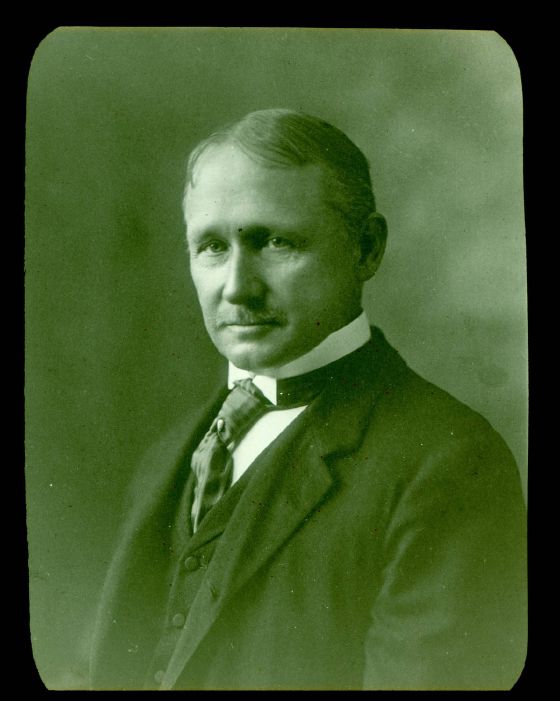
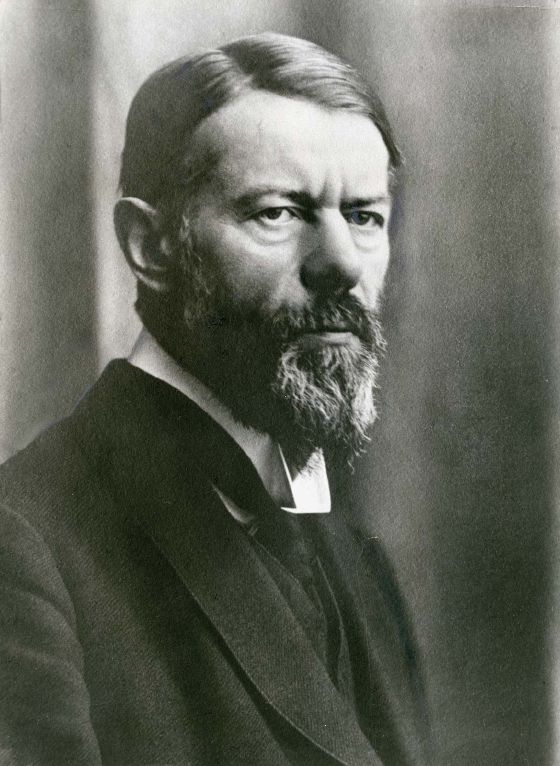
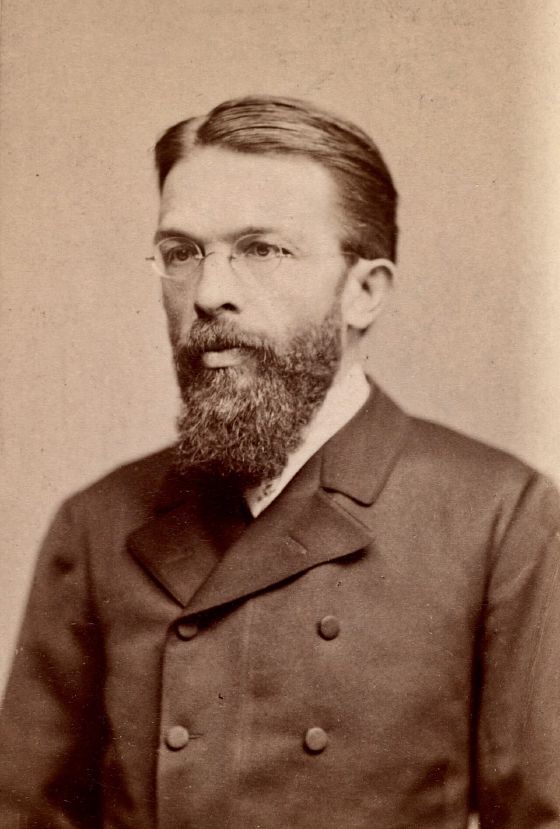
Over the Labor Day weekend of 1969, St. Louis hosted two conventions at once. One was the World Science Fiction Convention. The other was the national convention of Young Americans for Freedom, the conservative youth group, which that weekend expelled its libertarians after one of them burned his draft card on the convention floor12. A 24-year-old physics student from Chicago went to both. At the science-fiction convention he was due to be crowned the first king of the Middle Kingdom, the new Midwestern branch of the Society for Creative Anachronism, a club that recreates the Middle Ages3.
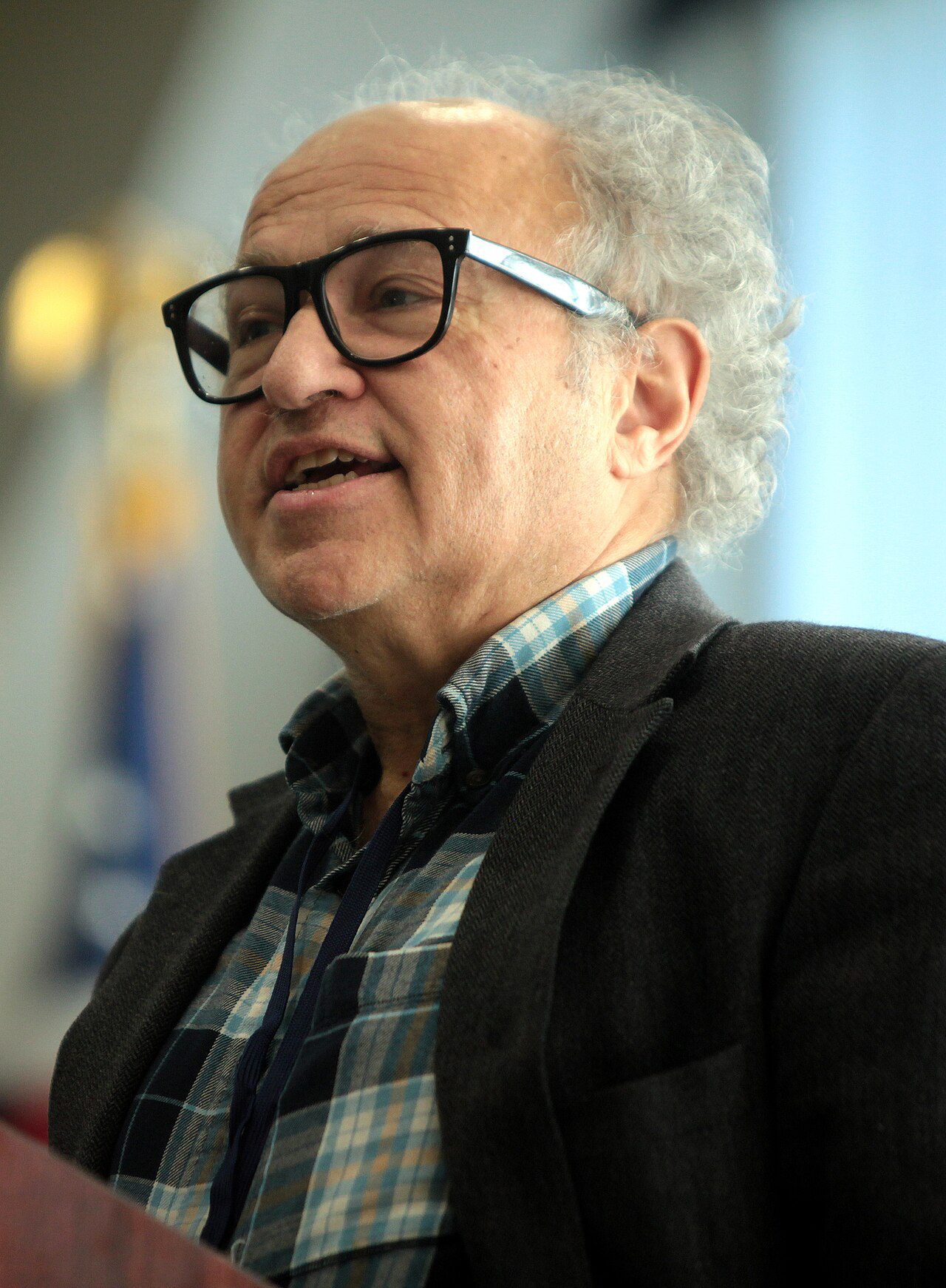
“I was attending both of them,” he said years later. “I’m afraid I was late for my own coronation.”4
The student was David Friedman, the son of Milton Friedman. Four years later he published The Machinery of Freedom, which made the case for anarcho-capitalism in the plain language of an economics textbook. A society, it argued, could buy its police, its courts and even its laws on the open market, the way it buys shoes5. The book is in its third edition. Friedman is now 81 and still writing.
In June 2026 a head of state paid the book public tribute. Javier Milei, the president of Argentina, who considers himself an anarcho-capitalist6, told an audience in Buenos Aires that to have Friedman in the city was “un evento de proporciones históricas para la tradición liberal en Argentina”, an event of historic proportions for Argentina’s liberal tradition7.
This article examines two of Friedman’s claims. Both are empirical, and he has defended both in public for years. The first is that medieval Iceland ran for three centuries on privately enforced law, and that even in its civil war it was not much more violent than modern America. The second is that nobody knows whether climate change will, on balance, make the world worse or better.
“What kind of a knight are you?”
David Director Friedman was born in New York in February 19458, while his father was working as a wartime statistician at Columbia University. When he was eight, the family spent a year in Cambridge, England, where his father introduced him to the statistician Ronald Fisher as Sir Ronald. As his parents tell it in their memoirs, the boy asked: “What kind of a knight are you?” Fisher answered: “I am a knight bachelor with five daughters and two sons.”9
He grew up in a household that never stopped arguing, and in which rank did not count. “In interactions with my father when I was growing up it was always clear that what mattered was who was right, who had the better argument, not who was older—status was simply irrelevant,” he wrote in 200810.
He went to Harvard at sixteen and studied chemistry and physics, graduating in 196511. He was then a libertarian of the limited-government kind, an ardent supporter of Barry Goldwater9. The anarchism came later, partly from a novel: he names Robert Heinlein’s The Moon Is a Harsh Mistress, published in 1966 and set in a society without a government, as one of the sources of his ideas5.
He did not follow his father into economics. He took a doctorate in physics at the University of Chicago in 1971, “in part because I did not want to go through life primarily identified as my father’s son.”12
Physics did not hold him. A pamphlet on population policy that he wrote in 1972 persuaded him that he was better at economics and enjoyed it more12. In 1976 he went to Virginia Tech as an assistant professor of economics. Posts followed at UCLA, Tulane and the University of Chicago Law School, and from 1995 until he retired in 2017 he was a professor of law at Santa Clara University in California11. He has described himself as having “taught at the graduate level at respectable schools in two different fields (law and economics) in neither of which I have ever taken a course for credit.”13
Most of his academic work is in the economic analysis of law, the field his uncle Aaron Director helped to found9. Of the 6,752 citations that Google Scholar counts for him, 1,182 are to the book on anarchy. Law’s Order, his book on the economics of law, a paper on trade secrets and the Iceland paper discussed below come next14. His papers tend to start from an odd question. One, “Why Not Hang Them All”, asks why societies choose costly punishments such as prison over cheap ones such as fines, and answers that a punishment which profits the enforcer invites abuse15.
Outside the university he has led an unusual life. He joined the Society for Creative Anachronism in 1969 and is still active, as Duke Cariadoc of the Bow. He has been king four times, twice of the Middle Kingdom and twice of the East16, and by his own account he helped to start the mock war between the two: he carried the Middle’s war arrow to the king of the East, then won the eastern crown himself and fought on the other side4.
Father and son agreed about most things, but not about the question the son became known for. Milton wanted a small state; David wanted none. David put the difference in two sentences: “I think the sort of system of private rights enforcement I have described would probably work, in many although not all circumstances, but might not. He thought it might work but probably would not.”12
Milton gave his side to Reason magazine in 1995. “I would like to be a zero-government libertarian,” he said, but he did not think it feasible. “I look over history, and outside of perhaps Iceland, where else can you find any historical examples of that kind of a system developing?”17 He had the example from his son, whose paper on Iceland he credits in the memoirs with awakening his interest in the country9.
Books and bras
The Machinery of Freedom appeared in 1973, dedicated, among others, to Milton Friedman, Friedrich Hayek and the science-fiction writer Robert Heinlein, “from whom I learned”. Its central idea is simple. People would pay private agencies to protect their rights. When the clients of two agencies fell into dispute, the agencies would take the case to an arbitrator they had agreed on in advance, because the alternative, fighting, costs money5:
But wars are very expensive and Tannahelp and Dawn Defense are both profit-making corporations, more interested in saving money than face.
— David Friedman, The Machinery of Freedom
The arbitrators, in turn, would compete on the quality of their rulings. The result, Friedman wrote, would be that “systems of law would be produced for profit on the open market, just as books and bras are produced today.” His worked example is capital punishment. If one agency’s customers want it and another’s do not, the agencies bargain, and the side whose customers value their rule more pays the other to accept it. In such a system the law is bought by the people who care most about it, measured in what they will pay.
The book stood out on the libertarian shelf for what it did not claim. Most radical libertarians argued from natural rights: aggression is wrong, the state is aggression, so the state is wrong. Friedman argued from consequences. He was, he wrote, “very much surer where I stand, where my arguments come from and where they will lead me, with regard to practical questions than with regard to ethical ones.”
That made the movement’s best-known anarchist suspicious. In 1977 Murray Rothbard wrote an essay called “Do You Hate the State?” He charged Friedman with “amoralist utilitarianism” and concluded that “it is evident that David does not hate the State at all”18. Friedman’s answer came in the chapters he added to the second edition in 1989: “I know a great deal more about what works than about what is just.”5
On the main charge he pleaded guilty, in 200819:
He was correct. I don’t view the state as a diabolical plot by evil people to exploit innocent victims, merely as an understandable and unfortunate mistake. In that regard, at least, I am a wimp, not a boor.
— David Friedman, 2008
The words were his own. They come from a post about a quarrel among libertarians over deliberately offensive speech. Boors, as the other side calls them, enjoy offending liberal sensibilities; wimps would sooner not. Wimps, he suspected, tend to think of their opponents on the left as “reasonable people who are mistaken”. Boors tend to see them as “stupid or evil”19.
The disagreement surfaced again in Buenos Aires, with a head of state on Rothbard’s side. Milei built his speech around the book. He praised Friedman for arguing “pura y exclusivamente desde los resultados”, purely and exclusively from results, and spoke of “la enorme inspiración” he had drawn from him. Then he parted company. “A diferencia de David, que se dedicó a desarrollar el argumento en términos de eficiencia, hoy creo que el énfasis debe ser puesto sobre los valores morales del capitalismo”: unlike David, who made the argument in terms of efficiency, he believed the emphasis now belonged on the moral values of capitalism, and he named Rothbard among his teachers7. Friedman had told a Chilean newspaper three days earlier that Milei was moving in the right direction but could not move far, and that he doubted the president would live to see anarchy6.
Friedman’s most general argument turns the textbook case for government around. Economists justify the state by market failure, the cases in which people do not bear the costs of their own actions. In politics, Friedman replies, almost nobody does. “Hence market failure, the exception on the private market, is the rule on the political market.”5
He used nearly the same sentence on 2 October 2026 to explain why he opposes a carbon tax. In principle he is for one. If he ran the world and cared only for efficiency, he wrote, he would tax greenhouse gases at the cost of the damage they do and use the revenue to cut the most harmful other taxes, which is the textbook answer. He does not expect a real tax to look like that. It would be set by a political temperature target and not by the damage, so it could cost more than the cooler climate is worth. The revenue would be kept, as wartime taxes are kept after the war. And a public convinced of catastrophe would accept interference in many other things. His evidence that governments behave this way is the tariff: economists have known for two centuries that a tariff usually harms the country that imposes it, and almost every country has them20. One more reason goes deeper. Friedman does not claim to know whether emissions do net harm at all, and if the sign of the effect is unknown, so is whether the right tax is above zero20. That doubt is the second claim examined below.
What he says he cannot solve
The most useful chapters of the book are the ones in which Friedman lists what his system may not be able to do.
The first problem is national defence. A private agency can protect your house, because it can refuse to protect your neighbour who does not pay. It cannot protect you from a foreign army without protecting your neighbour too. “Defense against nations, in the present state of military technology, is a public good,” he wrote. He offered some ways an anarchist society might pay for it and admitted that none was sure: “I am only balancing one imperfect system against another and trying to guess which will work better.” If it came to a choice, he would keep a tax-funded state for defence: “I do not like paying taxes, but I would rather pay them to Washington than to Moscow”.
The second is bad law. A market for law supplies the laws people will pay for, and those need not be libertarian ones. “If almost everyone believes strongly that heroin addiction is so horrible that it should not be permitted anywhere under any circumstances, anarcho-capitalist institutions will produce laws against heroin.” His comfort is arithmetic: “But market demands are in dollars, not votes.” People who want to run other people’s lives, he argues, are seldom willing to pay much for the privilege, so a prohibition needs a majority that is both large and passionate. His verdict on the alternative, a limited government that stays limited, takes one line5:
Anarchy at least might work; limited government has been tried.
— David Friedman, The Machinery of Freedom
He raised the third problem himself and called it “the second and far more serious argument against anarcho-capitalism”. The agencies would hold most of a society’s armed force. “What can prevent them from getting together and using that might to set themselves up as a government?” His answer was numbers. A cartel of three firms is easy to arrange and a cartel of thousands is not, and the first two editions guessed that the number of agencies “will be nearer 10,000 than 3”21.
Critics doubt that numbers are protection enough. In 1992 the economist Tyler Cowen argued that the system’s own machinery makes the cartel possible. To settle disputes peacefully the agencies need a shared network of arbitration, and “If the network can implement successful sanctions against outlaws, however, the network can also implement successful sanctions against potential competitors.”22 Friedman rejected the argument, but granted what the book had already said: “If all the existing firms do agree on a common anti-competitive policy, they may well have the physical force necessary to enforce it by keeping new firms from forming.”23
The third edition, in 2014, went further. A new chapter takes up a point that the economist James Buchanan, later his colleague at Virginia Tech, had made in a review of the first edition. The agencies, Friedman now wrote, sell two products: the enforcement of rights and the ability to threaten other agencies, and threats may get cheaper with size. “It follows that my reasons for believing that economies of scale in the industry will not be sufficient to produce very large firms are weaker than I thought.” A cartel might re-establish government, “Possibly a worse government than we started with.” He expects the danger mainly in the early years of a stateless society, and the chapter ends on his old optimism. One change the edition does not announce: in the chapter on stability, “nearer 10,000 than 3” has become “nearer a thousand than three”5.
Invented by a mad economist
An argument that law can work without a state is stronger with an example of a place where it did. Friedman supplied one in 1979 with a paper in the Journal of Legal Studies, “Private Creation and Enforcement of Law: A Historical Case”24. It is the most cited of the papers he wrote alone14, and since 1989 the example has had a chapter in the book.
The case was Iceland between about 930, when its general assembly was founded, and 1262–64, when it submitted to the king of Norway. Its institutions, Friedman wrote, “might almost have been invented by a mad economist to test the lengths to which market systems could supplant government in its most fundamental functions.”
Iceland had laws, a law-making assembly called the Althing, and courts. It had no king, no police and no public prosecutor. Power lay with chieftains, 39 of them after a reform of about 96525, each holding a goðorð, a chieftaincy that could be bought, sold and inherited. A householder could choose which chieftain to follow, and could change. A killing was a wrong against the victim’s family, who had to bring the case themselves. A killer convicted in court became an outlaw, whom anyone could kill without penalty, though in the sagas most cases end in a negotiated payment instead26. And a claim could be sold, so a family too weak to enforce its own claim could hand it to someone strong enough to do so.
“I have described the legislative and judicial branches of ‘government’ but have omitted the executive,” Friedman wrote. “So did the Icelanders.”24
The claim, checked
The system lasted more than three hundred years. The obvious objection is how it ended: in the Age of the Sturlungs, a civil war in which a handful of great families fought for control of the island. If private enforcement leads to private war, the example proves the opposite of what Friedman wants.
Friedman answered in 1979 by counting the dead. He took from the Icelandic scholar Einar Ól. Sveinsson a figure of about 350 men killed in battle or executed between 1208 and 1260, set it against a population of about 70,000, and found the yearly toll per head “roughly equal to the current rate of murder and nonnegligent manslaughter in the United States”24. The Machinery of Freedom has carried the calculation since 1989: “That comes to 7 deaths a year in a population of about 70,000, or about one death per ten thousand per year.” Even in what Icelanders regarded as their national catastrophe, he concluded, their society was “not substantially more violent than ours.”5
The calculation rests on uncertain numbers, so the chart runs it with others.
At its worst, Iceland's civil war was as deadly as ordinary medieval homicide
Deaths per 100,000 people a year. The civil-war rows count only people killed in battle or executed; the comparison rows count homicides. Population estimates for medieval Iceland range from 40,000 to 80,000.
Show the numbers
| Row | Deaths | Years | Population | Per 100,000 a year |
|---|---|---|---|---|
| Iceland 1208–60, Friedman’s figures (after Sveinsson) | 350 | 52 | 70,000 | 9.6 |
| Iceland 1208–58, Guðbrandur Vigfússon’s count (1878) | 370 | 50 | 40,000–80,000 | 9.3–18.5 |
| Iceland 1238–55, Örlygsstaðir, Flóabardagi, Haugsnes, Flugumýri and Þverá only | about 270 | 17 | 40,000–80,000 | 19.9–39.7 |
| England, 13th–14th centuries (homicide) | Eisner, table 1 | 23 | ||
| Europe, 13th–14th centuries (homicide, average of 76 estimates) | Eisner, table 2 | 32 | ||
| Scandinavia, 15th century (homicide) | Eisner, table 1; no earlier figure | 46 | ||
| United States, 1974 (murder and non-negligent manslaughter) | Sourcebook of Criminal Justice Statistics 1976, table 3.80 | 9.7 | ||
| United States, 2014 (murder and non-negligent manslaughter) | FBI, Crime in the United States 2014, table 1 | 4.5 | ||
| Iceland, 2014–23 average (homicide) | World Bank | 0.8 | ||
As Friedman did it, the arithmetic holds. His figures give 9.6 deaths per 100,000 people a year. The American murder rate in the table he cited, for 1974, was 9.727. A specialist has put the point more bluntly than he did. “We might guess that during this fifty-year period more men than that were run over by their own horses,” wrote the historian Jesse Byock of the same 35028. Even at the lowest population estimate, the average for the half-century stays below the ordinary homicide rate of medieval England29.
Four things qualify it. The first is the average. The only count whose origin is known is the nineteenth-century scholar Guðbrandur Vigfússon’s: about 370 men killed in battle or executed between 1208 and 1258. The historian Gunnar Karlsson, who reports it, adds that the great majority died after 1230, and that five clashes between 1238 and 1255 account for about 27030. Over those seventeen years the rate was two to four times the American figure Friedman set beside it.
The second is the population. Friedman’s 70,000 was the lower of the two figures his source offered; the other was 80,000. Historians have since worked with 40,000 to 60,00028, which turns his 9.6 into 11 to 17 (own calculation).
The third is the unit. The civil-war rows count men who fell in battle or were executed. The rows beneath them count homicides. Ordinary killings in Iceland appear in neither Friedman’s figure nor the chart, and the legal historian William Ian Miller holds that they cannot be supplied: “Homicide rates, only the crudest of indicators at best, are not recoverable in medieval Iceland, since we know neither the number of homicides nor the number of people.”31
The fourth is the date. The third edition of the book still says “ours”. When it appeared in 2014, the American murder rate had been below 6 per 100,000 since 1999 and stood at 4.532. Measured against that America, Iceland’s civil war was about twice as deadly; measured against the Iceland of today, twelve times.
On the numbers, then, the civil war that ended stateless Iceland was at its worst about as deadly as ordinary homicide in a medieval kingdom, and deadlier than the comparison in the book now suggests. How violent ordinary life was, the numbers cannot say.
The harder questions are whom the system served and why it ended. The market in protection was open to householders. A medieval chronicle puts the number of farmers with full rights at 4,560 at the start of the twelfth century, in a population estimated at about 60,000. Almost everyone else belonged to some farmer’s household, as the law required of anyone without land33. Slavery was never formally abolished34. The saleable claim, Friedman’s mechanism for protecting the weak, was real, and it had a price. An ordinary farmer in a dispute, Byock writes, “had little chance of success in facing opponents of more substance” without a chieftain to act for him, and advocacy became a source of the chieftains’ power35.
On the ending, Friedman never hid the problem. Concentration of power, his 1979 paper says, was “one of the problems which led to the eventual breakdown of the Icelandic legal system in the thirteenth century”24. Icelandic historians date its beginnings as early as the eleventh century, and by about 1220 six leading families held districts as small states in which, in one historian’s summary, every farmer had to bow to the will of the great chieftain36. The Church’s tithe, paid in part to churches that landowners controlled, gave ambitious families a steady income. In Legal Systems Very Different from Ours, published in 2019, Friedman accepts the point: the tithe “provided the equivalent of taxation, a source of revenue to support the power of ambitious men”. The same chapter corrects his paper, which “had been mistaken about some significant legal details”, the rule on outlawry among them26.
The sharper objection is about why Iceland could do without a state for so long. The judge and legal economist Richard Posner gave two reasons in 1992. Iceland “didn’t have any significant foreign enemies”, and it “was very poor, which made it difficult for anyone to support an entourage of retainers”. A community needs a surplus to feed specialists in coercion, and “Once the surplus appears, however, the stateless state’s days are numbered.”37 Few modern societies are that poor, or that safe from their neighbours.
Taken together, Iceland shows two things. Privately enforced law kept a poor and remote society of farmers going for three centuries, and even in its last, warring half-century fewer men fell in battle per head than died by ordinary homicide in medieval England. And its competing chieftaincies merged, slowly, into a few territorial powers, as the worry about size predicts, and then came under a foreign king. Friedman was careful from the start. “It is difficult to draw any conclusion from the Icelandic experience concerning the viability of systems of private enforcement in the twentieth century,” he wrote in 197924. On this evidence anarchy might work, in the right place, for a while.
The sign of the sum
Climate is the other subject on which Friedman has argued in public for years, and the one on which he is most easily taken for someone who denies the science.
He does not. His best guess “from watching the debate is that the first half of the argument is correct, that global climate is warming and human action is an important part of the cause”, he wrote in a post of 2009 that he reissued in 202438. His quarrel is with the second half, the claim that the consequences will be bad on balance, let alone catastrophic. Costs get counted, he argues, and benefits do not. His next book, Consequences of Climate Change: A Skeptical Account, is on his website in draft, and its position is the one he has held for more than a decade: “we do not know enough to have confidence in the size, or even the sign, of the net effects of climate change”39. On 5 October 2026 he told a reader who thought carbon taxes too low20:
I don’t even know the sign of the net externality, let alone the magnitude.
— David Friedman, October 2026
His reasons are specific. Deaths from cold are far more numerous than deaths from heat, “about fifteen times as large globally” by his reading of a 2015 study in The Lancet. Warming moves the limit of habitable land towards the poles, and by his own rough estimate three more degrees would make more than ten million square kilometres warm enough to live in. Carbon dioxide feeds plants and raises the yields of most crops. Against this he sets his estimate of the land a rising sea would take: a little over twenty thousand square kilometres40.
Where he does guess, he guesses that the sum is positive. “If I had to guess, my guess would be that the net effect of the change will be positive”, says the 2014 edition of his book5. In March 2026 he went a step further: “In the short run, anthropogenic climate change might make us worse off. In the long run it will make us better off.” The next paragraph is one word: “Probably.”41
For twelve years he has also pursued a single sentence about the figure that 97 per cent of climate scientists agree. In 2013 John Cook, who runs the climate website Skeptical Science, and eight colleagues sorted the abstracts of 11,944 climate papers. Of the 4,014 that took a position, 97.1 per cent endorsed the view that humans are causing global warming42. A month later an article that Cook co-wrote in another journal said the study “found that over 97% endorsed the view that the Earth is warming up and human emissions of greenhouse gases are the main cause.”43 Friedman went to the paper’s data. The 97 per cent pooled three levels of endorsement, and only the first, with 64 abstracts or 1.6 per cent, said outright that humans were the main cause. “John Cook surely knows the contents of his own paper. Hence the sentence in question is a deliberate lie,” he wrote in February 201444. A reply under Cook’s name on the blog of the economist David Henderson said Friedman had quoted him out of context, by leaving off the words that limit the claim to the abstracts which took a position45. That was not what Friedman had objected to, and he answered with a question: “is he a rogue or a fool?”46 The episode is now a chapter of the book draft, in a part headed “Evidence that the orthodoxy should not be trusted”39.
The claim, checked
The sentence first, because its numbers are clear.
Asked directly, most climate scientists say humans are the main cause
Cook et al. (2013) rated twice, by the study’s team and by the papers’ own authors, and counted three ways; and three surveys that asked scientists who publish on climate whether humans have caused most of the warming.
Show the numbers
| Measure | Question | Base | Agree |
|---|---|---|---|
| Cook et al. 2013, abstracts, levels 1–3 | humans are causing warming, stated or implied, without minimising it | 3,896 of 4,014 abstracts | 97.1% |
| Cook et al. 2013, abstracts, level 1 | humans are the primary cause, stated outright | 64 of 4,014 abstracts | 1.6% |
| Cook et al. 2013, abstracts, level 1 against level 7 | primary cause, among abstracts saying more or less than half | 64 of 73 abstracts | 87.7% |
| Cook et al. 2013, authors’ ratings, table 4 | humans are causing warming | 1,342 of 1,381 papers with a position | 97.2% |
| Cook et al. 2013, authors’ ratings, released file | humans are causing most of the warming, stated outright | 224 of 1,377 papers with a position (six fewer than in table 4) | 16.3% |
| Cook et al. 2013, authors’ ratings, released file | humans are causing most of the warming, against less than half | 224 of 233 papers (the study’s team counts 228 of 237) | 96.1% |
| Stenhouse et al. 2014, survey of 2012 | warming of the past 150 years caused mostly by human activity | 124 society members whose field is climate science and who publish mostly on climate; another 10% said equally human and natural | 78% |
| Verheggen et al. 2014, survey of 2012 | more than half of the warming since the mid-20th century is due to greenhouse gases from human activity | 623 authors of more than ten climate papers who gave an estimate; 74% of all 752 including those who gave none | 89% |
| Myers et al. 2021, survey of 2019 | the Earth is getting warmer mostly because of human activity | 153 confirmed climate experts | 98.7% |
About what the sentence says, Friedman is right. The paper’s 97 per cent counts abstracts that say or imply that humans are causing warming. It did not show that 97 per cent call humans the main cause, and the sentence said it did. Whether that was a lie or a careless summary, the numbers cannot show.
The 1.6 per cent is no measure of what scientists think, and Friedman does not offer it as one. “I expect that considerably more than 1.6% of climate scientists believe that humans are the main cause of climate change,” says the draft39. The figure divides the 64 abstracts by all 4,014 that took a position, all but 73 of which say nothing about shares. Of the 73 that took a side on whether humans caused more or less than half of the warming, 64, or 88 per cent, said more. The paper also has a second test, which neither his posts of 2014 nor the chapter in his draft mentions: it asked the authors to rate their own papers. In the ratings the team released, authors put 224 papers in the category for humans causing most of the warming and 9 in the category for less than half. The 224 are 16 per cent of the self-rated papers that took a position, ten times the share among the abstracts (own count)42. Three surveys between 2012 and 2019 put the question directly to scientists who publish on climate. The share saying that humans had caused most of the warming was 78 per cent, 89 per cent of those who gave an estimate, and 98.7 per cent474849. The best estimate of the Intergovernmental Panel on Climate Change (IPCC) is that humans caused 1.07°C of warming by the 2010s, when the warming observed was 1.06°C50.
What Friedman builds on the sentence is a broader charge. Because nobody he could find on Cook’s side pointed the error out, the episode “is evidence that his intellectual allies are unwilling or unable to recognize dishonest work in support of conclusions they agree with.”39 One sentence in an education journal is a narrow base for that, when the paper’s second test and the surveys all point where the sentence pointed.
His main claim, that nobody knows the sign of the sum, is about the future and cannot be settled. What can be checked is whether the research he cites supports it.
Part of it does. Cold does kill more people than heat today. The Lancet study attributed 7.29 per cent of deaths in its 13 countries to cold and 0.42 per cent to heat, a ratio of seventeen to one51. A larger study published in 2021, covering 43 countries, put the shares at 8.52 and 0.91 per cent, about nine to one52. The planet has grown greener: a 2016 study found greening over a quarter to a half of the world’s vegetated land and attributed 70 per cent of it to carbon dioxide53. Mainstream estimates of the economic damage are modest. The IPCC’s 2014 report put the loss from about 2°C of further warming at 0.2 to 2.0 per cent of income, though it added that losses were “more likely than not to be greater, rather than smaller, than this range”54. And a headline number of the kind Friedman distrusts did collapse. A 2024 paper in Nature that projected a 19 per cent loss of world income within 26 years was retracted in December 202555.
Part of it does not. The economist Richard Tol once estimated that the early stages of warming bring net benefits, and Friedman’s draft still relies on that: “Tol himself found that the early stages of warming produced net benefits”39. The estimate did not survive Tol’s own correction of his figures in 2014, which the draft does not mention. In the corrected curve, Tol wrote, “impacts are always negative, at least in expectation”56. His 2024 survey says the same, “The central estimate of the economic impact of global warming is always negative”, with a margin of uncertainty that has widened enough to include no impact even for considerable warming57.
On mortality the answer depends on how much the world warms. A large study by Tamma Carleton and colleagues, published in 2022, builds adaptation into its model. Under high emissions it finds 73 extra deaths a year per 100,000 people by 2100 and puts the whole cost, the deaths and the expense of adapting, at 3.2 per cent of world output. Under moderate emissions it finds 11 extra deaths, with a range that runs from 36 fewer to 62 more, and a cost of 0.6 per cent. Cold places gain, and “today’s poor and hot locations have large projected damages”58. Friedman uses this study himself, and his own recalculation in the draft finds “a decrease in total mortality by mid-century, a significantly larger increase by the century’s end”39.
On the sea his numbers look too low. His twenty thousand square kilometres comes from multiplying the length of the world’s coastline by sixty metres of retreat, for a rise of 0.6 metres59. Scaled to a full metre, the method gives about 36,000 (own calculation). A 2021 study using laser elevation data found that a metre of relative rise would put another 387,000 square kilometres below mean sea level, 518,000 against 131,000 today60. The two figures do not measure the same thing. Land below sea level is not land lost, and about half of the study’s metre is the land itself sinking, which warming does not cause. But the gap is more than tenfold, and in Bangladesh, where Friedman found the effect of a metre “almost invisibly small”40, the same study puts 6,000 square kilometres and 4.9 million people below mean sea level after that metre60.
The evidence supports his doubt and not his guess. The uncertainty is real, the central estimates for moderate warming are small, and their ranges include zero. But the central estimates sit on the side of net cost: in Tol’s surveys, in the IPCC’s range and in the mortality study Friedman uses himself. Where he offers a guess, he guesses against them.
The same man, twice
On anarchy Friedman is the wimp he described. The state is “an understandable and unfortunate mistake”, and the people who defend it are reasonable and wrong.
He can write that way on harder subjects too. He holds that groups almost certainly differ in the distribution of their abilities, the sexes and populations that evolved apart alike, while adding that the argument “does not tell us what the differences are”61. In an essay of 2021, reissued in 2023, he described how reading the Zambian-born writer Chanda Chisala had settled one such question for him: “Having read him I am now confident that African genetic IQ is not substantially lower than European.” What he liked about Chisala, he added, was the way he treated the scholars he was arguing against, “not as wicked racists but as fellow scholars who have, for understandable reasons, reached mistaken conclusions.”62
On climate he extends his opponents less. Cook’s sentence is “a deliberate lie”, and he asks whether its author is “a rogue or a fool”. The draft book goes further: “A more interesting question is whether there are any honest people. Are there any prominent supporters of the need for strong action to prevent warming who have publicly rejected Cook et. al. 2013 or its author?” By his own account he found none. Friedman coined the words wimp and boor for a quarrel among libertarians; applying them to the climate debate is our reading. But someone who takes his opponents for “stupid or evil” is, by his own description, a boor. He does turn the suspicion on himself. The same draft tells its readers that his politics give him “an incentive to believe that climate change is not very dangerous”, and that they should judge his arguments on the evidence and not on his say-so39.
The good. On his own subject Friedman argues like a moderate: he starts from what works, and he lists the problems his system may not solve. His Iceland arithmetic of 1979 holds on his own figures. And about what Cook’s sentence said he was right.
The bad. Iceland proves less than a reader of the book might assume: the system served householders, on Posner’s reading it needed poverty and isolation, and it ended under a foreign king. The comparison in the current edition still rests on the American murder rate of 1974. On climate, a correct point about one sentence has become a twelve-year case against a field, made without the paper’s second test or the surveys. And his agnosticism sits beside a guess that warming will do good, which is not where the central estimates of the literature he cites point.
Friedman once put the difference between himself and his father in two sentences: the son thought anarchy would probably work but might not, the father that it might work but probably would not. His own caveats have narrowed the gap. If anarchy cannot defend itself or breaks down, he wrote in September 2025, then “minarchy may be the most libertarian option available to us”63. That is the wimp he described and something more: a man who takes his opponents for reasonable people and allows that he may be the one who is mistaken. On climate he still allows that he may be wrong.
Sources
-
Jerome Tuccille, “Report from St. Louis: The Revolution Comes to YAF”, The Libertarian Forum I, 12, 15 September 1969, pp. 1–2. ↩︎
-
Rebecca E. Klatch, A Generation Divided: The New Left, the New Right, and the 1960s, University of California Press, 1999, pp. 9 and 225–232. ↩︎
-
MiddleWiki, the Middle Kingdom’s own history, article on the kingdom, retrieved 9 October 2026. ↩︎
-
“Sir Cariadoc of the Bow Interview”, recorded by Craig Brown at the Pennsic War in August 1990, transcript corrected by Friedman in 1997, Calontiri Wiki. ↩︎ ↩︎
-
David Friedman, The Machinery of Freedom: Guide to a Radical Capitalism, third edition, 2014 (first edition Harper & Row, 1973). Dedication; pp. 112–115 (agencies, arbitration, capital punishment); 119–124 (stability, heroin); 133–139 (defence); 143 (limited government); 159 and 177–178 (ethics); 203 (Iceland); 261 (market failure); 268–271 (the new chapter on stability); 303 (climate); appendix II (Heinlein). ↩︎ ↩︎ ↩︎ ↩︎ ↩︎ ↩︎ ↩︎ ↩︎ ↩︎
-
Juan Pablo Silva, “David Friedman, el anarcocapitalista hijo de Milton: ‘Milei no está yendo más allá de lo que Chile ya fue’”, Diario Financiero, 20 June 2026 (in Spanish). ↩︎ ↩︎
-
Javier Milei, speech at the Fundación Faro event Ideas para una Sociedad Libre, official transcript, Casa Rosada, 23 June 2026 (in Spanish). ↩︎ ↩︎
-
“Friedman, David 1945–”, Contemporary Authors, New Revision Series, Gale, for the date and place of birth. ↩︎
-
Milton and Rose D. Friedman, Two Lucky People: Memoirs, University of Chicago Press, 1998, pp. 238 and 249 (Cambridge, Fisher), 278 (Aaron Director), 371 (Goldwater), 570 (Iceland). ↩︎ ↩︎ ↩︎ ↩︎
-
David Friedman, “Equality Times Two”, Ideas (blog), 9 May 2008. ↩︎
-
David D. Friedman, academic page with degrees, posts and publications, retrieved 9 October 2026. ↩︎ ↩︎
-
Anthony Wile, “David D. Friedman on his Famous Father, Anarcho-Capitalism and Free-Market Solutions”, interview, The Daily Bell, 8 April 2012. ↩︎ ↩︎ ↩︎
-
David Friedman, “Textbooks that are Fun to Read”, Ideas (blog), 26 June 2011. ↩︎
-
Google Scholar, profile of David Friedman, retrieved 9 October 2026. ↩︎ ↩︎
-
David Friedman, “Why Not Hang Them All: The Virtues of Inefficient Punishment”, Journal of Political Economy 107(S6), 1999, pp. S259–S269, DOI 10.1086/250110; restated in “The Case Against Efficient Punishment”, David Friedman’s Substack, 22 April 2026. ↩︎
-
East Kingdom Wiki, entry on Cariadoc of the Bow, retrieved 9 October 2026. ↩︎
-
Brian Doherty, “Best of Both Worlds: An Interview with Milton Friedman”, Reason, June 1995. ↩︎
-
Murray N. Rothbard, “Do You Hate the State?”, The Libertarian Forum X, 7, July 1977, pp. 1 and 8. ↩︎
-
David Friedman, “The Ron Paul Affair and Libertarian Culture Clash”, Ideas (blog), 21 January 2008. ↩︎ ↩︎
-
David Friedman, “Global Warming, Carbon Taxes, and Public Choice”, David Friedman’s Substack, 2 October 2026, with his replies to readers of 2 and 5 October. ↩︎ ↩︎ ↩︎
-
David Friedman, The Machinery of Freedom, second edition, Open Court, 1989, chapter “The Stability Problem”. ↩︎
-
Tyler Cowen, “Law as a Public Good: The Economics of Anarchy”, Economics and Philosophy 8(2), 1992, pp. 249–267, at p. 259. ↩︎
-
David Friedman, “Law as a Private Good: A Response to Tyler Cowen on the Economics of Anarchy”, Economics and Philosophy 10(2), 1994, pp. 319–327. ↩︎
-
David Friedman, “Private Creation and Enforcement of Law: A Historical Case”, Journal of Legal Studies 8(2), March 1979, pp. 399–415. The death toll and the comparison are in the conclusion and note 46. ↩︎ ↩︎ ↩︎ ↩︎ ↩︎
-
Gunnar Karlsson, “Hversu margir alþingismenn voru á hinu forna Alþingi?”, Vísindavefurinn, 7 June 2013 (in Icelandic). ↩︎
-
David Friedman, Peter T. Leeson and David Skarbek, Legal Systems Very Different from Ours, 2019, chapter 10, “Saga-Period Iceland”, quoted from the late draft on Friedman’s website. ↩︎ ↩︎
-
Michael J. Hindelang et al., Sourcebook of Criminal Justice Statistics 1976, US Department of Justice, 1977, table 3.80, p. 443. It is the page Friedman’s note 46 cites. ↩︎
-
Jesse L. Byock, “The Age of the Sturlungs” (archived copy), in Continuity and Change: Political Institutions and Literary Monuments in the Middle Ages, ed. Elisabeth Vestergaard, Odense University Press, 1986, pp. 27–42, at pp. 31–32. ↩︎ ↩︎
-
Manuel Eisner, “Long-Term Historical Trends in Violent Crime”, Crime and Justice 30, 2003, pp. 83–142, tables 1 and 2. ↩︎
-
Gunnar Karlsson, “Hversu margir voru vegnir á Sturlungaöld?”, Vísindavefurinn, 20 March 2014 (in Icelandic). Guðbrandur Vigfússon’s count is in the prolegomena to his edition of Sturlunga Saga, Oxford, 1878. ↩︎
-
William Ian Miller, “Bloodtaking and Peacemaking: Feud, Law, and Society in Saga Iceland”, Law Quadrangle Notes 34(3), 1990, the prologue and conclusion of his book of the same title (University of Chicago Press, 1990). ↩︎
-
FBI, Crime in the United States 2014, table 1. ↩︎
-
Włodzimierz Gogłoza, “Anarchist Visions of the Medieval Icelandic Non-State Socio-Political Order – an Outline of a Critique”, Krakowskie Studia z Historii Państwa i Prawa, special issue, 2018, pp. 47–67, at pp. 52–53. ↩︎
-
Gunnar Karlsson, “Hvaðan fengu Íslendingar flesta þræla sína og hvenær var þrælahald afnumið á Íslandi?”, Vísindavefurinn, 25 February 2014 (in Icelandic). ↩︎
-
Jesse L. Byock, “Feuding in Viking Age Iceland’s Great Village” (archived copy), in Conflict in Medieval Europe, ed. Warren C. Brown and Piotr Górecki, Ashgate, 2003, pp. 229–241, at p. 237. ↩︎
-
Skúli Sæland, “Hvað var Sturlungaöld?”, Vísindavefurinn, 28 July 2004 (in Icelandic). ↩︎
-
Richard A. Posner, “Medieval Iceland and Modern Legal Scholarship”, Michigan Law Review 90(6), 1992, pp. 1495–1511, at pp. 1508–1509. ↩︎
-
David Friedman, “Does Climate Catastrophe Pass the Giggle Test?”, David Friedman’s Substack, 26 April 2024; first published on his blog on 5 July 2009. ↩︎
-
David Friedman, Consequences of Climate Change: A Skeptical Account, draft of a book put on his website for comment, file of 13 May 2026. Chapter 9 is the Cook episode. ↩︎ ↩︎ ↩︎ ↩︎ ↩︎ ↩︎ ↩︎
-
David Friedman, “Externalities, Population and Climate”, David Friedman’s Substack, 28 January 2023. ↩︎ ↩︎
-
David Friedman, “Consequences of Climate Change”, David Friedman’s Substack, 2 March 2026. ↩︎
-
John Cook et al., “Quantifying the consensus on anthropogenic global warming in the scientific literature”, Environmental Research Letters 8(2), 024024, 15 May 2013, tables 3 and 4, with the paper’s released data files. ↩︎ ↩︎
-
Daniel Bedford and John Cook, “Agnotology, Scientific Consensus, and the Teaching and Learning of Climate Change: A Response to Legates, Soon and Briggs”, Science & Education 22(8), 2013, pp. 2019–2030, published online 14 June 2013. ↩︎
-
David Friedman, “A Climate Falsehood You Can Check for Yourself”, Ideas (blog), 26 February 2014. ↩︎
-
David Henderson, “David Friedman on the 97% Consensus on Global Warming”, EconLog, 27 February 2014, with the reply in the comments. ↩︎
-
David Friedman, “John Cook’s Response to My Criticism”, Ideas (blog), 23 March 2014. ↩︎
-
Neil Stenhouse et al., “Meteorologists’ Views About Global Warming: A Survey of American Meteorological Society Professional Members”, Bulletin of the American Meteorological Society 95(7), 2014, pp. 1029–1040, table 1. ↩︎
-
Bart Verheggen et al., “Scientists’ Views about Attribution of Global Warming”, Environmental Science & Technology 48(16), 2014, pp. 8963–8971, supporting information, table S3. The 89 per cent is of the 623 who gave an estimate. ↩︎
-
Krista F. Myers et al., “Consensus revisited: quantifying scientific agreement on climate change and climate expertise among Earth scientists 10 years later”, Environmental Research Letters 16(10), 104030, 2021, table 1. ↩︎
-
IPCC, “Summary for Policymakers”, in Climate Change 2021: The Physical Science Basis, 2021, section A.1.3 and footnote 11, p. 5. ↩︎
-
Antonio Gasparrini et al., “Mortality risk attributable to high and low ambient temperature: a multicountry observational study”, The Lancet 386(9991), 2015, pp. 369–375. ↩︎
-
Qi Zhao et al., “Global, regional, and national burden of mortality associated with non-optimal ambient temperatures from 2000 to 2019: a three-stage modelling study”, The Lancet Planetary Health 5(7), 2021, pp. e415–e425. ↩︎
-
Zaichun Zhu et al., “Greening of the Earth and its drivers”, Nature Climate Change 6(8), 2016, pp. 791–795. ↩︎
-
IPCC, “Summary for policymakers”, in Climate Change 2014: Impacts, Adaptation, and Vulnerability, Working Group II, 2014, p. 19. ↩︎
-
Maximilian Kotz, Anders Levermann and Leonie Wenz, “Retraction Note: The economic commitment of climate change”, Nature 648, p. 764, 3 December 2025. ↩︎
-
Richard S.J. Tol, “Correction and Update: The Economic Effects of Climate Change”, Journal of Economic Perspectives 28(2), 2014, pp. 221–226, at p. 222. ↩︎
-
Richard S.J. Tol, “A meta-analysis of the total economic impact of climate change”, Energy Policy 185, 2024, 113922, DOI 10.1016/j.enpol.2023.113922; quoted from the preprint. ↩︎
-
Tamma Carleton et al., “Valuing the Global Mortality Consequences of Climate Change Accounting for Adaptation Costs and Benefits”, The Quarterly Journal of Economics 137(4), 2022, pp. 2037–2105, DOI 10.1093/qje/qjac020; figures from the April 2022 revision of NBER working paper 27599, pp. 22 and 26. ↩︎
-
David Friedman, “Land Gained and Lost”, David Friedman’s Substack, 26 February 2023. ↩︎
-
A. Hooijer and R. Vernimmen, “Global LiDAR land elevation data reveal greatest sea-level rise vulnerability in the tropics”, Nature Communications 12, 3592, 2021, table 1. ↩︎ ↩︎
-
David Friedman, “Ethnic Cleansing, Other Horrors, and the Racial IQ Controversy”, David Friedman’s Substack, 30 August 2026. ↩︎
-
David Friedman, “Race, Gender and IQ”, David Friedman’s Substack, 25 May 2023; first published on his blog on 3 April 2021. ↩︎
-
David Friedman, “A Libertarian Taxonomy”, David Friedman’s Substack, 30 September 2025. ↩︎