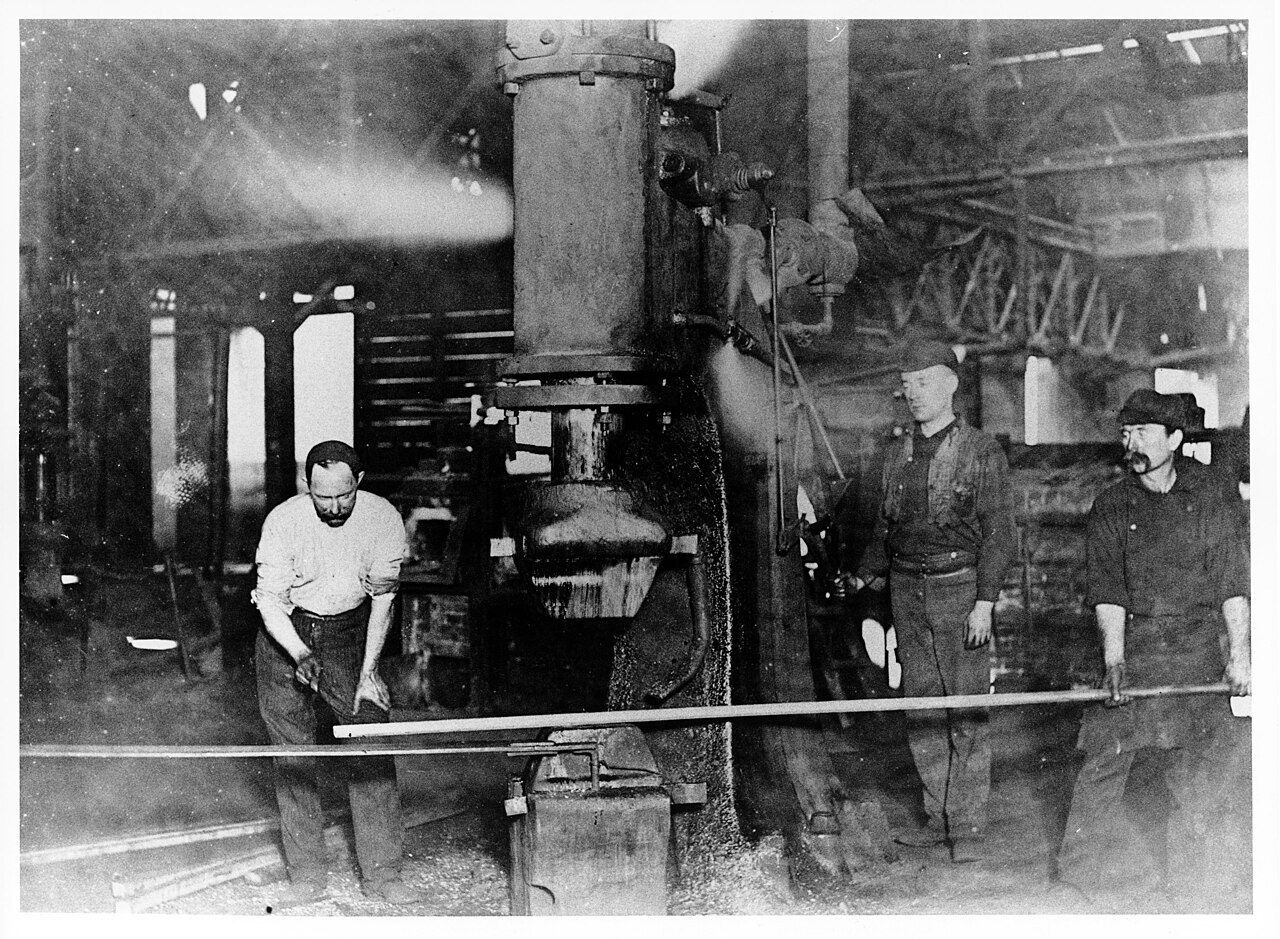
The best-known scene in the literature of management opens with a question: “Schmidt, are you a high-priced man?” A labourer at the Bethlehem steel works in Pennsylvania, paid $1.15 a day for carrying 92-pound bars of pig iron up a plank into a railway wagon, is called out of his gang. He is offered $1.85 if he will do exactly as the man with the watch tells him, “and no back talk”. He answers in stage German, “Vell, I don’t know vat you mean.” By half past five the next afternoon he has loaded 47½ tons, where the gang had averaged 12½1.
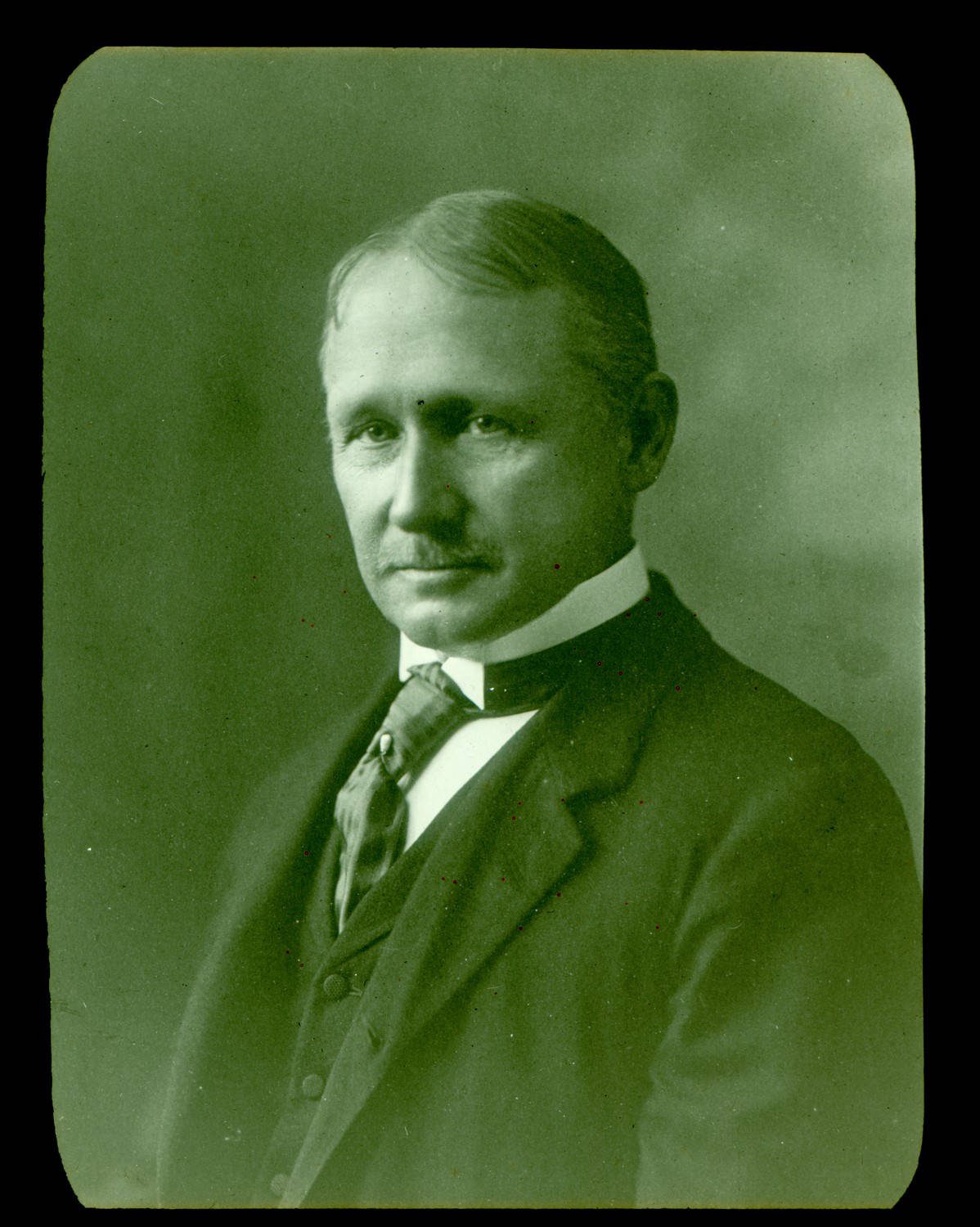
Frederick Winslow Taylor printed the scene in 1911 in The Principles of Scientific Management, a short book whose first sentence says what it means to prove: “The principal object of management should be to secure the maximum prosperity for the employer, coupled with the maximum prosperity for each employee.”1 Study the work, measure it, plan it, and output rises so far that wages and profits can go up together, while the old quarrel over what a fair day’s work is becomes a matter for measurement. Peter Drucker wrote that the idea “may well be the most powerful as well as the most lasting contribution America has made to Western thought since the Federalist Papers”2. Lenin, who had called it sweating, wanted it taught in Russia3. When the fellows of the Academy of Management were polled in 2001, they ranked Taylor’s book first among the management books of the century4. His critics turned his name into a term of abuse.
The scene at Bethlehem did not happen as he wrote it. The labourer was called Henry Noll, the daily task had been set at 45 tons by taking a round 40 per cent off a figure nobody could sustain, and the trial in the yard was run by two assistants5. What follows sets out who Taylor was and what his system is, and checks his central claim against his own writings, the inquiries of his day and the evidence gathered since.
Three numbers
A rich man’s son at the lathe
He was born on 20 March 1856 in Germantown, by then part of Philadelphia, the second of three children. His father, Franklin Taylor, was a lawyer who hardly practised and lived on inherited means. His mother, Emily Winslow, was an abolitionist: she campaigned to end slavery, which was still legal in the Southern states when he was born. By the account of his authorised biographer Frank Copley, she was also one of the earliest campaigners for women’s right to vote6. In September 1872 he entered Phillips Exeter Academy to prepare for Harvard, and in 1874, according to his room-mate, he passed the entrance examinations6.
He never went. His own explanation, in a letter of 1910, was that the Exeter training “ruined my eyes and left me no alternative than working as a workman”6. Copley, who wrote with the family’s help, repeats the story and then takes half of it back: the eyesight “presently was restored”, yet Taylor stayed in the workshop for four years6. Late in 1874 he became an apprentice patternmaker and machinist at a small Philadelphia pump works. He worked the first year for nothing, as he later told Congress, because “my father had some means”6.
In 1878 he went to the Midvale Steel Company as a labourer because, he said, he could not get work at his trade. He was no stranger there. One of Midvale’s two principal owners, the banker E. W. Clark, was a friend of the Taylor family, and Clark’s son Clarence married Taylor’s sister6. In 1881 the two young men won the first national lawn tennis doubles championship of the United States at Newport7. Within six years Taylor had been clerk, lathe hand, gang boss, foreman of the machine shop, master mechanic, chief draftsman and chief engineer. In 1883 he took an engineering degree from the Stevens Institute of Technology by examination, without, by his own account, attending classes. A year later he married Louise Spooner6.
Private life
Louise Spooner had been part of his life since childhood. Her parents, the Philadelphia doctor Edward A. Spooner and his wife, were friends of the Taylors, and she often came out to stay with them in Germantown6. The wedding was on 3 May 1884, the year Taylor became chief engineer at Midvale. At home, Copley writes, he tossed his dignity aside and went on “playing the amusing urchin”, so that his wife often wondered why people elsewhere took him so seriously6.
He slept badly all his life. At about twelve he noticed that he always woke from his nightmares lying on his back, and built himself a harness of straps and wooden points that woke him whenever he turned over onto it. It did not cure him. For the rest of his life he slept sitting upright, propped on pillows, and in hotels there was always a struggle to find enough of them6.
While they still lived in Bethlehem, the Taylors legally adopted three children, distant relations of Louise’s family: Elizabeth and her younger brothers Kempton and Robert, then aged between six and twelve8. Kempton later recalled that the two boys had been soft and indifferent to outdoor sport, and Taylor set out to change that. They rode their bicycles to school whatever the weather, and at the Chestnut Hill Academy he had them train with a football squad of boys five or six years older. “Get into the game” was his standing order. When they were ill, Copley writes, he nursed them himself8.
In the autumn of 1901 the Taylors bought about eleven acres in Chestnut Hill, on the north-western edge of Philadelphia, above the wooded valley of the Wissahickon. The land held an old garden laid out after 1803 by a French count who had fled the Revolution. Its paths were lined with box, which over a century had grown into one tangled hedge. Every gardener and landscape architect they asked said the box could not be moved. Taylor had it lifted with its roots in their own soil and replanted, and the place took its name from it: Boxly8. In matters of taste, Copley writes, everyone had to consult Louise, while Taylor took care of the engineering. His mother, an invalid since a stroke in 1897, died in March 1904, just before the family moved in8.
Taylor was a keen golfer. In front of the house he laid out a putting green with planned rises and hollows, which Copley thought was probably the first of its kind in the country, and spent years working out how to grow grass on it; he published the results in 1915. When Louise took up roses, he and the gardener Robert Bender began experimenting with those too, and in 1913 Taylor wrote that they were growing “the finest autumn roses that have ever been grown around Philadelphia”8.
Around Christmas 1911 Louise’s health broke down. From then on, Copley writes, Taylor made every engagement depend on her condition. The visits to Boxly by people who came to hear him talk about his system ended after 1911, and the couple spent most of their time away from home, to spare her the cares of running a household8. When he went into hospital in March 1915, he gave orders that she was not to visit him, so that in her weakened state she would not risk an infection8.
The war over a day’s work
What he found at Midvale he described for the rest of his life. The shop, he wrote, “was really run by the workmen, and not by the bosses”. The men had agreed among themselves how fast each job should be done, and the pace was “about one-third of a good day’s work”. When he was made gang boss they warned him not to break the rates, or “we’ll throw you over the fence”. He broke them anyway. For three years he fired men, cut rates and fined machinists whose machines broke down. Output, he says, was in many cases doubled1. “I was a young man in years,” he told a committee of Congress in 1912, “but I give you my word I was a great deal older than I am now, what with the worry, meanness and contemptibleness of the whole damn thing.”6
The conclusion he drew is easy to miss in a book remembered for its contempt of workmen. He thought the men were right. Under piece work a man who worked faster soon saw his rate cut, so that he worked harder for the same money. Had he been in their place, Taylor wrote, “he would fight against turning out any more work, just as they were doing”. He called the deliberate go-slow “soldiering” and thought it the greatest evil afflicting the working people of England and America. The fault, in his view, lay with managers who had no idea how long a job ought to take and therefore bargained by guesswork. As foreman he reckoned that “the combined knowledge and skill of the workmen who were under him was certainly ten times as great as his own”1.
So he set out to measure. From about 1880 he timed jobs with a stopwatch, element by element. In the same year he began experiments on how fast a lathe tool can cut metal. He expected them to take six months. They ran for about 26 years, through between thirty and fifty thousand recorded experiments that turned more than 800,000 pounds of steel and iron into chips, at a cost he put at $150,000 to $200,0009. The best-known result came at Bethlehem on 31 October 1898. Working with his colleague Maunsel White, he found that tool steel heated beyond the point at which every machinist believed it ruined would cut at much higher speeds. Bethlehem bought the patents, and the two men received $128,875 between them8. In 1909 a federal court found nothing new in them. “Both are invalid,” the judge wrote10.
By then Taylor had long been a missionary. From 1893 he worked as a consulting engineer. His rubber stamp read “Systematizing Shop Management and Manufacturing Costs a Specialty”6. Bethlehem hired him in 1898 and dismissed him in 1901. After that, he testified in 1908, his work in this field was done without pay8. He lectured and gathered disciples, among them Henry Gantt and Carl Barth.
What scientific management is
Taylor set the system out twice: for engineers in Shop Management (1903), and for the public in the Principles. The second book reduces it to four new duties for managers. They work out a “science” for each element of a job, to replace rule of thumb. They select each workman for the job and train him, where before he chose his own work and taught himself. They cooperate with the men to see that the work is done according to the science. And they take over the planning, so that work and responsibility are divided almost equally between the two sides1.
In the shop this meant what he called the task idea. Each man’s work is planned by the management at least a day ahead and handed to him in writing: what is to be done, how, and in how much time. If he does it right and in time, he earns between 30 and 100 per cent above the ordinary wage1. Around the task stood the machinery that visitors noticed first. There was the stopwatch study of each motion, a planning department, instruction cards, tools standardised down to the size of a shovel, and a costing system. The single foreman was to give way to “eight different bosses”, each responsible for one function, such as speed, inspection or repairs. The stopwatch became the emblem, though the planning office was the larger change. “All possible brain work”, Taylor wrote in 1903, “should be removed from the shop and centred in the planning or laying-out department”11. A sentence often held against him comes from the introduction of 1911: “In the past the man has been first; in the future the system must be first.”1
The name stuck by accident. Taylor had used the phrase “scientific management” in passing since 1903, but he called his system “task management” and never approved of its being named after him. The name was settled on in October 1910, in Gantt’s New York apartment, by the lawyer Louis Brandeis and a handful of engineers. They needed a label for the hearings in which Brandeis would oppose a rise in railway freight rates before the Interstate Commerce Commission. Taylor was not present128. At the hearings Brandeis asked the efficiency engineer Harrington Emerson whether the railways could save a million dollars a day. “At least that,” said Emerson13. The Commission ruled in February 1911 that it could make little of the testimony: “The system is everywhere in an experimental stage.”14 The phrase had made the newspapers all the same, and what one historian calls an efficiency craze followed15.
The word “Taylorism” was in print by 13 April 1911, when a contributor to the trade weekly American Machinist regretted “the antagonism it has aroused”16. On 19 May The Engineer of London wrote: “We do not hesitate to say that Taylorism is inhuman.”17
Taylor’s own definition went the other way. Before Congress in January 1912 he began by saying what scientific management is not. It is “not holding a stop watch on a man and writing things down about him; it is not time study; it is not motion study”, nor a pay scheme, nor divided foremanship. In its essence, he said, it involves “a complete mental revolution” on the part of workmen and managers alike, in which both take their eyes off what he called “the division of the surplus” and work to make the surplus larger18. Reference works have therefore been able to pick whichever part they like. For Britannica, Taylorism is finding the best way to do a job by breaking it into motions and timing them with a stopwatch. For Merriam-Webster it is “breaking down production into specialized repetitive tasks”. The standard history of management thought follows Taylor and calls it a change of attitude192021. What can be tested is the promise underneath all three, that measurement makes both sides better off and settles what a day’s work is.
Schmidt
The Principles rests its proof on stories, and the first is Schmidt’s. As Taylor tells it, the outbreak of the war with Spain let Bethlehem sell 80,000 tons of pig iron that lay in a field. A gang of 75 men had been loading 12½ tons each a day. Study showed, he writes, that a first-class man ought to load 47 to 48 tons (long tons of 2,240 pounds, here and below). Four candidates were picked after days of observation, and one of them, a “little Pennsylvania Dutchman” who trotted home after work and was building himself a house, was chosen to begin. He was told when to lift and when to sit, loaded 47½ tons, and earned $1.85 from then on. One man after another was trained to the same pace, “without any quarrel with the men”. The science lay in a “law of heavy laboring”, which fixed the share of the day a man could spend under load. Taylor’s opinion of the man who obeyed it was that he must be “so stupid and so phlegmatic that he more nearly resembles in his mental make-up the ox than any other type”1.
Taylor had told the story before, and differently. Shop Management in 1903 has no Schmidt, no dialogue and no law. The man is unnamed and weighs “about 130 pounds”. The task is “from forty-five to forty-eight tons”. And the men did quarrel: “One after another of the new men who were started singly on this job were either persuaded or intimidated into giving it up,” until the opposition “ceased rather suddenly after about two months”. The tasks were set so high that “not more than one out of five laborers” could keep up; by 1911 it was one in eight. In 1903 Taylor also said who had run the trial. He himself “had so many other duties that his personal help was confined to teaching the proper methods and approving the details”11.
The trial was run by two assistants, James Gillespie and Hartley Wolle, who reported to Taylor in writing on 17 June 1899. Their report lies in his papers. It was first set against his book in 1974 by Charles Wrege and Amedeo Perroni, under the title “Taylor’s Pig-Tale”22. We could obtain neither that article nor the report itself, and rely on the historian Daniel Nelson, whose biography of Taylor quotes the report5.
In Nelson’s account Bethlehem sold 10,000 tons, not 80,000, after the price of pig iron rose in February 1899. Gillespie and Wolle began piece work on 11 March. They had a gang of Hungarian labourers load a wagon “at their maximum speed”. At that rate each man would have loaded the equivalent of 75 tons a day, and the men were exhausted after one wagon. Then, the report says, “we deducted 40 percent for rests and necessary delays and set the amount to be loaded by a first class man at 45 tons per day”. Nelson found no reason for the 40 per cent and supposed it “a ‘rule of thumb’ decision”, which is Taylor’s own term for the guesswork his system was to replace5.
Where the 45 tons came from
Pig iron loaded per man per day at Bethlehem, in long tons. The task set in 1899 is a burst at top speed, scaled up to a day, less a round 40 per cent.
Show the numbers
| long tons per man per day | source | |
|---|---|---|
| Day work, before piece work | 12½ (the report, as Nelson gives it: thirteen) | Taylor 1911; Nelson 1980 |
| A gang at top speed, one wagon, scaled to a day | 75 | report of 1899, in Nelson |
| Deducted for rests and necessary delays | 40%, or 30 tons | report of 1899, in Nelson |
| Task set in 1899 | 45 | report of 1899, in Nelson |
| Task in Shop Management, 1903 | 45 to 48 | Taylor 1903 |
| Task in the Principles, 1911 | 47 to 48; Schmidt loads 47½ | Taylor 1911 |
| Piece rate per ton | 3.75 cents (report), 3.9 cents (Taylor 1911) | Nelson 1980; Taylor 1911 |
| Pay for the task | $1.69 for 45 tons at 3.75 cents (own calculation); $1.85 in Taylor 1911 |
The rate was fixed at 3.75 cents a ton, which pays about $1.69 for 45 tons, not $1.85. The Hungarians were discharged within the week, according to a later study by Wrege and Ronald Greenwood23. At the end of March seven men were recruited from another gang. Five turned up, and only Noll proved “first class”. By the end of May the two assistants had hired forty men and counted three first-class ones, one in thirteen, with ten more who could “make a fair day’s wages”. Noll averaged between $1.35 and $1.70 a day, which at that rate is 36 to 45 tons, about three times the old average (own calculation)5. He was a remarkable workman. But the scientific selection described in the book amounts, in the record, to keeping whoever could keep up.
The book knows nothing of a 40 per cent deduction. It has the law of heavy labouring instead, worked out by Barth from earlier experiments, and states it twice with different numbers: a man can be under load for 43 per cent of the day in the text, 42 per cent in a footnote1.
When Taylor went before Congress in 1912 he left the story out. “I won’t take up any of your time with that,” he said, since the members knew it18. Copley writes that he “had come to realize the need of dropping the illustration”. By then opponents were saying that the work had killed Schmidt. In January 1914 Taylor had Noll examined by a doctor, who found him “in good physical condition”, working ten to twelve hours a day handling graphite8. By March a German science weekly, which spelt his name Knoll, was telling its readers that the story of his death from overwork was “völlig unwahr”, wholly untrue24. Nelson adds that Noll, whom Taylor had held up as a model of thrift, later lost his job and his home through drink5.
The cost did fall. By the end of May 1899 loading pig iron on piece work cost 4.8 cents a ton, against more than 8 cents on day work, by the report’s own figures, and the men who could not keep up were moved to easier jobs that paid better than their old ones5. Taylor has also had defenders. Edwin Locke of the University of Maryland, in a memorial lecture of 1980 at Taylor’s old college, argued that the wrong figures “could have involved errors of memory rather than deliberate deception”. He granted that Noll was not selected as the book says, and still judged the evidence of dishonesty “virtually nonexistent”25. A friend put it more gently to a committee of Congress in 1916. Taylor, said Henry Towne, had “a habit of overstatement. He exaggerates, unconsciously but unavoidably”8.
The table
The second proof in the Principles is a table. It covers the labourers who shovelled ore, coal and sand in the Bethlehem yard. Between 400 and 600 men, the book says, were reduced to about 140. Each handled 59 tons a day where he had handled 16, and earned $1.88 where he had earned $1.15. The cost of handling a ton fell from 7.2 cents to 3.3 cents. Taylor knew the objection, which was that the clerks, the time-study men and the planning office might eat the saving. He met it in one sentence: “in computing the low cost of $0.033 per ton, the office and tool-room expenses, and the wages of all labor superintendents, foremen, clerks, time-study men, etc., are included.”1
The table first appeared in Shop Management eight years earlier, with the totals behind it. In the year to 30 April 1901 the piece workers handled 924,040 tons at a total cost of $30,797.78, a sum described as “including the piece work wages paid the men, and in addition all incidental day labor used”. The same tonnage on day work would have cost $67,215.47. Each man handled 57 tons a day, not 59, and earned $1.8811.
Those figures can be multiplied out. At 57 tons a man, 924,040 tons are about 16,200 days of work, and at $1.88 a day that comes to roughly $30,480 in wages. The whole cost was $30,798. What is left for everything else is about $320, or 1 per cent, and no more than $670 on any rounding of his figures. With the book’s 59 tons it is about $1,350 (own calculation). The 3.3 cents of 1903 is the wage bill. It has no room for the office, the tool room and the men with the stopwatches, which the book of 1911 says it contains. Elsewhere in Shop Management Taylor writes that the time study in the yard alone “took practically the time of two trained men for two years”11.
The comparison is fair as far as it goes, since the day-work figure is wages too. But the saving of $36,417.69 is then a saving in wages, before any of the new overhead. And 16,200 days are the work of some 54 men over a year of 300 days, not of 140. The table covers the part of the yard that was already on piece work.
That saving did not keep him his post. In April 1901 he asked Bethlehem’s president for wider authority and went off to play golf. On his return he found a letter of one sentence telling him that his services would “not be required by this Company” after 1 May8. Copley offers only a rumour as the reason, and says himself that it is no more than that. Joseph Wharton, the Philadelphia financier who had brought Taylor to Bethlehem, held a quarter of its shares and most of its bonds when he was hired8. While Taylor was away, the rumour ran, the president told Wharton that the company could now be sold at an attractive price to the British firm Vickers, Sons & Maxim, provided Wharton stopped backing Taylor against the managers at Bethlehem. The works were sold that August, but to Charles M. Schwab8.
His third proof has a similar history. At a ball-bearing works in Fitchburg, Massachusetts, 35 women inspectors came to do the work of 120, with shorter hours and wages 80 to 100 per cent higher. The accuracy of their work, one-third better in the telling of 1903, was two-thirds better by 1911111. Neither book says that the firm’s owners shut it down in the summer of 1898, after the price of bicycle balls collapsed6.
Who got the gain
Taylor’s promise was prosperity for both sides, and the share of each can be read off his own figures.
Output rose far more than pay
Rise in output per worker and rise in pay per worker: Taylor’s three showcases on his own figures, and a modern switch to piece rates.
Show the numbers
| case | output per worker | pay | source |
|---|---|---|---|
| Pig iron, Bethlehem, 1899 | 12½ to 47½ tons a day: +280% | $1.15 to $1.85 a day: +61% | Taylor 1911 |
| Yard labour, Bethlehem, year to 30 April 1901 | 16 to 57 tons a day: +256% | $1.15 to $1.88 a day: +63% | Taylor 1903, table on p. 1362 |
| Ball inspection, Fitchburg, about 1897 | 35 inspectors for the work of 120: +243% a head | $3.50–4.50 to $6.50–9.00 a week: +80 to 100% | Taylor 1903 and 1911 |
| Windscreen fitters, Safelite, 1994–95 | +44% (for a given installer: about +22%) | +7% (for a given installer: about +10%) | Lazear 2000 (abstract); pay and the figures for a given installer from the 1996 working paper, coefficients 0.066, 0.20 and 0.096 |
The novelist Upton Sinclair did the sum as soon as the first instalment appeared in The American Magazine. Taylor, he wrote to the editor, “gave about 61 per cent. increase in wages, and got 362 per cent. increase in work”. Why $1.85, Sinclair asked, and not $2.85? The 61 is right. The 362 is not, since 47 tons is 276 per cent more than 12½ (280 on 47½), and Taylor’s answer did not correct it26.
The answer made several points, of different quality. One is sound: the extra output is not the workman’s doing alone, since somebody studied the job, bought the shovels and paid the planners. Another appeals to a third party. In the long run, Taylor argued, most of the gain from any improvement goes to consumers in lower prices, as it had with machinery. A third concerns the other workmen, to whom it would be “grossly unjust” to pay one of their grade 3.6 times their wage. The last was offered as science. The 60 per cent, he wrote, “was not the result of an arbitrary judgment of a foreman or superintendent” but of “a long series of careful experiments impartially made”. They had shown that men paid up to 60 per cent above the usual wage become thriftier and steadier, while many of those paid much more “work irregularly and tend to become more or less shiftless, extravagant, and dissipated”. In short, “it does not do for most men to get rich too fast”126.
The sentences were not new. In Shop Management eight years earlier the warning against overpaying is “the writer’s judgment”, the thrift of the well-paid is “the writer’s observation”, and the percentages were found by “trial and error”, after “making many mistakes above and below the proper mark”11. By 1911 the judgment had become a series of experiments. We found no account of any such experiment in his books, his testimony or his authorised biography.
A modern case shows the same split under better record-keeping. When Safelite, an American windscreen fitter, moved its installers from hourly pay to piece rates in 1994 and 1995, output per worker rose by 44 per cent27. Pay per worker rose by about 7 per cent. About half of the extra output came from the more productive people the new system brought in; a given installer fitted about a fifth more windscreens and was paid about a tenth more28.
Congress and the stopwatch
The Principles makes two further claims that events tested at once. One is that “there has never been a single strike among the men working under this system”. The other is that “at least 50,000 workmen” in the United States worked under it, earning 30 to 100 per cent more than their neighbours, in firms whose output per man had on average doubled1.
The book was serialised from March 1911. On 11 August, at the army’s Watertown Arsenal near Boston, a time-study man asked to time a moulder at his work. The man refused and was discharged, and every other moulder walked out. They came back a week later on the promise of an inquiry. Taylor and Barth put the trouble down to “a mistake in tactics”. Copley, less guarded, calls it “the first strike that had occurred under Scientific Management”8.
The House of Representatives appointed a special committee of three, which sat from October 1911 to February 1912. Taylor was sworn and testified for four days, and under questioning he gave up a good deal of what the book asserts. Asked how many concerns used his system in its entirety, he answered: “In its entirety — none; not one.” Asked how many used it substantially, he said “a very great many” and could give no number. Asked whether his time study was not, after all, an approximation, he said: “The whole subject of time study is only an approximation. There is nothing positively accurate about time study from end to end.” He also explained that an allowance of “from 20 per cent to 225 per cent is added to the observed time, so as to cover all kinds of uncertainties”18.
The committee’s report of March 1912 did not condemn the system, and proposed no law. It put the objection to the stopwatch in a sentence: “you may be able to determine the time in which a piece of work can be done, but you do not thereby alone determine the length of time in which it ought to be done.” And it recommended that no stopwatch study be made of workmen “without their consent”29.
Congress went further. From March 1915 the acts that funded the army and the navy carried a clause. No money might pay any officer or foreman for making, “with a stop watch or other time-measuring device, a time study of any job” of a government employee, nor any premium or bonus on top of wages30. The clause was renewed every year for a generation. The army’s version last appears in the act for the year to June 1947, and the navy’s, by then narrowed to outside contractors, in the act for the year to June 19493132. With the stopwatch went the bonus that the Watertown machinists had been earning.
The fullest contemporary check is the inquiry that Robert Hoxie made for a federal commission in 1915. He examined 35 shops and consulting firms, among them the ones that Taylor, Gantt and Emerson had listed as representative, with a management consultant and a union editor at his side. “No single shop was found” that represented the Taylor system as Shop Management describes it. Of the claim to science he wrote that “the methods and results of time study and task setting are, in practice, the special sport of individual judgment and opinion”. Wage rates, he found, were set as they were anywhere else: “there is nothing scientific or out of the ordinary in connection with this whole matter”. On safety and cleanliness the same report says that scientific-management shops “seem to be good shops as shops go”. Its conclusions, signed by all three men, call the system “inadequately scientific”, and then go on: “Nevertheless, it is to date the latest word in the sheer mechanics of production”33.
How far it had spread, a disciple counted. Of 107 plants far enough along to judge in 1915, Bertrand Thompson rated 58 complete successes, 15 partial successes and 34 failures34. Two years later he reckoned that the American factories using the system made up 1.2 per cent of those with more than a hundred wage earners35.
Taylor died less than three weeks after the first of the stopwatch clauses became law. He fell ill with influenza in March 1915 and died of pneumonia in a Philadelphia hospital on the 21st, the day after his fifty-ninth birthday. Copley has him winding his watch at half past four that morning, half an hour before the nurse found him dead8.
Admirers and enemies
The idea travelled faster than the practice. Lenin first met it as an enemy. In Pravda in March 1913 he called it a “‘scientific’ system of sweating”36. In April 1918, in power and short of output, he wrote: “We must organise in Russia the study and teaching of the Taylor system and systematically try it out and adapt it to our own ends.”3
In Germany the Principles appeared in 1913 in a translation by Rudolf Roesler and reached its tenth thousand within the year. Its opening sentence promises “die größte Prosperität des Arbeitgebers und des Arbeitnehmers”, the greatest prosperity of employer and employee37. In 1924 a national committee for time study was founded there, known as REFA. It still exists, still teaches time study, and says on its website that its methods are worked out together with employers’ associations and trade unions38. Congress kept the stopwatch out of the army’s and navy’s own works. In Germany it stayed, by agreement.
Henry Ford’s engineers denied the debt. “No one at Ford”, wrote his production chief Charles Sorensen, “not Mr. Ford, Couzens, Flanders, Wills, Pete Martin, nor I”, knew Taylor’s theories39. The historian David Hounshell found a time-study department at Ford by 1912 or 1913, but a different aim. “The Ford approach was to eliminate labor by machinery,” he wrote, where Taylor’s followers worked on the man40.
A lasting criticism came in 1974 from Harry Braverman. He saw the heart of Taylorism in “the separation of conception from execution”: managers gather up the workers’ knowledge, keep it, and use it to control each step of the job41. Taylor’s own sentence about brain work supports the reading. Drucker made nearly the same point in the book that carries his highest praise. The divorce of planning from doing, he wrote there, was one of scientific management’s two blind spots2.
Drucker also supplied the largest number. Since Taylor’s principles took hold, he wrote in 1993, “productivity has increased some 50-fold” in all advanced countries, at 3.5 to 4 per cent a year from 1881. In 1999 he called this “the fifty-fold increase in the productivity of the manual worker in manufacturing”, now at 3 per cent a year4243. The statistics give less. Output per hour in American manufacturing rose about 16-fold over the twentieth century, or 2.8 per cent a year, and about 20-fold if the clock starts in 1881 as Drucker’s does. For the business sector as a whole the figure is about 10-fold4445.
Fifty-fold, checked
The timing settles nothing either way. Output per hour in American manufacturing grew by 1.3 per cent a year from 1899 to 1909. It rose by 29 per cent between 1909 and 1915, the years of the efficiency craze, fell back by 13 per cent during the war, and then grew by 5.6 per cent a year in the 1920s44.
Output per hour pulled away from pay in the 1920s
Output per hour and real hourly earnings in American manufacturing, 1890 = 100. The dashed lines mark Taylor’s two books and his death.
Show the numbers
| year | output per hour | real hourly earnings |
|---|---|---|
| 1890 | 100 | 100 |
| 1891 | 100 | 100 |
| 1892 | 101 | 101 |
| 1893 | 95 | 106 |
| 1894 | 100 | 103 |
| 1895 | 106 | 104 |
| 1896 | 101 | 109 |
| 1897 | 105 | 106 |
| 1898 | 116 | 105 |
| 1899 | 112 | 111 |
| 1900 | 108 | 113 |
| 1901 | 115 | 117 |
| 1902 | 121 | 121 |
| 1903 | 117 | 122 |
| 1904 | 123 | 120 |
| 1905 | 123 | 123 |
| 1906 | 125 | 129 |
| 1907 | 120 | 129 |
| 1908 | 113 | 127 |
| 1909 | 127 | 129 |
| 1910 | 126 | 132 |
| 1911 | 120 | 135 |
| 1912 | 138 | 135 |
| 1913 | 145 | 142 |
| 1914 | 145 | 139 |
| 1915 | 164 | 142 |
| 1916 | 161 | 153 |
| 1917 | 150 | 156 |
| 1918 | 150 | 176 |
| 1919 | 143 | 175 |
| 1920 | 151 | 175 |
| 1921 | 174 | 173 |
| 1922 | 198 | 171 |
| 1923 | 190 | 186 |
| 1924 | 202 | 191 |
| 1925 | 216 | 185 |
| 1926 | 220 | 185 |
| 1927 | 225 | 191 |
| 1928 | 235 | 193 |
| 1929 | 246 | 196 |
John Kendrick, who compiled these figures in 1961, noted that the scientific-management movement “spread widely in the 1920’s” and listed it among the possible causes. He added that it was “not possible adequately to analyze the factors”46. Later economic historians gave the decade to electricity. Electric motors drove just under a quarter of American factory machinery in 1909 and 78 per cent in 1929, and Paul David attributed about half of the decade’s acceleration to them4748. None of these studies measures a share for Taylor, so whether he had one is not known.
Wages rose, which is the part of his promise that held, but more slowly than output per hour. For 1889 to 1913 the economist Albert Rees put the growth of factory workers’ real hourly earnings at 1.3 per cent a year and that of output per production-worker hour at 2.1 per cent. He concluded that the wage earner’s share of manufacturing output had declined49. On Kendrick’s broader measure, which counts everyone engaged in manufacturing and is the one in the chart, the two kept closer until the war. Wages then ran ahead, and fell behind in the 1920s. Over the four decades to 1929 real hourly earnings roughly doubled, while output per hour rose about two and a half times (own calculation from Rees’s and Kendrick’s series and the official price index50).
What the measurements say now
For most of the twentieth century the question of whether management method matters could only be argued. It has since been tested, and the tests come out on Taylor’s side of the general question.
The best known is an experiment in India. Between 2008 and 2010 economists led by Nicholas Bloom gave textile plants near Mumbai five months of free consulting on 38 management practices. The authors report that this “raised productivity by 17% in the first year”. The sample is small, as they say themselves: “We have data on only 28 plants across 17 firms.”51 When they returned in 2017, about half of the practices adopted had been dropped, most often after a change of plant manager, yet the treated plants were still ahead52. A survey of some 35,000 American factories by the same group, run with the Census Bureau, found that differences in such practices account for about a fifth of the gap in productivity between the best and the worst plants. That is as much as research and development and more than the skills of the workforce53.
The evidence closest to Taylor’s double promise comes from Italy. In the 1950s the Marshall Plan sent managers of small Italian firms to American factories for eight to twelve weeks to learn planning, maintenance, training and supervision. The economist Michela Giorcelli compared firms that went with firms that had applied and were cut by a budget change. Fifteen years on, the productivity of the trained firms, measured from their revenue and all their inputs, was 49 per cent higher. They employed 35 per cent more people, paid an average real wage 32 per cent higher, and had reported fewer injuries. Giorcelli reads the higher wage partly as a sign that trained managers hired and kept better workers54. Even so, firms and their workforce gained together, as the first sentence of the Principles said they would.
None of these studies tests the stopwatch. The Indian practices concern machines, stocks and defects. The Italian programme taught managers how to plan, train and supervise. Where close watching of the individual has been tested, the result can go the other way. When two assembly lines in a Chinese mobile-phone factory were curtained off from their supervisors’ view, their output rose by as much as 10 to 15 per cent55.
The stopwatch itself has had two afterlives. At the car plant in California that Toyota ran with General Motors from 1984, workers timed and redesigned their own jobs. “Team members themselves hold the stopwatch,” wrote Paul Adler, who studied the plant and saw in it “an innovative form of Taylor’s time-and-motion regimentation”56. In Amazon’s warehouses the watching has been automated. Staff of a Senate committee reported in 2024 that they “observed workstations with timers counting the seconds since the workers last scanned an item”57. Amazon’s expectations, the company told senators in 2020, are “developed based on demonstrated performance aggregated over time across the network”58. A standard drawn from what other workers achieve can rise as they speed up, which is what Taylor’s machinists at Midvale had feared.
What survives
Taylor claimed three things. The first was that study and planning beat habit, and that the gain is large. That has held, though the gain is smaller than the doubling he promised and the methods are plainer than his. At Bethlehem the cost of loading pig iron fell by about two-fifths, on the record of his own assistants and with the minority of men who could keep the pace. In the modern studies, ordinary management practices raised productivity by a sixth within a year in India and by half over fifteen years in Italy.
The second was that higher wages and lower costs can go together. That has held too, with a qualification he resisted. Pay rose by far less than output in his own showcases, and how the gain is divided was settled then as it is now, by bargaining, by law and by the labour market. On his own figures his workmen got about 60 per cent more pay for 3.6 to 3.8 times the work. On his assistants’ record they got less.
The whole subject of time study is only an approximation. There is nothing positively accurate about time study from end to end.
— Taylor, 1912
The third was that science would settle what a fair day’s work is and so end the quarrel. That has not held, and his own practice shows why. The 40 per cent taken off for rest at Bethlehem and the 60 per cent ceiling on pay were rules of thumb. A stopwatch can show how long a job takes. It cannot show how long it ought to take, as the committee of 1912 said, or what it ought to pay. Taylor himself told the committee that time study was only an approximation.
He also told his evidence better than it was. In the retelling the tonnage grew, the quarrels vanished, a judgment became an experiment, and the overhead was folded into a figure that had no room for it. A labourer who had averaged $1.35 to $1.70 became, in the book, a man who averaged a little more than $1.85. Whether that was memory, salesmanship or worse cannot be settled now. The time-study records at Bethlehem are reported to have burned within a few years of his leaving35.
His grave in West Laurel Hill Cemetery, across the river from Philadelphia, carries the inscription “Father of Scientific Management”8. He had never much liked the name, and he had said under oath that nobody used the system in full.
Sources
-
Frederick Winslow Taylor, The Principles of Scientific Management, Harper & Brothers, New York, 1911 (Project Gutenberg text): introduction and chapter I for the aims, soldiering and Midvale; chapter II for the four duties, the task idea, pig iron, the yard labourers, the ball-bearing inspectors and the division of the gain. ↩︎ ↩︎ ↩︎ ↩︎ ↩︎ ↩︎ ↩︎ ↩︎ ↩︎ ↩︎ ↩︎ ↩︎ ↩︎
-
Peter F. Drucker, The Practice of Management, Harper, New York, 1954, for the praise and for the two blind spots. Read as text excerpts from the scanned book. ↩︎ ↩︎
-
V. I. Lenin, “The Immediate Tasks of the Soviet Government”, Pravda No. 83, 28 April 1918; Collected Works, vol. 27, pp. 235–277, translated by Clemens Dutt. ↩︎ ↩︎
-
Arthur G. Bedeian and Daniel A. Wren, “Most Influential Management Books of the 20th Century”, Organizational Dynamics 29(3), Winter 2001, pp. 221–225. A poll of the 137 fellows of the Academy of Management on a list of 50 titles drawn up by the authors. ↩︎
-
Daniel Nelson, Frederick W. Taylor and the Rise of Scientific Management, University of Wisconsin Press, Madison, 1980, chapter on Bethlehem; the pig-iron study is at pp. 94–95, quoting the report of James Gillespie and Hartley C. Wolle to Taylor of 17 June 1899 (Frederick Winslow Taylor Collection, Stevens Institute of Technology). Read as text excerpts from the scanned book; we have not seen the report. ↩︎ ↩︎ ↩︎ ↩︎ ↩︎ ↩︎
-
Frank Barkley Copley, Frederick W. Taylor, Father of Scientific Management, Harper & Brothers, New York, 1923, vol. I, pp. 3–5, 23–49, 58–60, 69–80, 116–127, 332, 386–391 and 461–462. The authorised biography, written with the family’s cooperation. ↩︎ ↩︎ ↩︎ ↩︎ ↩︎ ↩︎ ↩︎ ↩︎ ↩︎ ↩︎ ↩︎ ↩︎ ↩︎
-
International Tennis Hall of Fame, entry for Clarence Clark, retrieved 11 October 2026. ↩︎
-
Frank Barkley Copley, Frederick W. Taylor, Father of Scientific Management, vol. II, pp. 7 (Wharton), 50–56 (Sinclair; Schmidt’s later life), 78 (Towne), 99–115 (high-speed steel), 152–156 (dismissal), 167–170 (the children; his mother’s death), 186–203 (Boxly), 224–226 (family life), 233–234 (work without pay), 343–345 (Watertown), 369–373 (the name), 392–397 (his wife’s illness) and 451–452 (death and grave). ↩︎ ↩︎ ↩︎ ↩︎ ↩︎ ↩︎ ↩︎ ↩︎ ↩︎ ↩︎ ↩︎ ↩︎ ↩︎ ↩︎ ↩︎ ↩︎ ↩︎ ↩︎
-
Frederick W. Taylor, “On the Art of Cutting Metals”, presidential address of December 1906, in Transactions of the American Society of Mechanical Engineers, vol. 28, New York, 1907, pp. 31–36. ↩︎
-
Bethlehem Steel Co. v. Niles-Bement-Pond Co., 166 F. 880 (Circuit Court, District of New Jersey, 29 January 1909), affirmed on appeal, 173 F. 1019 (21 July 1909). ↩︎
-
Fred. W. Taylor, “Shop Management”, Transactions of the American Society of Mechanical Engineers, vol. 24, 1903, pp. 1337–1480; the table of yard-labour costs is on p. 1362. ↩︎ ↩︎ ↩︎ ↩︎ ↩︎ ↩︎
-
Horace Bookwalter Drury, Scientific Management: A History and Criticism, Columbia University, New York, 1915, pp. 15–20. ↩︎
-
Louis D. Brandeis, Scientific Management and Railroads: Being Part of a Brief Submitted to the Interstate Commerce Commission, The Engineering Magazine, New York, 1911, section 23, quoting the hearing record at pp. 3543–3551. ↩︎
-
Interstate Commerce Commission, In re Investigation of Advances in Rates by Carriers in Official Classification Territory, No. 3400, decided 22 February 1911, 20 I.C.C. 243, at pp. 279–280. ↩︎
-
Samuel Haber, Efficiency and Uplift: Scientific Management in the Progressive Era, 1890–1920, University of Chicago Press, 1964; the book’s index lists the efficiency craze at pp. 51–74. Read as text excerpts from the scanned book. ↩︎
-
American Machinist, vol. 34, no. 15, 13 April 1911. ↩︎
-
“Taylorism”, editorial, The Engineer, vol. 111, London, 19 May 1911, pp. 520–521. ↩︎
-
“Taylor’s Testimony Before the Special House Committee”, 25 to 30 January 1912, reprinted from the hearings (vol. III, pp. 1377–1508) in Frederick Winslow Taylor, Scientific Management, Harper & Brothers, New York, 1947. ↩︎ ↩︎ ↩︎
-
Encyclopaedia Britannica, entry “Taylorism”, retrieved 11 October 2026. ↩︎
-
Merriam-Webster, entry “Taylorism”, retrieved 11 October 2026. ↩︎
-
Daniel A. Wren and Arthur G. Bedeian, The Evolution of Management Thought, 8th edition, Wiley, Hoboken, 2020, chapter 7. ↩︎
-
Charles D. Wrege and Amedeo G. Perroni, “Taylor’s Pig-Tale: A Historical Analysis of Frederick W. Taylor’s Pig-Iron Experiments”, Academy of Management Journal 17(1), March 1974, pp. 6–27. Not read in full; cited for its place in the record. ↩︎
-
Charles D. Wrege and Ronald G. Greenwood, Frederick W. Taylor, the Father of Scientific Management: Myth and Reality, Business One Irwin, Homewood, Illinois, 1991. Read as text excerpts from the scanned book. ↩︎
-
Note signed H. – O., Prometheus. Illustrierte Wochenschrift über die Fortschritte in Gewerbe, Industrie und Wissenschaft, No. 1273, Leipzig, 21 March 1914, p. 399 (in German). ↩︎
-
Edwin A. Locke, “The Ideas of Frederick W. Taylor: An Evaluation”, Academy of Management Review 7(1), January 1982, pp. 14–24. Given as a memorial lecture at the Stevens Institute of Technology on 17 April 1980. ↩︎
-
“The Gospel of Efficiency: The Principles of Scientific Management. A Criticism by Upton Sinclair and an Answer by Frederick W. Taylor”, The American Magazine, vol. 72, no. 2, June 1911, pp. 243–245. ↩︎ ↩︎
-
Edward P. Lazear, “Performance Pay and Productivity”, American Economic Review 90(5), December 2000, pp. 1346–1361, abstract. ↩︎
-
Edward P. Lazear, “Performance Pay and Productivity”, NBER working paper 5672, July 1996. The working paper gives the effects as coefficients in logarithms: 0.36 for output and 0.066 for pay per worker over the whole workforce, 0.20 and 0.096 for a given worker; own conversion to percentages. The share due to new hiring is from Edward P. Lazear and Paul Oyer, “Personnel Economics”, NBER working paper 13480, October 2007. ↩︎
-
Report of the Special Committee of the House of Representatives to Investigate the Taylor and Other Systems of Shop Management, 9 March 1912, as printed in American Machinist, vol. 36, 21 March 1912, pp. 474–475, and in The Iron Age, vol. 89, no. 12, 21 March 1912, pp. 727–728. ↩︎
-
Army appropriation Act of 4 March 1915, chapter 143, 38 Stat. 1062, at p. 1083; the naval appropriation Act of 3 March 1915, 38 Stat. 928, at p. 953, carries the same clause. Both provide money for the year from 1 July 1915. ↩︎
-
Military Appropriation Act, 1947, 16 July 1946, chapter 583, 60 Stat. 541, section 2, at p. 562. The Military Appropriation Act, 1948 (61 Stat. 551) no longer has the clause. ↩︎
-
Department of the Navy Appropriation Act, 1949, 24 June 1948, chapter 617, 62 Stat. 584, section 112, at p. 595. The appropriation Act for 1950 (63 Stat. 987) no longer has it. ↩︎
-
Robert Franklin Hoxie, Scientific Management and Labor, D. Appleton, New York, 1915. The report of an investigation for the United States Commission on Industrial Relations, made with Robert G. Valentine and John P. Frey. ↩︎
-
C. Bertrand Thompson, “Scientific Management in Practice”, Quarterly Journal of Economics 29(2), February 1915, pp. 262–307. ↩︎
-
C. Bertrand Thompson, The Theory and Practice of Scientific Management, Houghton Mifflin, Boston, 1917. ↩︎ ↩︎
-
V. I. Lenin, “A ‘Scientific’ System of Sweating”, Pravda No. 60, 13 March 1913; Collected Works, vol. 18, pp. 594–595, translated by Stepan Apresyan. ↩︎
-
Frederick Winslow Taylor, Die Grundsätze wissenschaftlicher Betriebsführung, authorised German edition by Rudolf Roesler, R. Oldenbourg, Munich and Berlin, 1913. Printings from the union catalogue of the North Rhine-Westphalian libraries, retrieved 11 October 2026: 5th to 10th thousand in 1913, 29th to 31st thousand in 1922. The opening sentence is quoted from p. 7 of the printing of 1917. ↩︎
-
REFA, page “Was ist REFA?”, retrieved 11 October 2026 (in German). Founded in 1924 as the Reichsausschuss für Arbeitszeitermittlung. ↩︎
-
Charles E. Sorensen with Samuel T. Williamson, My Forty Years with Ford, W. W. Norton, New York, 1956; p. 41 in the Wayne State University Press reprint of 2006. Read as text excerpts from the scanned book. ↩︎
-
David A. Hounshell, From the American System to Mass Production, 1800–1932, Johns Hopkins University Press, Baltimore, 1984. Read as text excerpts from the scanned book. ↩︎
-
Harry Braverman, Labor and Monopoly Capital: The Degradation of Work in the Twentieth Century, Monthly Review Press, New York, 1974. Read as text excerpts from the scanned book. ↩︎
-
Peter F. Drucker, “The Rise of the Knowledge Society”, The Wilson Quarterly 17(2), Spring 1993, pp. 52–71, at p. 63. ↩︎
-
Peter F. Drucker, “Knowledge-Worker Productivity: The Biggest Challenge”, California Management Review 41(2), Winter 1999, pp. 79–94. ↩︎
-
John W. Kendrick, Productivity Trends in the United States, Princeton University Press for the National Bureau of Economic Research, 1961, appendix D, table D-II, pp. 465–466. Growth rates and percentage changes are own calculations from the index of output per man-hour. ↩︎ ↩︎
-
Bureau of Labor Statistics, output per hour in manufacturing in the United States, 1950–2011 (FRED series USAOPHI), and real output per hour of all persons in the business sector, from 1947 (FRED series OPHPBS), retrieved 11 October 2026. Own calculation: Kendrick’s indices for manufacturing (table D-II) and for the private domestic economy (appendix A, table A-XXII) from 1900, linked to these series in 1950 and 1947. For 1881 Kendrick’s benchmarks for 1879 and 1889 are interpolated. ↩︎
-
John W. Kendrick, Productivity Trends in the United States, 1961, chapter 3, pp. 69–70. ↩︎
-
Warren D. Devine, “From Shafts to Wires: Historical Perspective on Electrification”, Journal of Economic History 43(2), June 1983, pp. 347–372. ↩︎
-
Paul A. David, “The Dynamo and the Computer: An Historical Perspective on the Modern Productivity Paradox”, American Economic Review 80(2), Papers and Proceedings, May 1990, pp. 355–361. ↩︎
-
Albert Rees, Real Wages in Manufacturing, 1890–1914, Princeton University Press for the National Bureau of Economic Research, 1961, chapter 5, pp. 120–127, for the comparison with output per hour; chapter 1, table 1, p. 4, for the annual series in the chart. ↩︎
-
Albert Rees, New Measures of Wage-Earner Compensation in Manufacturing, 1914–57, National Bureau of Economic Research, 1960, table 1, for hourly earnings from 1914 to 1929; deflated with the Bureau of Labor Statistics’ consumer price index, retrieved 11 October 2026. ↩︎
-
Nicholas Bloom, Benn Eifert, Aprajit Mahajan, David McKenzie and John Roberts, “Does Management Matter? Evidence from India”, Quarterly Journal of Economics 128(1), February 2013, pp. 1–51. The productivity effect is significant at the 10 per cent level. ↩︎
-
Nicholas Bloom, Aprajit Mahajan, David McKenzie and John Roberts, “Do Management Interventions Last? Evidence from India”, American Economic Journal: Applied Economics 12(2), April 2020, pp. 198–219. ↩︎
-
Nicholas Bloom, Erik Brynjolfsson, Lucia Foster, Ron Jarmin, Megha Patnaik, Itay Saporta-Eksten and John Van Reenen, “What Drives Differences in Management Practices?”, American Economic Review 109(5), May 2019, pp. 1648–1683, table 4. ↩︎
-
Michela Giorcelli, “The Long-Term Effects of Management and Technology Transfers”, American Economic Review 109(1), January 2019, pp. 121–152, table 3 (total factor productivity in revenue terms, and employment); real wages from table A.24 of the online appendix. Own conversion of the coefficients to percentages. ↩︎
-
Ethan S. Bernstein, “The Transparency Paradox: A Role for Privacy in Organizational Learning and Operational Control”, Administrative Science Quarterly 57(2), June 2012, pp. 181–216. Read in the author’s manuscript. ↩︎
-
Paul S. Adler, “Time-and-Motion Regained”, Harvard Business Review, January–February 1993. ↩︎
-
United States Senate, Committee on Health, Education, Labor, and Pensions, majority staff report, The “Injury-Productivity Trade-off”: How Amazon’s Obsession with Speed Creates Uniquely Dangerous Warehouses, December 2024. A report of the majority staff, not of the committee. ↩︎
-
Brian Huseman, vice-president for public policy, Amazon, letter to Senators Elizabeth Warren and Edward Markey and Representative Joseph Kennedy, 6 January 2020, as published by Senator Warren’s office. ↩︎