Germany, France and, up to a point, the United States brought in quotas to raise the share of women in leadership. Did they work?
By Raphael Bauer30 min read
Four of the 40 companies in Germany’s DAX are run by a woman. Four of the 40 in France’s CAC 40. In the United States, 48 of the 500 in the S&P 500. Three countries, three different approaches to the question, and much the …
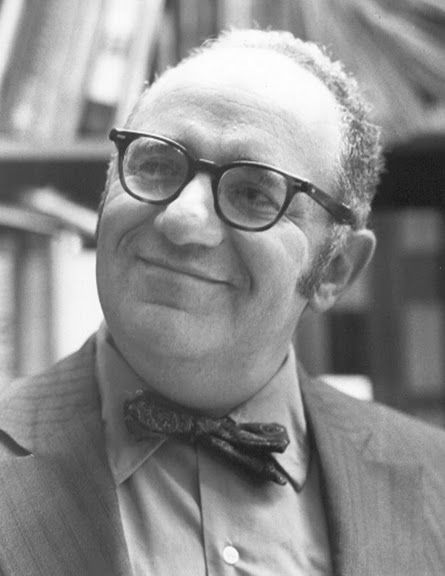
Murray Rothbard had a hard time of it in economics, for most of his life. He inspired a whole generation of people who love liberty all the same. Who was the man who wrote about 25 books, whom Javier Milei has named in 43 speeches of his presidency, and who got so many of his forecasts wrong?
By Raphael Bauer48 min read
On 1 April 1950 a census enumerator walked the corridors of 370 Central Park West in Manhattan and wrote down who lived there. In apartment 506 he found Arthur F. Burns, 46, born in Poland, an economics teacher, with his wife Helen and …
At 21 Ronald Coase asked why firms exist at all if prices organise an economy, and answered that using the market has a cost. The paper he published in 1937, at 26, lay largely unused for a generation and has since been cited more than 15,000 times. Set against its critics and against several hundred statistical tests, the question has held up better than the answer. The forecast often made in its name, that cheap communication would dissolve the firm, was never his.
By Raphael Bauer37 min read
On 10 October 1932 a 21-year-old lecturer in Dundee wrote to Ronald Fowler about the first lecture of a course he had just begun. “As it was a new approach (I think) to this subject, I was quite pleased with myself,” he …
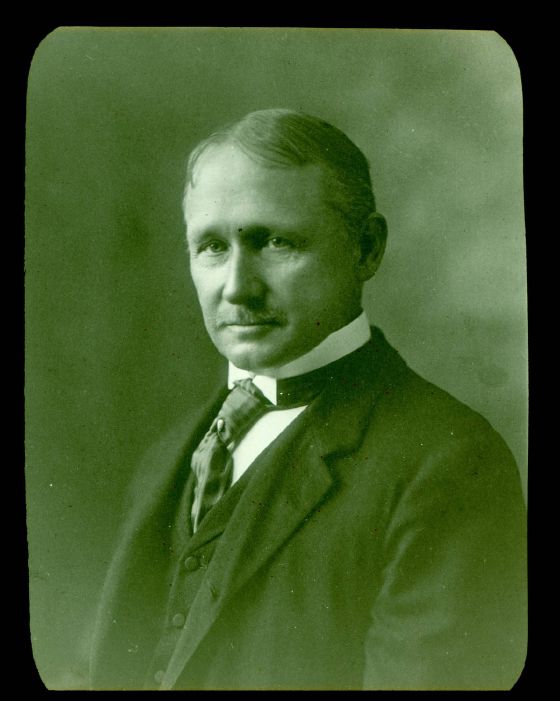
A rich Philadelphian's son promised workers that improving manual work by scientific method would raise wages and profits together. His famous anecdote, the story of a labourer he called Schmidt, did not happen that way, and under oath he said that no firm used his system in full. Yet his claim stands to this day: method beats habit, and pay can rise with output.
By Raphael Bauer46 min read
The best-known scene in the literature of management opens with a question: “Schmidt, are you a high-priced man?” A labourer at the Bethlehem steel works in Pennsylvania, paid $1.15 a day for carrying 92-pound bars of pig iron …
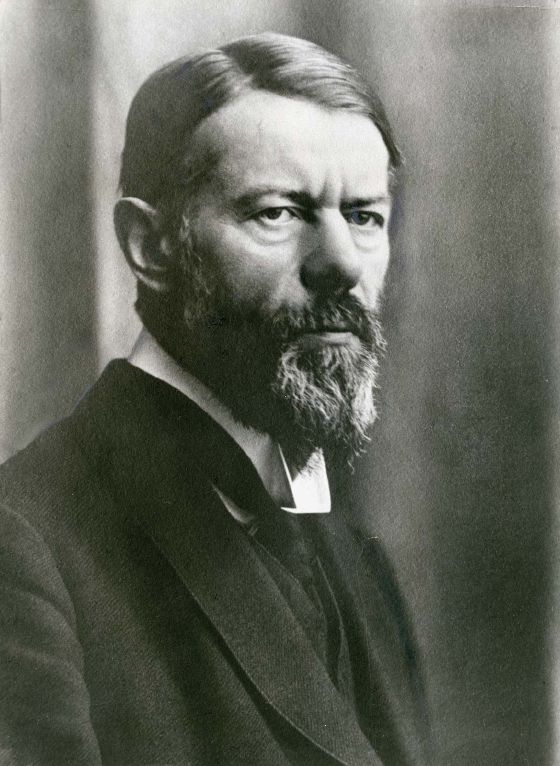
Max Weber is remembered for saying that Protestantism made capitalism. He called that thesis foolish in the essay itself, and one row of the school statistics the essay opens with adds up to 109 per cent. The tests of the past two decades find Protestants a little keener on work than Catholics, and no sign that they saved more or that their cities grew faster. What he told three hundred Austrian officers in Vienna in June 1918 has lasted better: that when the state takes over the economy, the officials rule, not the workers. He thought the trained official unbeatable at running things, and feared him for it.
By Raphael Bauer48 min read
On 13 June 1918 a German professor stood up in Vienna before some three hundred officers of the Austro-Hungarian army and talked for an hour and a half about socialism. He had not taught a course for more than eighteen years and had …
A record 288,579 Germans emigrated in 2025, three quarters of them graduates, and the country is losing its best people: so runs the claim. Nearly half of that record went to a destination the statistical office lists as unknown, and its own notes say many of those people never left Germany. What remains is real and about half the size. By the standards of its neighbours and of its own past few Germans leave, and far more graduates from abroad live in Germany than German graduates live abroad. Two things survive the check: the net loss of citizens is the largest since 2008, and no statistic records who is leaving.
By Raphael Bauer45 min read
On 1 June 2026 the Federal Statistical Office published Germany’s migration figures for 2025. On its count more Germans left the country than came back, for the twenty-first year running, and the loss had grown from 81,000 to 97,000. …
Milton Friedman's son took a doctorate in physics and taught economics and law without a course for credit in either. In 1973 he wrote a plain-spoken case for a society without a state. In June the president of Argentina called his visit historic. His sums on medieval Iceland, the stateless society whose civil war he found no deadlier than American murder, hold as he did them in 1979, though the comparison printed in his book has aged. On climate change he says nobody knows whether the effects of warming will, on balance, be bad or good. His own guess is that they will be good.
By Raphael Bauer40 min read
Over the Labor Day weekend of 1969, St. Louis hosted two conventions at once. One was the World Science Fiction Convention. The other was the national convention of Young Americans for Freedom, the conservative youth group, which that …
In 2004 Germany's environment minister said the renewables programme cost a household about a euro a month, as much as a scoop of ice cream. Twenty-two years and about €320 billion of subsidy later, Germany has the second-highest household electricity price in the European Union and electricity that carries ten times as much carbon as France's. The build-out is real. The bargain was not, and the environment has little to show for it.
By Raphael Bauer30 min read
On 30 July 2004, two days before the reformed Renewable Energy Sources Act (the EEG) came into force, the federal environment minister, Jürgen Trittin, gave Germans a number to hold on to. Es bleibt dabei, his ministry quoted him, it …
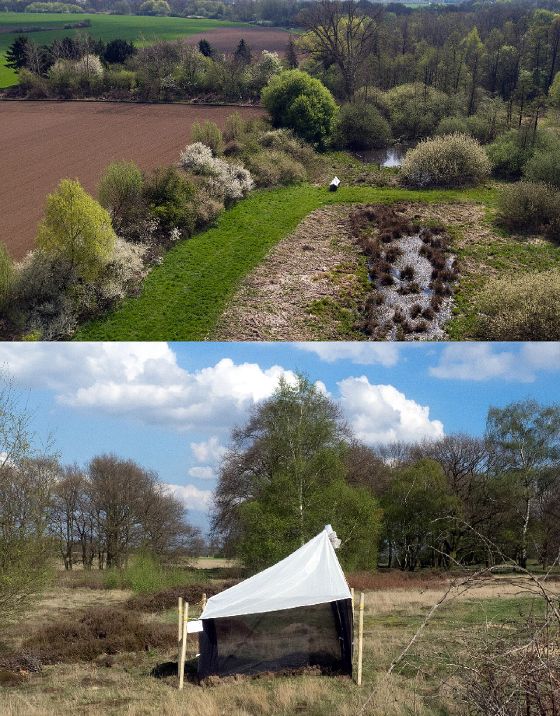
Germany has a word for the death of its insects, a law against it and a famous number: three-quarters gone in 27 years. The number is the weight of insects caught at 63 sites in protected areas, 57 of them in one federal state and 37 of them trapped in one year only. Where it was measured, the fall holds up. Nobody had measured the country as a whole when the number appeared in 2017, and nobody has since.
By Raphael Bauer37 min read
In October 2017 the Entomological Society Krefeld, on the Lower Rhine, and a group of ecologists from Nijmegen published what the society’s insect traps had caught over 27 years. The answer was less and less: by 2016 the weight of …
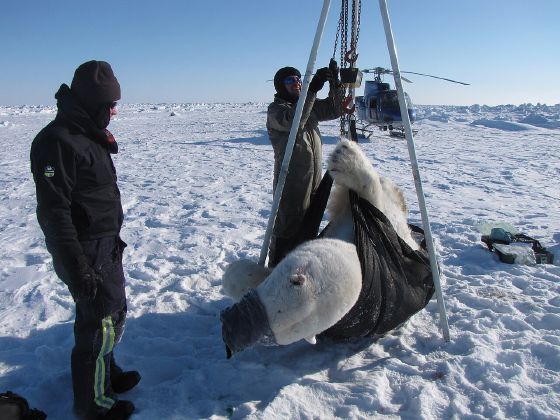
There are probably more polar bears alive today than in the 1960s. But the 1960s figure was a guess, any rise came from curbs on hunting rather than from the climate, and for nearly half the world's subpopulations there is no usable trend at all.
By Raphael Bauer22 min read
The polar bear has a public relations problem in both directions. For two decades it has been the face of the melting Arctic, thin and stranded on a shrinking floe. For almost as long there has been a counter-claim: polar bear numbers have …
Germany's governments promise business less bureaucracy. On 1 October Potsdam began taxing coffee cups, pizza boxes and forks. The statute is three pages long; the city's guide to applying it has eighteen sections, three other cities read the same tax differently, and Potsdam did not check how much of its rubbish is take-away packaging. The one study with a control group found the bins no lighter.
By Raphael Bauer36 min read
In Potsdam the length of a disposable fork is now a tax question. Since Thursday the city has charged 20 cents on every piece or set of disposable cutlery handed out with food. Section 2 of its official guide says the charge applies to …
Iran's uprising in 2025/2026 began over the price of a dollar on 28 December and was shot to pieces on the nights of 8 and 9 January, behind a switched-off internet. Nobody serious disputes that thousands died. The government says 3,117. A rights group lists about 7,000 confirmed dead. A broadcaster in exile says 36,500, and an American president said 32,000 eight days before going to war. Only one of those numbers comes with a list that gives places and dates. We counted it.
By Raphael Bauer33 min read
On Sunday, 28 December 2025, the traders who sell mobile phones in two shopping centres in central Tehran went on strike. That day the rial fell to 1.42 million to the dollar; when the nuclear deal was signed in 2015 it had been 32,000. A …