On Sunday, 28 December 2025, the traders who sell mobile phones in two shopping centres in central Tehran went on strike1. That day the rial fell to 1.42 million to the dollar2; when the nuclear deal was signed in 2015 it had been 32,000. A trader who buys stock in dollars and sells it in rials cannot set a price in a currency like that, so the traders stopped selling. On Monday shopkeepers in and around the Grand Bazaar shut too. On Tuesday students rallied at Sharif, Amirkabir and other universities3. They were not chanting about exchange rates.
Within eleven days the protests had reached all 31 provinces4. On the twelfth day the government turned off the internet. What happened over the next two nights has since been cited in the case for a war, and the argument over how many people died has not ended.
What the bazaar was looking at
The state of Iran's economy when the shops closed, and how far the protests spread in the fifty days that followed.
Eleven days of warning
The first eleven days followed a pattern Iran knows well. Shopkeepers struck, students joined, and slogans moved from prices to the man at the top. In HRANA’s translation: “Death to the dictator,” and “Neither Gaza nor Lebanon, my life for Iran.”5 The governor of the central bank resigned and was replaced6, and the government declared a public holiday across much of the country, citing the cold7. Police used tear gas, then shotguns, then in some towns live rounds8. The rights group HRANA, in a list of the dead published in February, dates 79 deaths to the eleven days before 8 January9. Each of those deaths was an outrage; together they were not yet a massacre.
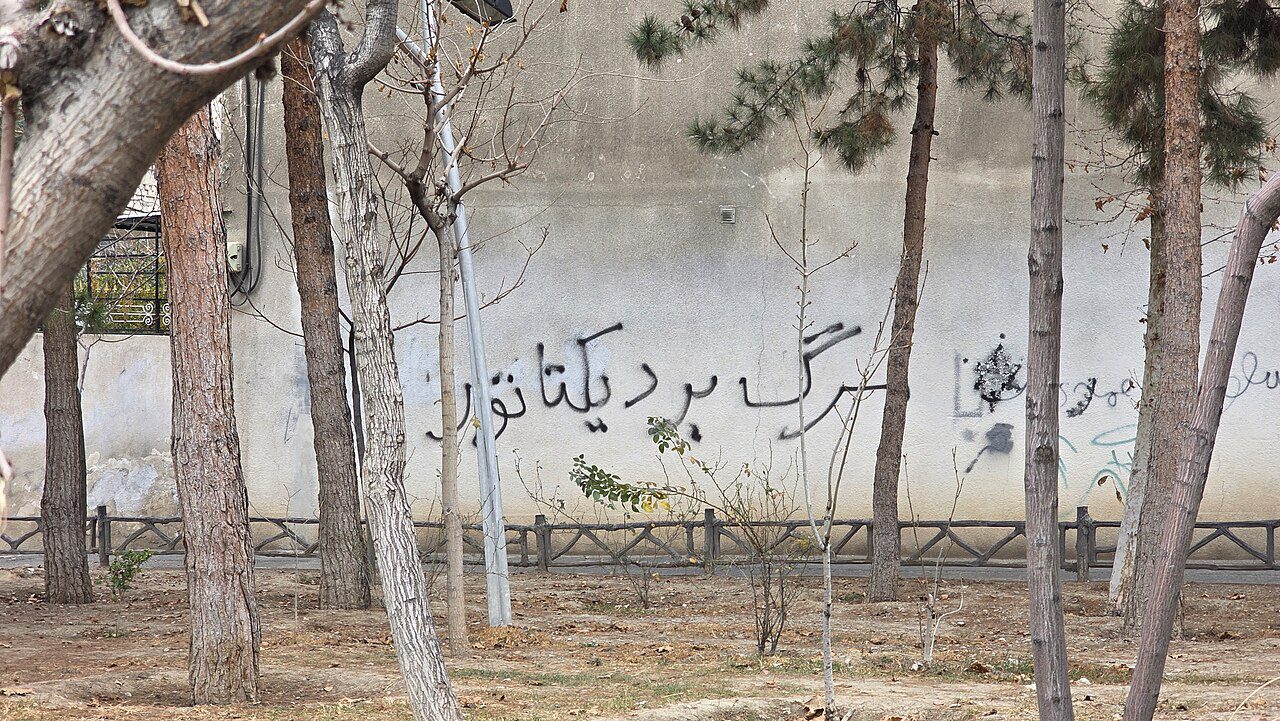
Then the stakes rose. On 2 January Donald Trump wrote that if Iran “violently kills peaceful protesters,” the United States “will come to their rescue,” and added: “We are locked and loaded and ready to go.”10 The next day the Supreme Leader, Ayatollah Ali Khamenei, said that “rioters must be put in their place.”11 On 6 January Reza Pahlavi, the exiled son of the last Shah, called on Iranians to chant at 8 pm on Thursday 8 and Friday 9 January, in the streets or from their homes12. By 7 January, according to HRANA, there had been protests at 348 sites in 111 cities4. The crowds on Thursday night were the largest the uprising had yet seen13, and in Tehran some were chanting for the return of the Shah’s son14.
Thursday night
On the afternoon of 8 January Iranian networks began to drop off the internet, and late that evening traffic fell to almost nothing15. The monitoring service NetBlocks reported that Iran was “in the midst of a nationwide internet blackout”16; mobile phones and even landlines were cut as well17. Iran had shut down the internet in earlier crises, but never so completely18. For almost three weeks smuggled Starlink terminals were one of the last ways to get pictures out of the country, and the authorities were jamming those too19.
Some of the most important pictures came from morgues. From 10 January videos showed body bags laid out in rows in an outbuilding of the state forensic centre at Kahrizak, south of Tehran, with families walking between them looking for their relatives209. Human Rights Watch counted at least 400 bodies visible in the videos from that one site, and said the true number was higher because bodies were piled on top of each other21. Amnesty International verified videos of security forces in the streets and on rooftops, including those of mosques and police stations, firing rifles and shotguns at protesters, “frequently targeting their heads and torsos.”20 Doctors described gunshot wounds to the eyes22. HRANA collected repeated reports of “final shots” fired at wounded protesters, some of them still attached to hospital equipment. By HRANA’s account officials first denied this and then in effect confirmed it, while blaming “terrorists”: in February the head of Tehran’s main cemetery said that more than 70% of the bodies brought there had been shot in this way9.
The clearest picture of when people died comes from HRANA. In February the group, a network of Iranian activists that has worked from the United States since a 2010 raid on its members inside Iran23, published The Crimson Winter, a 1,334-page report9. Its appendix lists every death the group considers confirmed, with a name where one is known, the city, the date and the first source. We extracted the appendix and counted it. The list covers 7,203 deaths (the report’s headline figure is 7,007; the appendix runs a little longer, and marks 1,045 of its deaths as only preliminarily confirmed). Of the 7,203, 4,543 are listed one by one, nearly all by name. The other 2,660 are in group entries that give a number and a place, such as one for 29 protesters in Azadshahr, but no names. Not all were protesters: HRANA’s own breakdown of its 7,007 has 207 members of the security forces and other government personnel, and 76 bystanders. Most deaths on the list have no date. Of the 2,683 that do, 2,512 fall on 8 and 9 January.
Two nights
Deaths on HRANA's list of the dead, by date of death. Of the 2,683 deaths with a recorded date, 93.6% fell on 8 and 9 January.
Show the numbers
| Date of death | Deaths on the list |
|---|---|
| 28 December | 0 |
| 29 December | 0 |
| 30 December | 0 |
| 31 December | 3 |
| 1 January | 10 |
| 2 January | 7 |
| 3 January | 13 |
| 4 January | 4 |
| 5 January | 4 |
| 6 January | 4 |
| 7 January | 34 |
| 8 January | 1,506 |
| 9 January | 1,006 |
| 10 January | 40 |
| 11 January | 13 |
| 12 January | 5 |
| 13 January | 6 |
| 14 January | 3 |
| 15 January | 2 |
| 16 January | 0 |
| 17 January | 1 |
| 18 January | 0 |
| 19 January | 1 |
| 20 January | 1 |
| 21 January | 0 |
| 22 January – 15 February | 20 |
| No date recorded | 4,520 |
| All deaths on the list | 7,203 |
There may be a bias in that chart. Deaths are easier to date when a family, a hospital or a local news channel reported them, so the dated deaths are not a random sample of all 7,203. But the other sources show the same shape. A second list, published in September by Iran Human Rights, a group based in Oslo, has 4,219 dead and dates most of them; it puts 3,356, or 91% of those dated, on the same two days24. Iran International, the London broadcaster behind the highest sourced total, says its figure is for 8 and 9 January25, and Time’s sources say the same26. Al Jazeera, reporting from Tehran, writes that the killings were “mostly carried out on January 8 and 9”, and that the government disputes who did the killing, not when27. This part of the story is not in dispute: whatever the total, almost all the deaths came within about forty-eight hours.
After the shooting
The rest of January was the aftermath. On 13 January an Iranian official told Reuters that about 2,000 people had been killed28. The same day Trump wrote to “Iranian Patriots”: “KEEP PROTESTING”, and “HELP IS ON ITS WAY.”29 The next day he said he had been told the killing had stopped30. By 15 January a night curfew was reported and security forces were patrolling towns across the country; the Institute for the Study of War, an American think-tank, recorded no protests at all on the 14th or the 15th31. On 17 January Khamenei said, in Al Jazeera’s translation, that people “linked to Israel and US caused massive damages and killed several thousands.”32 It was the first time the country’s highest authority had spoken of deaths in the thousands. On 21 January the state’s Martyrs Foundation put the toll at 3,11733, of whom it said 2,427 were civilians and security forces. The remaining 690 are, by implication, the “terrorists.” That same day the prosecutor-general said, as the New York Times rendered it, that “the sedition is over now”34. On 27 January the internet began to come back, as a list of approved websites35.
HRANA counts 53,777 arrests in the first fifty days36. The state has since begun hanging people for things it says they did during the protests. Iran Human Rights counted 29 protesters executed between 19 March and 23 August37; a fact-finding mission of the UN Human Rights Council says five of them were hanged in public38. On 30 September the judiciary announced two more executions, of men arrested in Mashhad39.
The case for even higher death tolls
Put at its strongest, the claim goes like this:
More than 30,000 people were killed on 8 and 9 January. The Islamic Republic’s figure of 3,117 is a lie. The rights groups’ lists, of 4,000 to 7,000 dead, are honest but hopelessly incomplete, because the blackout made counting impossible.
The claim has some evidence behind it. On 25 January Iran International25, a privately owned Persian-language broadcaster in London, reported that more than 36,500 people had been killed on the two nights. It said the figure stood in a report by the intelligence organisation of the Revolutionary Guards, as described to it by two sources on the Supreme National Security Council. The article also described an interior ministry tally of more than 30,000 and a report to a parliamentary committee of at least 27,500. The same day Time26 wrote that “as many as 30,000 people could have been killed in the streets of Iran on Jan. 8 and 9 alone,” citing two senior officials of the health ministry. They said the state had run out of body bags and was using semi-trailers instead of ambulances. Time also cited a tally of 30,304 deaths recorded by hospitals, compiled by Amir Parasta, a German-Iranian eye surgeon. Two days later a network of more than 80 medical professionals in 12 provinces told The Guardian that, by their estimate, fewer than one death in ten was being officially registered40. The UN’s special rapporteur on Iran, Mai Sato, said at least 5,000 civilians had been killed, and that doctors had told her it could be 20,000 or more41.
And on 20 February, eight days before American and Israeli aircraft struck Iran, Donald Trump said 32,000 people had been killed42. He did not give a source. On the day of the attack he said Iran had “just recently killed tens of thousands of its own citizens on the street as they protested”43. By June his figure was at least 42,00044.
Ten figures for one crackdown
Deaths in the crackdown as stated by each source, sorted by size (HRANA by its confirmed count). The three figures that rest on a published list of the dead, the government's, Iran Human Rights' and HRANA's, carry the contrasting mark; the others rest on documents, officials or networks that have not been made public.
Show the numbers
| Source, date | Figure | What it rests on |
|---|---|---|
| Iranian government, 21 January | 3,117 | names of 3,038 published, with no place, date or cause |
| Iran Human Rights, 17 September | 4,219 | a published list; a minimum, the group says |
| UN rapporteur Mai Sato, 20 January | 5,000 | “at least”; doctors told her 20,000 or more |
| HRANA, 23 February | 7,007 + 11,744 under review | a published list; the extension is still under review |
| Iran International, 13 January | 12,000 | its estimate, from unnamed officials and medics |
| Amir Parasta, Sunday Times, 18 January | 16,500 | hospital staff’s tally; records not published |
| Parliament committee, 21 January | 27,500 | report seen by Iran International only |
| Amir Parasta, Time, 25 January | 30,304 | hospital tally; records not published |
| Donald Trump, 20 February | 32,000 | no source given; 42,000 by June |
| Iran International, 25 January | 36,500 | Guards intelligence report, as described by officials |
The chart already shows the problem. The three figures that come with lists of names are among the four smallest, and every figure from 12,000 up rests on something the public has not been shown.
The floor: the state’s own list
Start at the bottom, with the government. The 3,117 is unlikely to be a count of every death, and the state’s own records are the first evidence. On 1 February the president’s office published the names of 2,986 people with their fathers’ first names and the last six digits of their national ID numbers27; two days later it replaced the file with one of 3,038 names45. The rest, it said, had not yet been identified. The list gives no place of death, no date and no cause, and does not say who was a protester and who was a policeman. HRANA noted spelling errors, duplicate entries and rows with no identity details in the first version46. Iran Human Rights compared the second with the state’s other records and found at least 27 people missing whom local governors’ offices had listed as dead, and 20 more whose deaths state media had reported24. People the state itself had named can hardly be the ones it calls unidentified. Iran Human Rights’ suspicion has a history: in 2024 it recorded 503 executions for drug offences, of which official sources announced 1547.
When President Trump said 32,000, Foreign Minister Abbas Araghchi wrote that Iran had published “a comprehensive list of all 3117 victims”, about 200 of them officers, and added: “If anyone disputes accuracy of our data, please share any evidence.”48 The list has 3,038 names, not 3,117, and none of the details anyone would need to dispute it.
HRANA’s appendix shows what the group did with the government’s list. Of the 4,543 people it lists one by one, 1,265 have the president’s office as their first source, and almost none of those have a city or date9. HRANA did not ignore the government’s names; it took them into its own list. Its total, the government’s names included, is more than twice the government’s.
The floor keeps rising
The best defence of the high numbers is that the low ones change over time, as HRANA’s own history shows.
The count after the shooting stopped
HRANA's running total at each update. Nearly all of the killing was over by 10 January; the confirmed count rose thirteenfold after that, as reports came in.
Show the numbers
| HRANA update | Confirmed deaths | Under review |
|---|---|---|
| 11 January | 544 | 579 |
| 14 January | 2,615 | 882 |
| 21 January | 4,902 | 9,387 |
| 30 January | 6,563 | 17,091 |
| 1 February | 6,842 | 11,280 |
| 9 February | 6,964 | 11,730 |
| 15 February | 7,007 | 11,744 |
On 11 January, two days after the second night, HRANA could confirm 544 deaths. By 30 January it could confirm 6,563, with another 17,091 reports not yet checked. This is the strongest argument against treating any count from January as final: nobody could see what had happened, and the careful count took weeks to catch up. HRANA says so itself. Its report calls 7,007 “the minimum number of confirmed cases” and adds: “The actual death toll may be significantly higher than the numbers documented by this organization.”9
The chart also shows something HRANA has not explained. Between 30 January and 1 February the pile of unchecked reports shrank from 17,091 to 11,280 while the confirmed count rose by only 279, so at least 5,500 reports left the pile without becoming confirmed deaths. The drop came on the day the government’s list appeared46, which suggests duplicates being struck out. Whatever the reason, a group trying to inflate its numbers would hardly publish a falling one. HRANA is not a neutral party: its parent organisation says it has taken money since 2011 from the National Endowment for Democracy, an American foundation financed by Congress49, and HRANA declined to tell Al Jazeera who its members and funders are23. But its record can be checked. By February 2023 it had counted 530 protesters killed in the “Woman, Life, Freedom” protests of 202250. The state admitted 20051; the UN’s fact-finding mission later called 551 a credible figure52.
If every one of the 11,744 cases still under review in February turned out to be a real, separate death, HRANA’s total would be 18,751. That is the highest figure the most careful count now supports, and we have found no newer total from HRANA. It is an upper limit rather than an estimate: the most the present backlog could confirm.
The ceiling: what the big numbers rest on
Iran International’s 36,500 comes from a Revolutionary Guards intelligence report that, by the broadcaster’s own account, was described to it by sources on the Supreme National Security Council. It says it has reviewed other classified documents; it has published none of them, and we have found no other outlet that has seen them. Its earlier figure of 12,000, on 13 January, was assembled in two days from what it called sources in the security council, the presidential office and the Guards, plus doctors and eyewitnesses53. None of the underlying numbers were released. Critics describe the channel as a supporter of Reza Pahlavi54, who had called for the protests of those two nights. That does not prove the number wrong, but it is a reason not to repeat it as fact until the documents are published.
Amir Parasta’s figures rose quickly. On 18 January The Sunday Times reported that his network of doctors had counted at least 16,500 dead55. A week later he gave Time 30,304. An 11-page report attributed to him, compiled by eight people from contacts in hospitals with data up to 23 January, turns that tally into a “conservative, lower bound” of 33,130 by adding an allowance for deaths the hospitals missed54. He told Sky News that every figure had been verified by at least two people in each hospital; Sky wrote that it had not seen the clinical records and could not verify the number56. The law professor Maryam Jamshidi, who analysed the report, found little in it about how the figures were cross-checked. A critic writing in Al Jazeera notes that Parasta makes no secret of his affiliation with Pahlavi57.
A number that rises is not therefore false. HRANA’s own confirmed count nearly doubled between 14 and 21 January, because the reports were only then arriving. The trouble with Parasta’s figures is that nobody outside his network has seen the records behind them.
Time’s officials are anonymous, and Time wrote that it had “been unable to independently verify these figures.”26 The Guardian’s medics, by the paper’s own account, were hesitant to give a figure, though they thought the toll could exceed 30,00040. Their main point was a different one: that all public figures were far too low.
The high figures can also be tested from outside, and the result is mixed. Iran International’s 25 January article gave estimates for six cities or groups of neighbouring cities, attributed to medical sources: more than 2,500 in Rasht, at least 1,800 in Mashhad, and so on. It gave none for Tehran. HRANA’s list gives a city for most of its entries, so the two can be set side by side.
Six places, two counts
Deaths per city on HRANA's list, group entries included, against the figures Iran International attributed to medical sources on 25 January, with the ratio between them.
Show the numbers
| City | HRANA, listed | Iran International, estimated | Ratio |
|---|---|---|---|
| Rasht | 198 | more than 2,500 | 12.6 |
| Karaj, Shahriar, Andisheh | 369 | at least 3,000 | 8.1 |
| Gorgan | 89 | 400 | 4.5 |
| Mashhad | 453 | at least 1,800 | 4.0 |
| Isfahan, Najafabad, Khorasgan | 514 | more than 2,000 | 3.9 |
| Kermanshah | 357 | 700 | 2.0 |
| Six places | 1,980 | 10,400 | 5.3 |
Across the six places, Iran International’s figures are 5.3 times HRANA’s. Multiply the 7,203 deaths on HRANA’s list by that ratio and the result is about 38,000. If the 1,546 deaths on the list that have no city are shared out among the cities in proportion, the ratio falls to 4.1 and the result to about 30,000. Either way, Iran International’s national figure fits its own city figures. That sounds like confirmation, but both sets of numbers come from the same outlet’s unpublished sources, so all it shows is that the outlet’s figures agree with one another. The ratio is also unstable: the two counts differ by a factor of two in Kermanshah and by nearly thirteen in Rasht. If HRANA’s coverage were simply thinner everywhere, the ratio would be similar in every city. A spread from 2 to 13 means that at least one of the two sources is much less reliable in some places than in others.
Two other documents bear on the question. Iran Human Rights’ list, compiled partly from the same sources as HRANA’s, has 258 dead in the whole of Gilan province, whose capital is Rasht, and 441 in Khorasan Razavi, whose capital is Mashhad24: close to HRANA’s numbers and far from Iran International’s. And the report attributed to Parasta has its own table of “validated” deaths by city, which Jamshidi reproduces54. It gives 986 for Rasht, where Iran International has more than 2,500, and 1,850 for Kermanshah, where Iran International has 700. It also gives 650 for Tabriz, 593 for Zahedan and 350 for Urmia. Iran Human Rights’ list has seven dead in the whole of East Azerbaijan, eight in Sistan and Baluchistan and four in West Azerbaijan, the provinces of which those cities are the capitals24; HRANA’s has four, five and three9. Both lists are minimums, and Iran Human Rights warns that its coverage is uneven. Even so, the two main sources for the high numbers contradict each other city by city, and one of them reports hundreds of dead where two lists of names find fewer than ten.
What seven years did not settle
Iran has had this argument before, and it was never settled.
In November 2019 the government raised petrol prices overnight, the country rose, and the internet went off for a week58. Amnesty International documented at least 304 dead, a count it later raised to 32159. Reuters, citing three interior ministry officials, reported about 1,50060. The interior minister later implied a figure of 200 to 22561. Almost seven years on, the gap between the documented dead and the figure from Reuters’ sources has not been closed. Then, too, the figure from anonymous officials was about five times the documented toll.
The large protest waves since 2009, on one scale
People killed in Iran's major protest waves. Each bar runs to the official figure, its extension to the highest figure in serious circulation. Official figures include members of the security forces; the rights groups' counts mostly do not.
Show the numbers
| Protest wave | Official figure | Highest figure | Note |
|---|---|---|---|
| 2009, after the disputed election | 36 | 72 | a Guards commander 36, opposition 72 |
| 2017–18, prices and corruption | 25 | 25 | the judiciary’s count, security forces included |
| 2019, “Bloody November” fuel-price protests | 225 | 1,500 | minister implied up to 225; Amnesty 321; Reuters 1,500 |
| 2022, “Woman, Life, Freedom” | 200 | 551 | interior ministry 200; Iran Human Rights 551 |
| 2025–26 | 3,117 | 36,500 | government 3,117; Iran International 36,500 |
The chart settles one thing that should not get lost in the argument over the total. Take the lowest number anyone now offers for January 2026, the government’s own 3,117. It is still twice the highest estimate for 2019 and more than five times the documented toll of 2022. It is larger than all four earlier waves combined, even when each is counted at its highest estimate. Whatever the true figure, this was the bloodiest crackdown on street protests in the history of the Islamic Republic, and nobody needs the high numbers to say so; the previous record, by Reuters’ account, was 201960. The UN’s fact-finding mission, which has not settled on a number of its own, says the deaths were at least five and a half times those of 202238.
The ledger
Where the claim holds up. The killing was concentrated in two nights: HRANA’s dates, Iran Human Rights’ dates, Iran International’s documents and Time’s officials all agree on that. The dead number in the thousands, as Ali Khamenei himself said. The government’s 3,117 is not a full count: its list gives no place, date or cause, and it leaves out people whom the state’s own local offices and media had named as dead. The careful counts are too low as well. Their authors say so, and families were pressed to keep quiet: the UN’s fact-finding mission heard of bodies released only after relatives had signed statements falsely saying the dead had belonged to the security forces38. The mission, which has seen lists that do not match the government’s, reported in September that it had “strong grounds to believe” the true toll was significantly higher than the official one. On this evidence the true number is very likely well above 7,000.
Where it does not. “More than 30,000” is not established. Every version of it rests on documents, officials or medical networks that nobody outside can examine, and critics link both main sources to the Shah’s exiled son. Those two sources contradict each other city by city, and the outside test shows only that Iran International’s figures agree with one another, not that they are right. The most careful count now reaches 18,751 if every open case is confirmed, and it cannot be assumed that all of them will be. Presenting such figures as fact, as an American president did with 32,000 while making the case for a war, goes beyond the evidence.
What the evidence supports is less satisfying than either side’s version. HRANA counts at least 7,007 dead, about three in five of them by name. As many as 18,751 are within reach of confirmation. The higher numbers may turn out to be right, but they are not yet known to be.
Who could settle it
One institution knows the answer, or could find it quickly: the Iranian state. Its forensic service processed the bodies at Kahrizak, its hospitals recorded the gunshot wounds, its cemeteries dug the graves, and its civil registry was used to check the names on the president’s list24. In January the UN Human Rights Council ordered its fact-finding mission to investigate62. The mission, which Iran has never let into the country, reported in September that it was “not yet in a position to determine the number of persons killed”, because the lists it had seen did not match and the government’s gave no places or ages38. Iran announced a fact-finding body of its own in January, without saying who sits on it or when it will report27; we have found no sign that it has done either since. Nor has the war opened the files. The internet went off again on 28 February63, when the American and Israeli strikes began and Ali Khamenei was killed64, and was only partly restored at the end of May65. His son succeeded him, and the state that holds the records is the same one.
Most of the uncertainty in this article comes from the same place. The state switched off the network on the night the mass killing began. In some cases, the UN mission found, it made families pay before releasing the bodies, and it refused to issue death certificates38. Then it published a list of names with no place, date or cause next to them and asked anyone who doubted it to produce the evidence. The evidence exists, and the Iranian state is the one keeping it hidden.
Sources
-
Iran International, “Tehran shopkeepers extend strikes into second day”, 29 December 2025. ↩︎
-
Associated Press, “Protests erupt in Iran over currency’s plunge to record low”, via CNN, 29 December 2025. ↩︎
-
Agence France-Presse, “Students in Iran stage protests over ‘deteriorating’ living standards”, via Deccan Herald, 30 December 2025. ↩︎
-
HRANA, “From the Streets to Universities: Iran’s Protests Enter Their Eleventh Day”, 7 January 2026. ↩︎ ↩︎
-
HRANA, “Report on the Second Day of Protests; Expansion of Bazaar Gatherings and Security Forces’ Confrontation”, 30 December 2025. ↩︎
-
Associated Press, “Iran appoints new central bank governor after mass protests as currency hits record low”, via CNN, 31 December 2025. ↩︎
-
Jon Gambrell, “At least 7 reportedly killed as Iran protests widen”, Associated Press, 1 January 2026. ↩︎
-
HRANA, “Detailed Report on the Ninth Day of Protests: More Than 1,200 Protesters Arrested”, 5 January 2026. ↩︎
-
HRANA, The Crimson Winter, English version, February 2026. 1,334 pp. The counts of its Appendix A are our own, from the file as revised on 27 February; the passages on the morgue videos and the final shots are at pp. 46–50, the breakdown of the dead and the two quotations at pp. 58–59. ↩︎ ↩︎ ↩︎ ↩︎ ↩︎ ↩︎ ↩︎
-
Donald J. Trump, post on Truth Social, 2 January 2026, as archived by Trump’s Truth. ↩︎
-
Khamenei.ir, “We stand firmly against the enemy and bring it to its knees with people’s support”, 3 January 2026. The English is his office’s own. ↩︎
-
Haley Ott, “As Iran’s exiled crown prince calls for Iranians to seize protest momentum, could it be a tipping point?”, CBS News, 8 January 2026. ↩︎
-
Gavin Blackburn, “Iranian protests escalate as authorities cut internet and crackdown intensifies”, Euronews, 8 January 2026. ↩︎
-
Jon Gambrell, “In Iran, no internet and surging protests urged on by an exiled prince”, Associated Press via Global News, 8 January 2026. ↩︎
-
David Belson, “What we know about Iran’s Internet shutdown”, Cloudflare Blog, 13 January 2026. ↩︎
-
NetBlocks, post on Mastodon, 8 January 2026, 17:25 UTC. ↩︎
-
IODA, Kentik, Miaan Group and ASL19, technical analysis of the January 2026 shutdown, published by Filterwatch, 14 January 2026. ↩︎
-
Doug Madory, “From Stealth Blackout to Whitelisting: Inside the Iranian Shutdown”, Kentik Blog, 21 January 2026. ↩︎
-
Reha Kansara and Ghoncheh Habibiazad, “Starlink reportedly made free in Iran - but protesters are taking huge risks by using it”, BBC News, 14 January 2026. ↩︎
-
Amnesty International, “What happened at the protests in Iran?”, 26 January 2026. ↩︎ ↩︎
-
Human Rights Watch, “Iran: Growing Evidence of Countrywide Massacres”, 16 January 2026. ↩︎
-
Deepa Parent and William Christou, “Hundreds of gunshot eye injuries found in one Iranian hospital amid brutal crackdown on protests”, The Guardian, 13 January 2026. ↩︎
-
Sarah Shamim, “What is HRANA, the US-based group behind Iran’s death toll figures?”, Al Jazeera, 15 January 2026. ↩︎ ↩︎
-
Iran Human Rights, “The January 2026 Protest Killings in Iran”, 17 September 2026. 165 pp.; the figures are at pp. 10–12, the government’s lists at pp. 20–22. ↩︎ ↩︎ ↩︎ ↩︎ ↩︎
-
Iran International’s Editorial Board, “Over 36,500 killed in Iran’s deadliest massacre, documents reveal”, 25 January 2026. ↩︎ ↩︎
-
Kay Armin Serjoie, Roxana Saberi and Fatemeh Jamalpour, “Iran Protest Death Toll Could Top 30,000, According to Local Health Officials”, Time, 25 January 2026. ↩︎ ↩︎ ↩︎
-
Maziar Motamedi, “Questions after Iran’s government releases victim list in protest killings”, Al Jazeera, 5 February 2026. ↩︎ ↩︎ ↩︎
-
Reuters, “About 2,000 killed in Iran protests, official says”, via Al-Monitor, 13 January 2026. ↩︎
-
Donald J. Trump, post on Truth Social, 13 January 2026, as archived by Trump’s Truth. ↩︎
-
Michelle L. Price and Farnoush Amiri, “Trump claims killing of Iran protesters ‘has stopped’ even as Tehran signals executions ahead”, Associated Press via WIS-TV, 14 January 2026. ↩︎
-
Critical Threats Project and Institute for the Study of War, “Iran Update, January 15, 2026”, 15 January 2026. ↩︎
-
Al Jazeera, “Iran’s Khamenei says US, Israel links behind ‘thousands killed’ in protests”, 17 January 2026. ↩︎
-
Al Jazeera, “At least 3,117 people killed during Iran protests, state media report”, 21 January 2026. ↩︎
-
Pranav Baskar, “Iran’s Protests Have Been Completely Squashed, Government Says”, The New York Times, 21 January 2026. ↩︎
-
Aisha Down, “Iran appears to ease internet blackout as cost of shutdown mounts”, The Guardian, 28 January 2026. ↩︎
-
HRANA, “The Crimson Winter: A 50 Day Record of Iran’s 2025–2026 Nationwide Protests”, 23 February 2026. ↩︎
-
Iran Human Rights, “Majid Adineh: 29th Protester Executed in Connection with the January Protests”, 23 August 2026. ↩︎
-
Independent International Fact-Finding Mission on the Islamic Republic of Iran, report to the UN Human Rights Council, A/HRC/63/61, advance edited version, 21 September 2026. Paras 23, 31, 50 and 58. ↩︎ ↩︎ ↩︎ ↩︎ ↩︎
-
HRANA, “January 2026 Protests: Ali Hemmati and Majid Nikandish Executed”, 30 September 2026. ↩︎
-
Tess McClure and Deepa Parent, “Disappeared bodies, mass burials and ‘30,000 dead’: what is the truth of Iran’s death toll?”, The Guardian, 27 January 2026. ↩︎ ↩︎
-
Nassim Khadem, “UN expert says Iran’s death toll is rising and there could be investigations into ‘crimes against humanity’”, ABC News (Australia), 20 January 2026. ↩︎
-
Kerry Breen, “Trump says 32,000 people were killed in Iran’s crackdown on protesters”, CBS News, 20 February 2026. ↩︎
-
Associated Press, “Read Trump’s full statement on Iran attacks”, via PBS News, 28 February 2026. ↩︎
-
Iran International, “Trump says at least 42,000 protesters were killed in Iran”, 16 June 2026. ↩︎
-
Office of the President of Iran, announcement of the list of names, 1 February 2026, in Persian. The count of 3,038 names in the file that replaced the first is Iran Human Rights’ (p. 20 of its report) and the UN mission’s (para. 31). ↩︎
-
HRANA, “Day Thirty-Six of the Protests; Government Releases List of Names and State TV Insults Those Killed”, 1 February 2026. ↩︎ ↩︎
-
Iran Human Rights and ECPM, “Annual Report on the Death Penalty in Iran 2024”, 20 February 2025. ↩︎
-
Human Rights Activists in Iran, introduction to the organisation, section 2.7, “Financial Resources”, retrieved 2 October 2026. ↩︎
-
HRANA, “Iran Nationwide Protests after 157 Days: a Preliminary Summary of the Mass Releases”, 21 February 2023. ↩︎
-
Reuters, “Iran state body reports 200 dead in protests, Raisi hails ‘freedoms’”, 3 December 2022. ↩︎
-
Independent International Fact-Finding Mission on the Islamic Republic of Iran, report to the UN Human Rights Council, A/HRC/55/67, 2 February 2024, para. 22. ↩︎
-
Iran International’s Editorial Board, “At least 12,000 killed in Iran crackdown during internet blackout”, 13 January 2026. ↩︎
-
Maryam Jamshidi, “Where Did the 40,000 Iran Protests Death Toll Number Come From?”, Zeteo, 3 June 2026. The table of city figures from the report attributed to Parasta is reproduced there as an image. ↩︎ ↩︎ ↩︎
-
Christina Lamb, “Iran report says 16,500 dead in ‘genocide under digital darkness’”, The Sunday Times, 18 January 2026. ↩︎
-
Alicja Hagopian, “What do we know about the number of people killed in Iran protests?”, Sky News, 30 January 2026. ↩︎
-
Kaveh Rostamkhani, “Appropriating the death count: Manufacturing consent for an attack on Iran”, Al Jazeera, opinion, 31 January 2026. ↩︎
-
NetBlocks, “Internet being restored in Iran after week-long shutdown”, 23 November 2019. ↩︎
-
Amnesty International, “Iran: Details of 321 deaths in crackdown on November 2019 protests”, index MDE 13/2308/2020, updated 29 July 2022. ↩︎
-
Reuters, “Special Report: Iran’s leader ordered crackdown on unrest - ‘Do whatever it takes to end it’”, 23 December 2019. ↩︎ ↩︎
-
Agence France-Presse, “Iran suggests up to 225 killed in November protests”, via Arab News, 31 May 2020. ↩︎
-
UN Human Rights Council, resolution S-39/1, adopted on 23 January 2026 by 25 votes to 7, with 14 abstentions. Para. 9. ↩︎
-
NetBlocks, post on Mastodon, 28 February 2026. ↩︎
-
Lorenzo Tondo, “Ali Khamenei’s son Mojtaba chosen as Iran’s new supreme leader”, The Guardian, 8 March 2026, which gives the date of his father’s death. ↩︎
-
NetBlocks, post on Mastodon, 26 May 2026. ↩︎


.jpg)
