The EU banned plastic drinking straws in 2021. Has the world become cleaner since? And are the alternatives perhaps worse than what was banned?
By Raphael Bauer37 min read
In May 2026 Capri-Sun stopped collecting signatures. The drinks maker from Eppelheim in Baden-Württemberg had turned to the public in August 2024 to win back a plastic straw for its pouches, which have come with a paper one since the …
Germany, France and, up to a point, the United States brought in quotas to raise the share of women in leadership. Did they work?
By Raphael Bauer30 min read
Four of the 40 companies in Germany’s DAX are run by a woman. Four of the 40 in France’s CAC 40. In the United States, 48 of the 500 in the S&P 500. Three countries, three different approaches to the question, and much the …
A record 288,579 Germans emigrated in 2025, three quarters of them graduates, and the country is losing its best people: so runs the claim. Nearly half of that record went to a destination the statistical office lists as unknown, and its own notes say many of those people never left Germany. What remains is real and about half the size. By the standards of its neighbours and of its own past few Germans leave, and far more graduates from abroad live in Germany than German graduates live abroad. Two things survive the check: the net loss of citizens is the largest since 2008, and no statistic records who is leaving.
By Raphael Bauer45 min read
On 1 June 2026 the Federal Statistical Office published Germany’s migration figures for 2025. On its count more Germans left the country than came back, for the twenty-first year running, and the loss had grown from 81,000 to 97,000. …
Germany has a word for the death of its insects, a law against it and a famous number: three-quarters gone in 27 years. The number is the weight of insects caught at 63 sites in protected areas, 57 of them in one federal state and 37 of them trapped in one year only. Where it was measured, the fall holds up. Nobody had measured the country as a whole when the number appeared in 2017, and nobody has since.
By Raphael Bauer37 min read
In October 2017 the Entomological Society Krefeld, on the Lower Rhine, and a group of ecologists from Nijmegen published what the society’s insect traps had caught over 27 years. The answer was less and less: by 2016 the weight of …
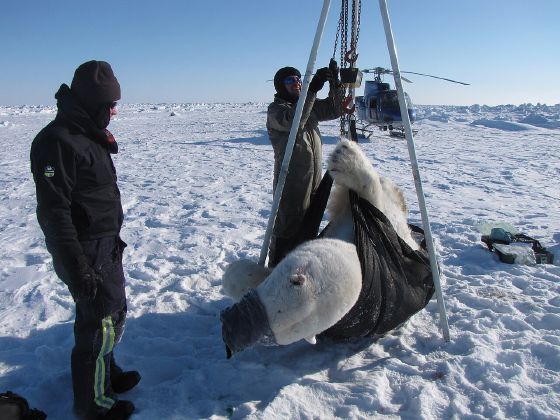
There are probably more polar bears alive today than in the 1960s. But the 1960s figure was a guess, any rise came from curbs on hunting rather than from the climate, and for nearly half the world's subpopulations there is no usable trend at all.
By Raphael Bauer22 min read
The polar bear has a public relations problem in both directions. For two decades it has been the face of the melting Arctic, thin and stranded on a shrinking floe. For almost as long there has been a counter-claim: polar bear numbers have …
Iran's uprising in 2025/2026 began over the price of a dollar on 28 December and was shot to pieces on the nights of 8 and 9 January, behind a switched-off internet. Nobody serious disputes that thousands died. The government says 3,117. A rights group lists about 7,000 confirmed dead. A broadcaster in exile says 36,500, and an American president said 32,000 eight days before going to war. Only one of those numbers comes with a list that gives places and dates. We counted it.
By Raphael Bauer33 min read
On Sunday, 28 December 2025, the traders who sell mobile phones in two shopping centres in central Tehran went on strike. That day the rial fell to 1.42 million to the dollar; when the nuclear deal was signed in 2015 it had been 32,000. A …
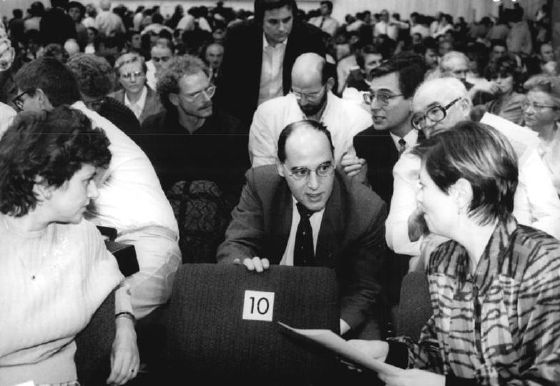
In December 1989 the SED voted down a motion to dissolve itself, and the commission that later audited its money recorded a deciding reason: its property. Every renaming since has left the legal person intact, so the claim that Die Linke is legally identical with the SED rests on the German state’s own findings. That identity makes the party answerable for a balance sheet, which it has already settled. It does not make it guilty of the deaths at the Wall, and the reason is German criminal law.
By Raphael Bauer37 min read
On 8 December 1989 the Sozialistische Einheitspartei Deutschlands (SED), the party that had ruled East Germany for forty years, opened an extraordinary congress in an East Berlin sports hall. At the end of the debate a delegate from a …
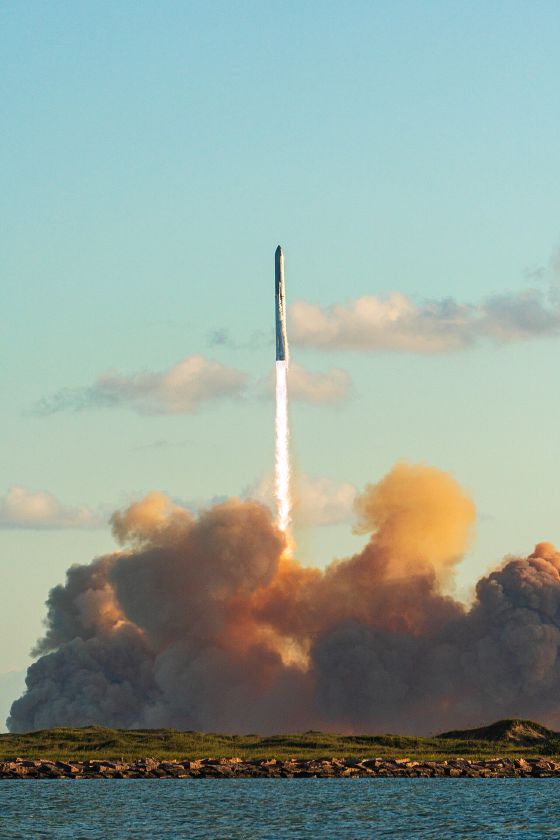
A Starship launch puts about as much carbon dioxide into the air as sixteen full transatlantic flights. Every launch the United States has so far authorised — three sites, 145 flights a year — comes to roughly six hours of world aviation. Methane and oxygen is the cleanest chemistry in rocketry, and the carbon it adds is negligible. The things that genuinely are wrong are all cheap to fix, and not one of them is the fuel.
By Raphael Bauer23 min read
Every so often somebody notices that a Starship is very large, that it is filled with fossil natural gas, and that SpaceX would like to fly one most weeks, and concludes that the biggest rocket ever built must be a climate problem in …