Germany, France and, up to a point, the United States brought in quotas to raise the share of women in leadership. Did they work?
By Raphael Bauer30 min read
Four of the 40 companies in Germany’s DAX are run by a woman. Four of the 40 in France’s CAC 40. In the United States, 48 of the 500 in the S&P 500. Three countries, three different approaches to the question, and much the same answer: about one company in ten.
Murray Rothbard had a hard time of it in economics, for most of his life. He inspired a whole generation of people who love liberty all the same. Who was the man who wrote about 25 books, whom Javier Milei has named in 43 speeches of his presidency, and who got so many of his forecasts wrong?
By Raphael Bauer48 min read
On 1 April 1950 a census enumerator walked the corridors of 370 Central Park West in Manhattan and wrote down who lived there. In apartment 506 he found Arthur F. Burns, 46, born in Poland, an economics teacher, with his wife Helen and …
At 21 Ronald Coase asked why firms exist at all if prices organise an economy, and answered that using the market has a cost. The paper he published in 1937, at 26, lay largely unused for a generation and has since been cited more than 15,000 times. Set against its critics and against several hundred statistical tests, the question has held up better than the answer. The forecast often made in its name, that cheap communication would dissolve the firm, was never his.
By Raphael Bauer37 min read
On 10 October 1932 a 21-year-old lecturer in Dundee wrote to Ronald Fowler about the first lecture of a course he had just begun. “As it was a new approach (I think) to this subject, I was quite pleased with myself,” he …
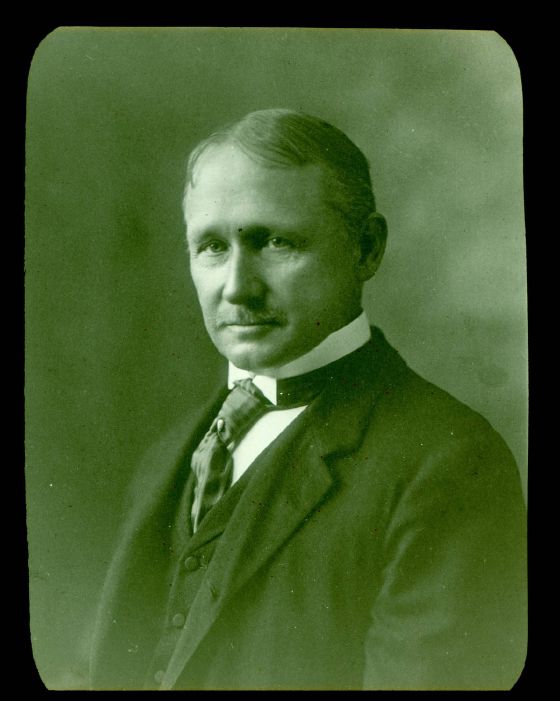
A rich Philadelphian's son promised workers that improving manual work by scientific method would raise wages and profits together. His famous anecdote, the story of a labourer he called Schmidt, did not happen that way, and under oath he said that no firm used his system in full. Yet his claim stands to this day: method beats habit, and pay can rise with output.
By Raphael Bauer46 min read
The best-known scene in the literature of management opens with a question: “Schmidt, are you a high-priced man?” A labourer at the Bethlehem steel works in Pennsylvania, paid $1.15 a day for carrying 92-pound bars of pig iron …