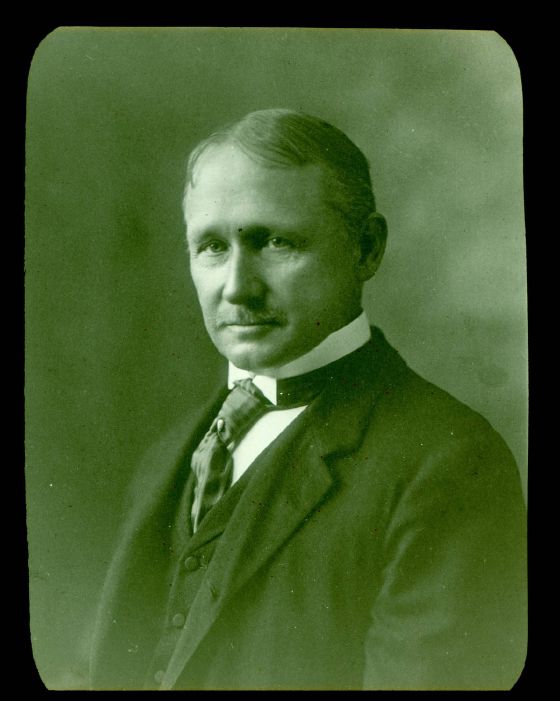
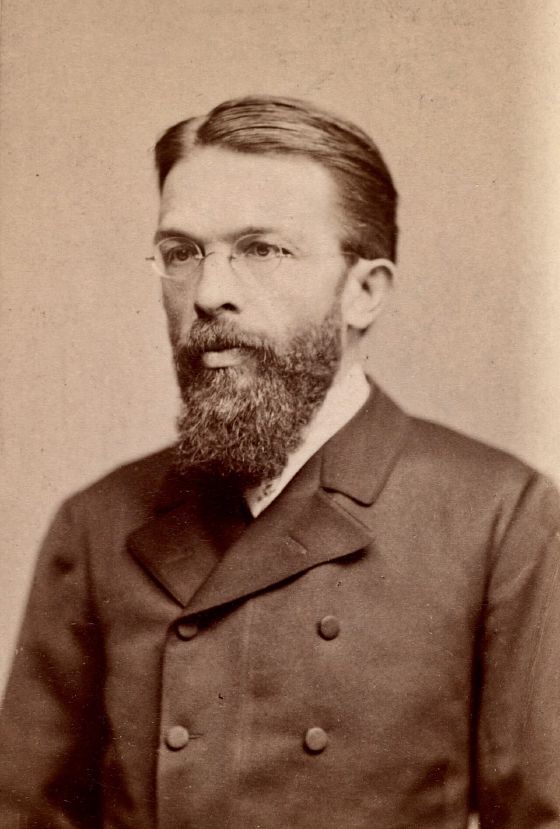
On 13 June 1918 a German professor stood up in Vienna before some three hundred officers of the Austro-Hungarian army and talked for an hour and a half about socialism12. He had not taught a course for more than eighteen years and had returned to the lecture hall only that spring, for the summer semester at the University of Vienna3. The army’s office for defence against enemy propaganda had invited him, the officers were being trained to give their men patriotic instruction, and the Bolsheviks had held Russia for seven months1. Max Weber did not tell them that socialism was wicked, and he did not tell them it was impossible. He told them to look at who was gaining as firms passed from their owners to salaried managers, to cities and to the state: “Die Diktatur des Beamten, nicht die des Arbeiters, ist es, die – vorläufig jedenfalls – im Vormarsch begriffen ist”4. What was on the march, for the time being at any rate, was the dictatorship of the official and not that of the worker.
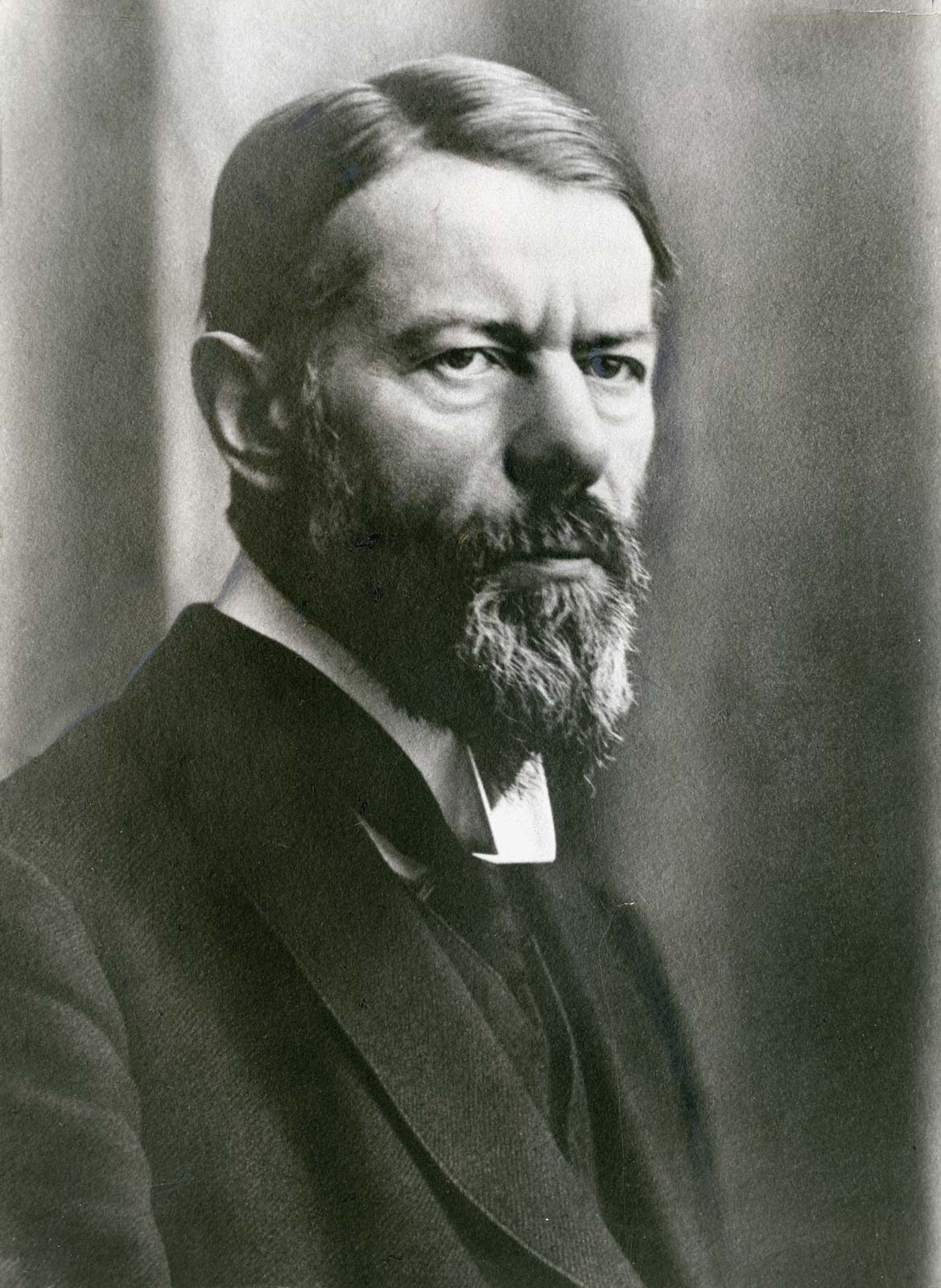
That sentence is not what Weber is known for. He is known for a title, The Protestant Ethic and the Spirit of Capitalism, and for the idea most people take from it: that Protestants worked harder and saved more, and that this is how the West got rich. And he is the theorist of Bürokratie, who explained why the office with its files and its trained officials beats every other way of running things, who dreaded the result, and whose image for it reached English as the “iron cage”, a phrase his translator coined. This profile first says who he was and then takes three of his claims in turn: what he told the officers, what he wrote about Protestants, and what he expected of officials.
Three numbers
A councillor’s son
He was born in Erfurt on 21 April 1864, in full Carl Emil Maximilian Weber, the eldest son among eight children, six of whom grew up53. His father, also Max, came from a family of linen merchants in Bielefeld and was a city councillor in Erfurt. In 1869 he took the same post in Berlin, and he sat in the Prussian parliament for most of three decades as a National Liberal. His mother, Helene Fallenstein, came on her mother’s side from a Huguenot family and so from the Calvinist tradition: one of her great-grandfathers had been the preacher of the French Reformed congregation in Frankfurt32. The author of the essay on Calvinists had a Calvinist preacher among his ancestors.
The family lived in a villa in Charlottenburg, then at the edge of Berlin. As a small child he fell ill with meningitis, which left him prone to cramps for years2. In 1882 he went to Heidelberg to read law and joined a duelling fraternity. When his mother first saw him afterwards, stout and with a scar across his cheek, she greeted him with a resounding slap, by his widow’s account32. He took his doctorate in 1889 with a study of medieval trading companies and qualified as a university teacher in 1892 with one of Roman agrarian history67.
In 1893 he married Marianne Schnitger, a granddaughter of his father’s brother, who had come to live with the family in Berlin and fallen in love with the eldest son of the house. She became more than his editor and biographer. She sat on the board of the federation of German women’s associations from 1900 and chaired it from 1919, wrote a history of the legal position of wives and mothers, and in January 1919 was the first woman to speak in the parliament of Baden. They had no children8. In April 1894, just thirty, he was appointed to a chair of economics at Freiburg, and from 1897 he taught at Heidelberg93.
Then he broke down. In the early summer of 1897 he quarrelled with his father, who died seven weeks later. Marianne Weber’s biography is our only source for the scene2. Within a year Weber could not lecture. He broke off his course on 25 July 1898, tried twice more and gave up at the end of 1899102. On his third request he was released from his chair on 1 October 190311. He was thirty-nine. The couple lived on investment income, and from 1907 on an inheritance that came to Marianne Weber from her grandfather, a linen manufacturer310. From 1910 they lived in the house his grandfather had built on the Neckar at Heidelberg, opposite the castle, where his mother had grown up, and made it a meeting place for the town’s scholars2128.
He did not stop working. In 1904 he became an editor of the Archiv with Werner Sombart and Edgar Jaffé, and that autumn he travelled through the United States as far as Oklahoma and New Orleans132. The essay that made his name appeared in the Archiv in two halves, in November 1904 and in June 19051314.
His private life had more than one centre. The editors of his letters write of his long love for Else Jaffé, the wife of his co-editor, which was fulfilled in his last years, and of his friendship with the Swiss pianist Mina Tobler151617. Of the 462 letters in the volume for 1918 to 1920, 74 are addressed to Tobler, 71 to Jaffé and 70 to his wife (own count from the volume’s list). Two days after the lecture in Vienna he wrote to Tobler of “‚das andre Ufer‘ mit seiner gewissen Einsamkeit gegenüber allen Gesunden, auch den Nächststehenden”: the other shore, with its loneliness towards everyone who is healthy, even those closest to him. He knew it well, he added12.
Socialism vs. capitalism
The lecture to the officers in Vienna was printed the same year as Der Sozialismus, with the subtitle “Rede zur allgemeinen Orientierung von österreichischen Offizieren in Wien 1918”, a speech for the general orientation of Austrian officers4. Weber began by granting the socialists their best point. It is true, he said, that the modern worker is separated from the means of production: he does not own the machine he works at. But the same holds for everybody else. The medieval knight owned his horse and his armour, and the modern officer owns nothing he fights with. The separation comes with modern technique and does not go away when the owner changes. Nothing about it alters, he said, “wenn etwa ein staatlicher Präsident oder Minister statt eines privaten Fabrikanten über ihn verfügt”: if a president or a minister is in command of the apparatus where a private manufacturer was4.
From there he went to the mines. A man who works in a state coal mine on the Saar lives exactly as a man in a private pit does. One thing differs, “daß gegen den Staat kein Streik möglich ist”, that no strike is possible against the state, so the worker depends on his employer more than before4. Today, Weber went on, the officials of the state and the officials of the cartels, the banks and the giant firms are separate bodies, and political power can still hold economic power in check. Under socialism they would be “ein einziger Körper mit solidarischen Interessen und gar nicht mehr zu kontrollieren”: a single body with common interests that nobody could control any longer4.
About Russia he was curious. By all reports, he said, the Bolsheviks had brought back piece rates, left the owners at the head of the factories and were paying officers of the old army again. His judgment was “sehr ermutigend ist das Experiment bisher nicht”, the experiment has not been very encouraging so far, and he said that a state and an economy could not be run that way in the long run. Then he added what people like him had said of the experiment at the start: if it succeeded, and a civilised life turned out to be possible on that footing, “dann – wären wir bekehrt”, then we would be converted4.
Do the officials rule under socialism?
On 27 March 1922, less than four years later, Lenin gave the political report to the eleventh congress of his party and asked a question about the capital: “If we take Moscow with its 4,700 Communists in responsible positions, and if we take that huge bureaucratic machine, that gigantic heap, we must ask: who is directing whom?” He answered it himself: “To tell the truth they are not directing, they are being directed”18. In October he gave the numbers. A census in August 1918 had counted 231,000 state and Soviet employees in Moscow. After a campaign to cut the staffs, a second census in October 1922 counted 243,00019.
Trotsky, writing in exile in 1936, called the bureaucracy “the sole privileged and commanding stratum in the Soviet society”20. Milovan Djilas, who had been one of the leaders of Communist Yugoslavia, said in 1957 that the new ruling class was the political bureaucracy21.
The prediction should not be made neater than it was. Weber’s sentence carries its own hedge, “vorläufig jedenfalls”, and he named no date. Lenin’s two censuses were both taken after the revolution: they show a regime that could not shrink its offices, not how far it had swollen them. And the state Weber said could not be run that way in the long run did fall apart, but only in 1991, 73 years after the lecture.
Economic calculation under socialism
Weber’s second objection to socialism is harder to quote and went deeper. When he died he had the first part of Wirtschaft und Gesellschaft, his Economy and Society, in press22. Its second chapter asks what a planned economy would calculate with once it had done away with money prices. A firm today, he writes, compares one method of production with another without effort, by its costs in money. Calculation in kind, in tons and hours, has no common unit, and nobody could say how one would be invented or checked. His conclusion: “von einer rationalen »Planwirtschaft« jedenfalls kann keine Rede sein, solange in dem alles entscheidenden Punkt kein Mittel zur rein rationalen Aufstellung eines »Planes« bekannt ist”23. There can be no talk of a rational planned economy so long as, on the decisive point, no means is known of drawing up a plan rationally.
A Viennese economist had just said the same. Ludwig von Mises’s “Die Wirtschaftsrechnung im sozialistischen Gemeinwesen” appeared in the spring of 1920 on pages 86 to 121 of volume 47 of the Archiv für Sozialwissenschaft und Sozialpolitik, the journal Weber had co-edited since 1904 and whose title page still carried his name242513. Weber saw it in time to add one sentence to the end of his own section: “Während des Druckes erscheint (im Archiv f. Sozialwiss., Bd. 47, S. 86 ff.) die mit diesen Problemen befaßte Arbeit von L. Mises”23. While this was in press, the work by L. Mises on these problems appeared. He died that June, and his chapter was published the following year.
Mises’s article opened the socialist calculation debate. Friedrich Hayek, editing its first collection in 1935, recorded that Mises had not been alone: “it is an interesting coincidence that about the same time two other distinguished authors arrived independently at very similar conclusions. The first was the great German sociologist Max Weber”25.
Weber was convinced that an economy without money prices cannot calculate rationally. He did not think that refuted socialism. The calculation problem shows only what socialism costs, he wrote in the same section. Those who want it out of ethical conviction can accept that price, and to refute them is something “was keine Wissenschaft vermag”, which no science can do23. He had been trained in the German Historical School that Carl Menger fought, yet in 1908 he defended Menger’s school against a colleague’s disdain2627.
Does Protestantism make people rich?
The essay on the Protestant ethic opens with a statistic. “A glance at the occupational statistics of any country of mixed religious composition”, in Talcott Parsons’s translation, shows that business leaders, owners of capital and the higher grades of skilled labour “are overwhelmingly Protestant”28.
Weber asks why, and his answer has three parts. Greed cannot be the explanation, because greed is everywhere: “Capitalism existed in China, India, Babylon, in the classic world, and in the Middle Ages”28. What those places lacked was an ethos, the idea that methodical work in a calling and the earning of money are duties in themselves. The second part gives that ethos religious roots. A Calvinist could not know whether he was among the saved and could do nothing to earn it. He could live a disciplined life of work and read success as a sign. The result was what Parsons calls “worldly asceticism”: people who earned and did not spend28.
The third part is the one the summaries leave out. Weber says what he is not claiming: “we have no intention whatever of maintaining such a foolish and doctrinaire thesis as that the spirit of capitalism” could only have arisen from the Reformation, “or even that capitalism as an economic system is a creation of the Reformation”28. He wanted to know only whether religious forces had a part in shaping that spirit, and how large a part. The sentence stood in the first printing29. When he revised the essay in 1920 he hung a footnote on it: “I have again and again been accused of this”28. He also raised the standard objection against himself: Florence in the fourteenth and fifteenth centuries was the money market of every great power in Europe, and Catholic. It had the business, he argued, and lacked the ethic30. And when a critic pressed him in 1907, he replied that the statistics of his own day had been only his starting point, the occasion for a question about the early days of capitalism31.
So the strongest fair version of the claim is narrow. Ascetic Protestantism, Calvinism above all, was one of several forces that gave the businessman of the sixteenth and seventeenth centuries an ethic of work. Weber’s word for the relation is Wahlverwandtschaften, elective affinities30. And capitalism, once built, no longer needs the ethic: “The Puritan wanted to work in a calling; we are forced to do so”28.
The version that travelled is wider. A current American introductory textbook speaks of “his century-old claim that the Protestant work ethic led to the development of capitalism”32. Weber is not blameless for that. He let the statistics of his own day do the work of an opening argument, and he put them in a footnote.
Are Protestants cleverer?
The numbers, the footnote says, come from one of his students, Martin Offenbacher, who had worked through the confessional statistics of the Grand Duchy of Baden. In 1895, 37.0 per cent of Baden’s people were Protestant, 61.3 per cent Catholic and 1.5 per cent Jewish. Among the pupils of its secondary schools, Weber reports, 48 per cent were Protestant, and the share was higher still in the schools he describes as meant for technical studies and for careers in industry and commerce, as against the classical Gymnasien. He prints the table by type of school. The row for the Realgymnasien reads: Protestants 69 per cent, Catholics 31, Jews 929. That makes 109.
The table he opened with
Protestants as a share of the boys at Baden’s secondary schools, by type of school: the figures Weber printed in 1904 and again in 1920, and a recount for a single school year.
The numbers
| type of school | Protestants, as Weber printed | Catholics | Jews | row total | boys in 1895–96 | of them Protestant | Protestant share, 1895–96 |
|---|---|---|---|---|---|---|---|
| Gymnasien | 43% | 46% | 9.5% | 98.5% | 4,523 | 2,073 | 45.8% |
| Realgymnasien | 69% | 31% | 9% | 109% | 1,504 | 787 | 52.3% |
| Oberrealschulen | 52% | 41% | 7% | 100% | 1,538 | 789 | 51.3% |
| Realschulen | 49% | 40% | 11% | 100% | 3,207 | 1,537 | 47.9% |
| höhere Bürgerschulen | 51% | 37% | 12% | 100% | 1,366 | 655 | 48.0% |
| all five types | 48% | 42% | 10% | 100% | 12,138 | 5,841 | 48.1% |
In the first printing the 69 and the 52 beneath it are set in bold type. The row stands unchanged in the revision of 1920, and Parsons carried it into English in 1930293028. In 1957 the Swedish historian Kurt Samuelsson added the row up. He put the slip down to “a typographical or arithmetical error” for 59 on Offenbacher’s part, which Weber then copied33. We could not find a scan of Offenbacher’s dissertation, so that the error began with the student rests on Samuelsson and on two later scholars who read Offenbacher3435. Even the 59 is an inference from the sum.
Samuelsson also did what Weber had not: he looked up the head counts. He took a single school year, 1895–96, where Weber’s percentages are averages over the years before it. That year Baden’s secondary schools had 12,138 boys. Of the 1,504 at a Realgymnasium, 787 were Protestant, which is 52.3 per cent. Across all five types of school the Protestant share was 48.1 per cent (own calculation from his table)33.
His larger point was about maps. The Realgymnasien stood in six towns where, by his count, almost exactly 55 per cent of the Christian population was Protestant, and school by school the pupils matched the district. “In brief, Weber’s alleged difference is a myth”33.
That overshoots in its turn. Among the Christian pupils of the Realgymnasien in Samuelsson’s own table, 57.7 per cent were Protestant, against his 55 per cent for their districts (own calculation). The recount also leaves Protestants with 48 per cent of all secondary pupils in a country where they were 37 per cent of the people. Samuelsson explains that by where Protestants lived, and Weber himself grants that confession may in part be a consequence of economic position30. What shrinks is the detail the footnote was built on, the Protestant lead in the modern schools. Sixty-nine against 43 became 52 against 46. The direction holds: in the recount Catholics are 46 per cent of the boys at the Gymnasien and between 38 and 42 per cent at the four modern types (own calculation).
Statistical tests of the Protestant work ethic
In 1998 the economist Laurence Iannaccone, reviewing what economists knew about religion, concluded that “the most noteworthy feature of the Protestant Ethic thesis is its absence of empirical support”36. Since then the old censuses have been digitised and the tests have multiplied. They test three different things: Weber’s opening observation about the Germany of his day, his claim about the centuries before it, and the textbook’s claim that Protestants work harder.
A much-cited test of the first came in 2009. Sascha Becker and Ludger Woessmann took the 452 counties of Prussia in the census of 1871 and found Weber’s observation sound. Protestant counties were better off, and they were more literate. With controls for the make-up of the population, an all-Protestant county had a literacy rate 9.9 points above an all-Catholic one. Using each county’s distance from Wittenberg, where the Reformation began, to separate cause from coincidence, they put the gap at 18.9 points37. Their explanation was Luther’s and owed nothing to Calvin: Luther wanted every Christian to read the Bible, so Protestants built schools. Hold literacy constant, they wrote, and “the share of Protestants loses all its association with economic outcomes”37. On this reading Weber had the fact right and the reason wrong. The two left a door open: “We cannot exclude the possibility that Protestants achieved higher literacy partly because of a different work ethic”37.
Weber had seen one trap. His second sentence says the pattern holds “not only in cases where the difference in religion coincides with one of nationality, and thus of cultural development, as in Eastern Germany between Germans and Poles”28. The Prussian data are public, and for literacy they suggest it held almost only there38. Counties less than 20 per cent Protestant were 84.8 per cent literate; counties more than 80 per cent Protestant, 90.5 per cent. In Pomerania, Posen and Silesia, which the authors call “the three predominantly Polish-speaking provinces”, the mostly Catholic counties stood at 69.5 per cent and the mostly Protestant ones at 89.437. In the other 333 counties of Prussia the figures are 91.4 and 90.8 (own calculation, simple averages of counties).
Where the gap is
Share of people aged ten and over who could read and write in 1871, in Prussian counties that were mostly Catholic and mostly Protestant. Simple averages of counties, no controls.
The numbers
| counties | Protestant share of the county | number of counties | literate, aged ten and over |
|---|---|---|---|
| All of Prussia | under 20% Protestant | 106 | 84.8% |
| All of Prussia | over 80% Protestant | 237 | 90.5% |
| Pomerania, Posen and Silesia | under 20% Protestant | 32 | 69.5% |
| Pomerania, Posen and Silesia | over 80% Protestant | 49 | 89.4% |
| The rest of Prussia | under 20% Protestant | 74 | 91.4% |
| The rest of Prussia | over 80% Protestant | 188 | 90.8% |
That split is a table of averages, and it can be cut other ways. Weighted by population, the Protestant counties outside the three provinces lead by 0.7 points. Without East and West Prussia as well, where even Protestant counties were only 72.5 per cent literate, they lead by 1.5 points as simple averages and 2.3 weighted (own calculation). Twenty points inside the three provinces stand against two at most outside them. Becker and Woessmann did test for geography. With a marker for the three provinces and other geographic controls their estimate is 11.7 points, and with a marker for each of Prussia’s 35 districts it is 6.937. A marker shifts a region’s average. It does not ask whether the Protestant lead is the same size in every region.
Others have looked at the same place. Felix Kersting, Iris Wohnsiedler and Nikolaus Wolf compared Catholics and Protestants inside each county and found a difference in literacy of “a mere 1.05 percentage points”, which shrinks to 0.14 once the eastern provinces are left out. Income, savings and literacy, they concluded, differed between Germans and Poles and not between Protestants and Catholics39. Jeremy Edwards replicated Becker and Woessmann’s study and argued that distance from Wittenberg cannot do the work asked of it, since it also measures where in Prussia a county lies40.
A second test went back to the centuries Weber was writing about. Davide Cantoni followed 272 cities of the old German empire from 1300 to 1900. If Protestantism made people richer, Protestant cities should have pulled ahead after the Reformation. “I find no effects of Protestantism on economic growth”41.
The case for Weber comes from studies of work itself, one of them among Calvinists. Christoph Basten and Frank Betz went to the border between the Swiss cantons of Vaud, where Bern imposed the Reformed, that is Calvinist, faith in the sixteenth century, and Fribourg, which stayed Catholic. In referendums on working time, support for more leisure was 13.5 points lower on the Reformed side. Income per head was higher there too, though the estimate is weak and their own chart shows no clear break at the border. The Prussian studies, they noted, were about Lutherans, “whereas we—like Weber—focus on Reformed Protestantism”42. Jörg Spenkuch found that Protestants in present-day Germany work longer hours than Catholics, for the same hourly wage43. In surveys of 82 societies, André van Hoorn and Robbert Maseland found that losing a job costs Protestants about 40 per cent more of their happiness than it costs others44. Luca Nunziata and Lorenzo Rocco found Swiss Protestants a little more likely than Catholics to run a business, but only where each was a local minority45.
Two results pull the other way. Benito Arruñada, with surveys from 32 countries, found Protestants working 8.5 per cent more hours, a difference that vanished once demographic and country differences were taken into account46. And a study of English counties found faster growth between 1377 and 1801 where Cistercian monks had settled centuries before Luther. Its authors’ verdict: “Weber was right in stressing the importance of a cultural appreciation of hard work and thrift but quite likely wrong in tracing the origins of these values to the Protestant reformation”47.
Eight studies, two questions
Studies that compare Protestants with Catholics. First column: were Protestants better off, in income, wages or growth? Second column: did they work or save more, or care more about work? “Partly” marks a finding that is weak or holds only in part. A dash means the study did not ask.
The grid as a table
| study | sample | Protestants better off? | working or saving more, or keener on work? | the finding in brief |
|---|---|---|---|---|
| Cantoni 2015 | 272 German cities, 1300–1900 | not found | not tested | no difference in city growth |
| Becker & Woessmann 2009 | 452 Prussian counties, 1871–86 | found | not tested | richer, via schooling; since disputed |
| Kersting, Wohnsiedler & Wolf 2020 | Prussian counties, 1875–1905 | not found | not found | no difference in income or savings |
| Basten & Betz 2013 | Swiss villages on a confessional border | found in part | found | votes for less leisure; income higher |
| Spenkuch 2017 | Germany, 2000–2008 | found in part | found | longer hours, same hourly wage |
| van Hoorn & Maseland 2013 | 82 societies | not tested | found | losing a job hurts about 40% more |
| Nunziata & Rocco 2016 | Swiss religious minorities | not tested | found in part | more entrepreneurs, among minorities |
| Arruñada 2010 | 32 countries | not found | not found | no difference with controls |
Becker and Woessmann, writing with Jared Rubin in 2024, summed up the field in one line: “Overall, the empirical evidence for the Weber thesis is mixed”48. The mixture has some shape. The clearest findings in Weber’s favour are about work itself: hours, leisure, the misery of losing a job. The clearest findings against him are about what the ethic was supposed to produce. Protestant cities did not grow faster, and Protestant Prussians did not save more. German Protestants who earn more today work more hours for it, at the same wage. None of the effects is large, and none comes near carrying the claim that travels under Weber’s name.
Bürokratie
Nine years before the officers, Weber had made another unwelcome speech in Vienna. In 1909 the Verein für Socialpolitik, the association of Germany’s reforming economists, met there to debate the businesses that cities had begun to run. Weber conceded the whole case for efficiency before he attacked it. Nothing in the world works as precisely as this human machine, he said, “und dazu noch: so billig!”, and so cheaply too. “Die technische Ueberlegenheit des bureaukratischen Mechanismus steht felsenfest”: the technical superiority of the bureaucratic mechanism stands firm as a rock. Then he turned. He saw a world filling with men who cling to a small post and strive for a slightly bigger one. The question was what could be set against the machine “um einen Rest des Menschentums freizuhalten von dieser Parzellierung der Seele”, to keep a remnant of humanity free from this parcelling-out of the soul49.
He put the first half into a list: “Precision, speed, unambiguity, knowledge of the files, continuity, discretion, unity, strict subordination, reduction of friction and of material and personal costs”50. These, he wrote, reach their optimum in an office staffed by trained, salaried career officials who work by rules and from files. Such an office compares with every other form of administration as a machine does with handwork. Once established, “bureaucracy is among those social structures which are the hardest to destroy”50. Capitalism cannot do without it, and socialism would mean “eine ungeheure Steigerung der Bedeutung der Fachbureaukratie”, an enormous increase in the importance of the expert bureaucracy51.
The second half is in a pamphlet of 1918. Bureaucratic organisation, he wrote there, is at work together with the dead machine of the factory to build “das Gehäuse jener Hörigkeit der Zukunft”, the casing of a future serfdom, in which people may one day have to submit as helplessly as the fellahs of ancient Egypt52.
That image has had a strange career in English. The phrase everyone knows, the “iron cage”, comes from the last pages of the Protestant Ethic, where Parsons has: “But fate decreed that the cloak should become an iron cage”28. Weber’s German is “stahlhartes Gehäuse”, a casing as hard as steel, and there it is the care for material goods that hardens around people30. A later translation prints “a shell as hard as steel”53. Weber carried the image over to the officials himself. The pamphlet of 1918 asks whether abolishing private capitalism would mean “ein Zerbrechen des stählernen Gehäuses der modernen gewerblichen Arbeit”, a breaking of the steel casing of modern industrial work, and answers no: the nationalised firms would be run by officials too52. The cage is Parsons’s. The steel is Weber’s.
Are bureaucratic systems superior?
Weber’s claim was about performance, and in 1999 two American scholars put a number on it. Peter Evans and James Rauch asked 126 experts how the core economic agencies of 35 developing countries hired and promoted their staff, and added the answers up into a “Weberianness” score. The countries that came closest to Weber’s model had grown fastest between 1970 and 1990, and the correlation was 0.6754.
A famous fit, and four dots
Thirty-five developing countries. Across: how closely the core economic agencies matched Weber’s model of the career official, on a scale built from expert surveys. Up: growth of income per head from 1970 to 1990. Hong Kong, Korea, Singapore and Taiwan are highlighted.
All 35 countries
| country | score | growth of income per head, 1970–90 |
|---|---|---|
| Singapore | 13.5 | +288% |
| Korea | 13.0 | +297% |
| Taiwan | 12.0 | +269% |
| Hong Kong | 11.0 | +230% |
| Pakistan | 11.0 | +35% |
| Malaysia | 10.5 | +138% |
| Greece | 10.0 | +60% |
| India | 10.0 | +58% |
| Spain | 10.0 | +64% |
| Costa Rica | 9.0 | +20% |
| Tunisia | 9.0 | +102% |
| Colombia | 8.5 | +54% |
| Mexico | 8.5 | +46% |
| Côte d'Ivoire | 8.0 | −25% |
| Sri Lanka | 8.0 | +69% |
| Thailand | 8.0 | +135% |
| Egypt | 7.8 | +64% |
| Brazil | 7.6 | +66% |
| Israel | 7.0 | +55% |
| Morocco | 7.0 | +60% |
| Turkey | 7.0 | +70% |
| Philippines | 6.0 | +26% |
| Chile | 5.0 | +20% |
| Peru | 5.0 | −20% |
| Portugal | 5.0 | +126% |
| Uruguay | 4.5 | +12% |
| Ecuador | 4.0 | +54% |
| Haiti | 4.0 | 0% |
| Zaire | 4.0 | −38% |
| Argentina | 3.8 | −17% |
| Syria | 3.8 | +70% |
| Guatemala | 3.0 | +5% |
| Nigeria | 3.0 | +30% |
| Dominican Republic | 2.0 | +41% |
| Kenya | 1.0 | +55% |
The authors saw the weak point themselves. The four fastest growers, Hong Kong, Korea, Singapore and Taiwan, are four of the five highest scorers. With a marker for those four in the equation the effect of the score fell by more than half, and with a second regional marker it was no longer statistically significant54. Without the four the plain correlation is 0.38 (own calculation from the authors’ data). And the experts were surveyed from 1993 to 1996, after the growth their answers are meant to explain. In 2020 Agnes Cornell, Carl Henrik Knutsen and Jan Teorell repeated the exercise with a measure of how impartially an administration works, for 105 countries. In the wider sample the estimated effect was less than half as large. When the administration was measured in 1965, before the growth and not after it, the effect was gone: “The coefficient for impartial administration turns insignificant at all conventional levels and even flips sign”55.
What has survived is narrower than Weber’s list. In a survey of 520 experts on 52 countries, there was less corruption where posts are in fact filled by ability and not by political connection. Whether a country does that through formal entrance examinations made no measurable difference beyond it, and neither did jobs for life or a separate civil-service law56. Studies of history point to the tie with politicians. American post offices put under civil-service rules by the Pendleton Act made about a fifth fewer errors in delivering the mail, with much the same staff as before57. Examinations alone did less: American customs houses that had to hire by them got better-qualified clerks and collected their revenue no more cheaply58.
As for “so billig”, the standing reply is C. Northcote Parkinson’s of 1955, that “work expands so as to fill the time available for its completion”. Between 1914 and 1928, he showed, the Royal Navy’s capital ships in commission fell from 62 to 20, while the officials of the Admiralty rose from 2,000 to 3,56959.
The state whose officials Weber rated the best in the world is not, by head count, a large one52. General government employs 11.5 per cent of everyone at work in Germany, against an average of 18.4 per cent in the OECD60. The weight of German Bürokratie lies in its rules more than in its payroll, as The Prosperitist found when it followed a city’s tax on take-away packaging through the eighteen sections of its guidance.
Weber did not think the machine could be stopped. He thought it could be watched, by a parliament that can summon officials, see the files and examine witnesses52. He wanted that right given to the minority too, so that a governing majority could not bury an inquiry, and his widow calls this his wholly original contribution to the draft of the constitution2. Article 34 of the constitution of 1919 obliged the Reichstag to set up a committee of inquiry “auf Antrag von einem Fünftel seiner Mitglieder”, on the motion of a fifth of its members61. Article 44 of the Basic Law of 1949 keeps the duty and asks for a quarter62. In 1984 the Federal Constitutional Court traced the clause back to Weber’s essay by name63. The Bundestag had set up 49 such committees by 202564.
The nationalist
Weber was a nationalist before he was anything else. In his inaugural lecture at Freiburg on 13 May 1895 he said that economic policy served the power of the nation: “Nicht Frieden und Menschenglück haben wir unseren Nachfahren mit auf den Weg zu geben, sondern den ewigen Kampf um die Erhaltung und Emporzüchtung unserer nationalen Art”6566. It is not peace and human happiness that we have to hand on to our descendants, but the eternal struggle to preserve and breed up our national kind. His subject was the Polish labourers and smallholders who were replacing Germans east of the Elbe. The Polish peasant gains ground, he said, “weil er gewissermaßen das Gras vom Boden frißt”, because he all but eats the grass off the ground. He demanded that the eastern border be closed and that the state buy land for German settlers65. He joined the Pan-German League in 1893 and left it in April 1899. His letter of resignation gives the reason: the League was too soft on Polish farm labour, because it put the landowners’ interest in cheap hands first672.
In the war he opposed unrestricted submarine warfare and the annexationists, though he wanted the new states of eastern Europe under German overlordship68. In 1917 he spoke at the conferences that the publisher Eugen Diederichs held at Burg Lauenstein69.
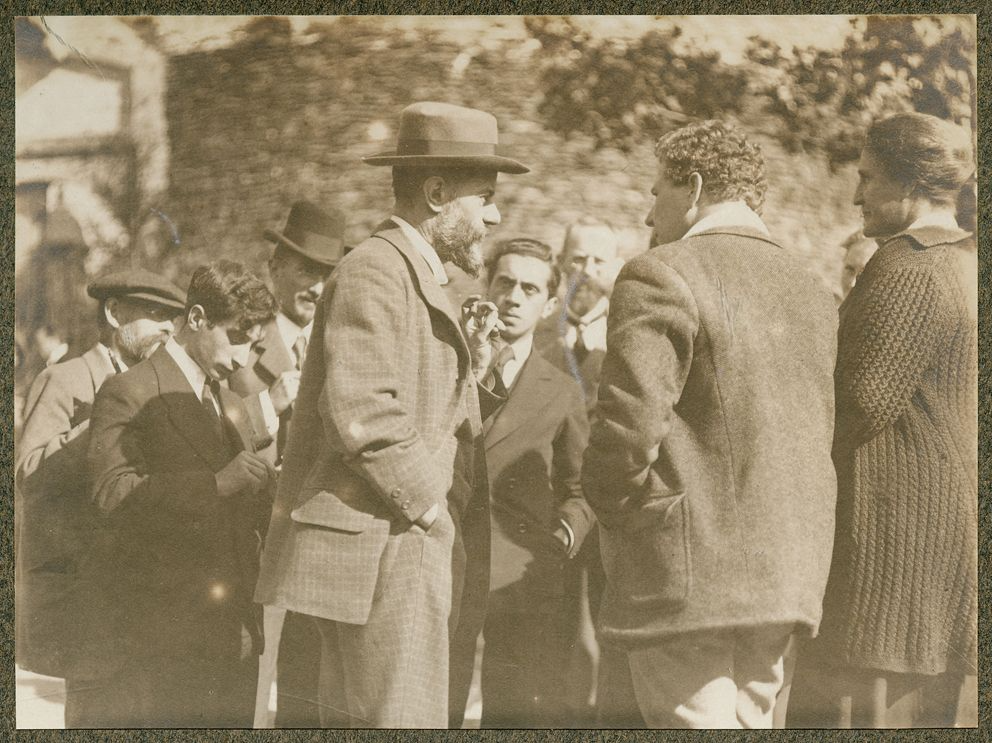
After the defeat he helped found the liberal German Democratic Party, but the seat in the National Assembly he hoped for did not come. “Politics is a strong and slow boring of hard boards”, he told students in Munich on 28 January 1919, and that June he took a chair there, his first since 190350703. In December 1918 he was the only man invited in an unofficial capacity to the consultations in the Reich Office of the Interior from which the draft of a constitution emerged68. What he pressed for was a president elected by the people. “Der künftige Reichspräsident muß unbedingt vom Volke unmittelbar gewählt werden”, the future president must without fail be elected directly by the people, he wrote in a Berlin newspaper on 25 February 191971. Article 41 of the constitution of 11 August 1919 reads: “Der Reichspräsident wird vom ganzen deutschen Volke gewählt”, the president is elected by the whole German people. Article 48 gave that president the power to govern by emergency decree61. In 1930 the Reichstag still passed 98 laws. In 1932 it passed five, and the president issued 60 emergency decrees72.
The charge against Weber is that he supplied the idea of a leader whom the people choose and nobody then checks. Its sharpest evidence is a conversation. In 1919 he went to see General Ludendorff, and his widow prints the exchange. Asked what he meant by democracy, Weber says that the people choose a leader they trust, and then the chosen man tells them: “Nun haltet den Mund und pariert”, now hold your tongues and obey. If the leader has made mistakes, to the gallows with him2. In 1959 the young historian Wolfgang Mommsen drew the line forward: Weber’s teaching on the leader chosen by plebiscite, he wrote, had helped to make the German people inwardly willing to acclaim Hitler67.
The defence is narrower than Weber’s admirers might wish. His widow, the source for the dialogue, also records that the popular election of the president “und seine autoritäre Stellung”, and his authoritarian position, went into the constitution at Weber’s demand2. His newspaper article wants the president to head the executive, control appointments and be able to dissolve parliament71. What it does not ask for is rule by decree. The president is to step in only when a crisis cannot be resolved otherwise, and for any attempt to touch the laws or to rule on his own authority he is to have “»Galgen und Strick« stets vor Augen”, gallows and rope always before his eyes71. The Ludendorff dialogue reaches us at third hand: Marianne Weber was not in the room, and she says herself that friends wrote down later what Weber told them of it2. And Mommsen softened his own sentence. From 1974 it spoke of acclaiming a leader, and to that extent Hitler too, and he wrote there that Hitler would probably have come to power anyway. The English edition of 1984 has Weber’s theory helping “if only marginally”6773.
There is also what Weber did while he lived. In January 1920 nationalist students at Munich celebrated the pardon of Count Arco, who had murdered Bavaria’s socialist premier, Kurt Eisner, the year before, and insulted a socialist student who objected. Weber took the insulted student’s part from the lectern. By his widow’s account he told the nationalists that he shared their opinion of Eisner and would have had Arco shot all the same. To restore Germany, he said, he would ally himself with any power on earth, “nur nicht mit der Macht der Dummheit”, only not with the power of stupidity. Students sent by the Pan-Germans broke up his next lecture2.
Death and legacy
He fell ill in Munich at the beginning of June 1920 and died on the 14th, aged 56, of pneumonia. He is buried in Heidelberg3. The Stanford Encyclopedia of Philosophy calls the Spanish flu the likely cause74. His doctors found bronchitis and then pneumonia, and the only hint of influenza we found from the time is his wife’s question whether that was what it might be2. His sister Lili had taken her own life earlier that year. His wife Marianne took in Lili’s four children and later adopted them158.
Most of what he is read for was not yet a book. The revised Protestant Ethic appeared in the first volume of his essays on the sociology of religion on 10 October 1920, 118 days after his death75. Of Economy and Society he had authorised only the first 180 pages. The rest was put together from his papers by Marianne Weber and Melchior Palyi and published by September 192222. She edited five more collections, and in 1926 she published the biography on which a good deal of what is said about him, in this article too, still rests3. The complete edition, begun in 1984, runs to 47 volumes and was finished in 202076.
In 1997 the International Sociological Association asked its members for the five books of the century that had most influenced their work. Of the 455 who answered, 95 named Economy and Society, more than any other book, and 47 the Protestant Ethic, which came fourth77.
The verdict
Of the three claims, the one about socialism has held best. Weber was no advocate of capitalism: he called it a casing as hard as steel, in which people have to work whether they want to or not. But he thought the alternative worse, for two reasons. When the firms belong to the state, the officials rule and not the workers, and without money prices nobody can work out what anything costs. Lenin confirmed the first within four years, and the debate that Mises opened turned on the second1825. He also said such a state could not be run in the long run. The Soviet Union did fall apart in 1991, though only 73 years after his lecture, and he had named no date. And by his own account he had not refuted socialism. A society may choose it and pay the price, and no science, he held, can prove that choice wrong23.
The claim about Protestants, for which he is famous, has held least. As he wrote it, it was narrow: ascetic Protestantism was one of several forces that gave the businessmen of the sixteenth and seventeenth centuries their ethic of work, and capitalism, once built, no longer needs it. What spread was another claim, that Protestants got rich by working and saving. The statistics he opened with include a row that adds up to 109 per cent29. The Protestant lead in reading and writing in Prussia sat almost wholly in three eastern provinces. Protestant cities grew no faster in six centuries, and Protestant Prussians saved no more than Catholic ones4139. What the studies do find is that German Protestants work somewhat longer hours and that Protestants take the loss of a job harder. That is the ethic he described, without the wealth the textbooks attach to it.
None of the effects is large, and none comes near carrying the claim that travels under Weber’s name.
On bureaucracy he made two claims, and they have fared differently. The first was that an administration of trained career officials, chosen on merit and working by rules, beats every other kind, and cheaply. Half of that stands. Where posts go by merit and not by connection there is less corruption, and offices taken out of the politicians’ hands have worked better5657. For the formal parts of his list, entrance examinations, jobs for life and a law of their own, no further effect can be measured: what counts is that people are chosen for ability, not the procedure by which it is done56. And the famous finding that such states grow faster did not survive a second test55. The second claim was that the machine, once built, can hardly be destroyed and so has to be watched. His means of watching it, the right of a minority in parliament to force an inquiry, stands today in Article 44 of the Basic Law, and by 2025 the Bundestag had set up 49 such committees6264.
He had himself warned against what became of his essay. In its last paragraph he wrote that he did not mean to put a one-sided spiritual explanation of history in place of a one-sided material one: “Each is equally possible, but each, if it does not serve as the preparation, but as the conclusion of an investigation, accomplishes equally little in the interest of historical truth”28. The essay was taken for a conclusion.
Sources
-
Ernst Hanisch, Der große Illusionist. Otto Bauer (1881–1938), Vienna: Böhlau, 2011, pp. 110–111, citing volume I/15 of the Max Weber-Gesamtausgabe for the date and the invitation. ↩︎ ↩︎
-
Marianne Weber, Max Weber. Ein Lebensbild, Tübingen: J. C. B. Mohr, 1926. The Souchay family p. 8; the house on the Neckar pp. 13–14 and 18; Charlottenburg and the meningitis pp. 34–35; the fraternity and the slap p. 74; the Pan-German League pp. 237–238; the quarrel with his father pp. 243–245; the breakdown pp. 247–254; the American journey pp. 293–317; the Vienna lecture p. 626; the constitution pp. 651–652; Ludendorff pp. 664–665; Munich, January 1920, pp. 684–685; the last illness pp. 710–711. She gives the Munich speech as approximately his words. ↩︎ ↩︎ ↩︎ ↩︎ ↩︎ ↩︎ ↩︎ ↩︎ ↩︎ ↩︎ ↩︎ ↩︎ ↩︎ ↩︎ ↩︎
-
Friedrich Wilhelm Graf, “Weber, Max”, Neue Deutsche Biographie 27 (2020), pp. 474–477. ↩︎ ↩︎ ↩︎ ↩︎ ↩︎ ↩︎ ↩︎ ↩︎ ↩︎
-
Max Weber, Der Sozialismus, Vienna, 1918; cited from Gesammelte Aufsätze zur Soziologie und Sozialpolitik, ed. Marianne Weber, Tübingen, 2nd ed. 1988, pp. 492–518. The officer and the knight pp. 498–499; the mines pp. 503–504; the official p. 508; Russia pp. 514–515. ↩︎ ↩︎ ↩︎ ↩︎ ↩︎ ↩︎
-
Max Weber, curriculum vitae of 1889–1891, Max Weber-Gesamtausgabe I/1, pp. 352–354. ↩︎
-
Max Weber-Gesamtausgabe digital, editorial report on Zur Geschichte der Handelsgesellschaften im Mittelalter: doctorate awarded 1 August 1889. ↩︎
-
Max Weber-Gesamtausgabe digital, editorial report on Die römische Agrargeschichte: habilitation completed 1 February 1892. ↩︎
-
Friedrich Wilhelm Graf, “Weber, Marianne, geborene Schnitger”, Neue Deutsche Biographie 27 (2020), pp. 477–479. ↩︎ ↩︎ ↩︎
-
Max Weber-Gesamtausgabe digital, introduction to volume I/4: appointed at Freiburg on 25 April 1894. ↩︎
-
Max Weber-Gesamtausgabe digital, editors’ introduction to volume I/9: the broken-off course of 1898, the release from office, the inheritance. ↩︎ ↩︎
-
Max Weber-Gesamtausgabe digital, editors’ introduction to volume I/7: the three requests to be released, and the release on 1 October 1903. ↩︎
-
Bayerische Akademie der Wissenschaften, Über Max Weber, Max Weber-Gesamtausgabe: the house at Ziegelhäuser Landstraße 17, and the letter to Mina Tobler of 15 June 1918, printed in MWG II/10, p. 195. ↩︎ ↩︎
-
Max Weber-Gesamtausgabe digital, editorial report on part I of Die protestantische Ethik, Bayerische Akademie der Wissenschaften: Archiv vol. 20, no. 1, pp. 1–54, issued in November 1904. ↩︎ ↩︎ ↩︎
-
Max Weber-Gesamtausgabe digital, editorial report on part II of Die protestantische Ethik: Archiv vol. 21, no. 1, pp. 1–110, first copies at the end of June 1905. ↩︎
-
Gerd Krumeich and M. Rainer Lepsius (eds), Max Weber. Briefe 1918–1920, Max Weber-Gesamtausgabe II/10, Tübingen: Mohr Siebeck, 2012: foreword, introduction and the chronological list of letters, in the publisher’s sample. ↩︎ ↩︎
-
Hans Jaeger, “Jaffé, Edgar”, Neue Deutsche Biographie 10 (1974), pp. 290–291. ↩︎
-
Bayerische Akademie der Wissenschaften, Biographische Sammlung, Max Weber-Gesamtausgabe, on the bequest from Mina Tobler’s estate. ↩︎
-
V. I. Lenin, Political Report of the Central Committee of the R.C.P.(B.), 27 March 1922, Eleventh Congress of the R.C.P.(B.), Collected Works, vol. 33. ↩︎ ↩︎
-
V. I. Lenin, Speech at the Fourth Session of the All-Russia Central Executive Committee, Ninth Convocation, 31 October 1922, Collected Works, vol. 33, pp. 390–395. ↩︎
-
Leon Trotsky, The Revolution Betrayed, 1936, translated by Max Eastman, ch. 9. ↩︎
-
Milovan Djilas, The New Class: An Analysis of the Communist System, New York: Praeger, 1957, p. 38. ↩︎
-
Max Weber-Gesamtausgabe digital, editorial report on Wirtschaft und Gesellschaft, Bayerische Akademie der Wissenschaften. ↩︎ ↩︎
-
Max Weber, Wirtschaft und Gesellschaft, part 1, ch. II, ed. Johannes Winckelmann, Tübingen, 5th ed. 1980. Money theory p. 40; calculation in kind, § 12, pp. 53–58. The essay title that follows Mises’s name in this edition is a later editor’s addition. ↩︎ ↩︎ ↩︎ ↩︎
-
Archiv für Sozialwissenschaft und Sozialpolitik, vol. 47, Tübingen: J. C. B. Mohr, 1920/21: title page, and Ludwig Mises, “Die Wirtschaftsrechnung im sozialistischen Gemeinwesen”, pp. 86–121. ↩︎
-
F. A. von Hayek (ed.), Collectivist Economic Planning, London: Routledge, 1935, pp. 32–35. ↩︎ ↩︎ ↩︎
-
Max Weber, “Die »Objektivität« sozialwissenschaftlicher und sozialpolitischer Erkenntnis”, 1904; Gesammelte Aufsätze zur Wissenschaftslehre, ed. Johannes Winckelmann, Tübingen, 6th ed. 1985, p. 208. ↩︎
-
Max Weber, “Die Grenznutzlehre und das »psychophysische Grundgesetz«”, 1908; Gesammelte Aufsätze zur Wissenschaftslehre, p. 396, note 4. A review of Lujo Brentano, Die Entwicklung der Wertlehre. ↩︎
-
Max Weber, The Protestant Ethic and the Spirit of Capitalism, translated by Talcott Parsons, with a foreword by R. H. Tawney, London: George Allen & Unwin, 1930. Opening p. 35; capitalism elsewhere p. 52; the disclaimer p. 91 and its note; the school table p. 189; the closing pages pp. 181–183. Translation from German. ↩︎ ↩︎ ↩︎ ↩︎ ↩︎ ↩︎ ↩︎ ↩︎ ↩︎ ↩︎
-
Max Weber, “Die protestantische Ethik und der »Geist« des Kapitalismus”, part I, Archiv für Sozialwissenschaft und Sozialpolitik 20 (1904), pp. 1–54; the school table at p. 4, note 1, the disclaimer at p. 54. ↩︎ ↩︎ ↩︎ ↩︎
-
Max Weber, “Die protestantische Ethik und der Geist des Kapitalismus”, in Gesammelte Aufsätze zur Religionssoziologie, vol. 1, Tübingen: J. C. B. Mohr, 1920, pp. 17–206. Opening paragraph and notes pp. 17–21; Florence p. 60; the disclaimer p. 83; the closing pages pp. 203–206. ↩︎ ↩︎ ↩︎ ↩︎ ↩︎
-
Max Weber, reply to H. Karl Fischer, Archiv für Sozialwissenschaft und Sozialpolitik 25 (1907), pp. 243–249, at p. 245. ↩︎
-
Tonja R. Conerly, Kathleen Holmes and Asha Lal Tamang, Introduction to Sociology 3e, Houston: OpenStax, 2021, section 15.1. ↩︎
-
Kurt Samuelsson, Religion and Economic Action: A Critique of Max Weber, translated by E. Geoffrey French, New York: Harper Torchbooks, 1964 (English translation 1961, Swedish original 1957), pp. 137–144; the head counts for 1895–96 at p. 139. ↩︎ ↩︎ ↩︎
-
Richard F. Hamilton, The Social Misconstruction of Reality: Validity and Verification in the Scholarly Community, New Haven: Yale University Press, 1996, ch. 3. ↩︎
-
Christopher Adair-Toteff, Max Weber’s Sociology of Religion, Tübingen: Mohr Siebeck, 2016, on Offenbacher. ↩︎
-
Laurence R. Iannaccone, “Introduction to the Economics of Religion”, Journal of Economic Literature 36 (September 1998), pp. 1465–1496, at p. 1474. ↩︎
-
Sascha O. Becker and Ludger Woessmann, “Was Weber Wrong? A Human Capital Theory of Protestant Economic History”, Quarterly Journal of Economics 124(2), 2009, pp. 531–596. Table II, columns 2 to 4; Table III for the estimate by distance from Wittenberg; Table V; note 19 on the three provinces; the conclusion. ↩︎ ↩︎ ↩︎ ↩︎ ↩︎
-
ifo Institute, iPEHD, the ifo Prussian Economic History Database, replication file for Becker and Woessmann (2009), retrieved 11 October 2026. ↩︎
-
Felix Kersting, Iris Wohnsiedler and Nikolaus Wolf, “Weber Revisited: The Protestant Ethic and the Spirit of Nationalism”, Journal of Economic History 80(3), 2020, pp. 710–745. ↩︎ ↩︎
-
Jeremy Edwards, “Did Protestantism promote prosperity via higher human capital? Replicating the Becker–Woessmann (2009) results”, Journal of Applied Econometrics 36(6), 2021, pp. 853–858. The argument about Wittenberg is in the abstract. ↩︎
-
Davide Cantoni, “The Economic Effects of the Protestant Reformation: Testing the Weber Hypothesis in the German Lands”, Journal of the European Economic Association 13(4), 2015, pp. 561–598. ↩︎ ↩︎
-
Christoph Basten and Frank Betz, “Beyond Work Ethic: Religion, Individual, and Political Preferences”, American Economic Journal: Economic Policy 5(3), 2013, pp. 67–91. The income difference is significant at the 10 per cent level. ↩︎
-
Jörg L. Spenkuch, “Religion and work: Micro evidence from contemporary Germany”, Journal of Economic Behavior & Organization 135, 2017, pp. 193–214. Abstract. The working paper of 2011 puts the longer hours at 12 per cent higher earnings. ↩︎
-
André van Hoorn and Robbert Maseland, “Does a Protestant work ethic exist? Evidence from the well-being effect of unemployment”, Journal of Economic Behavior & Organization 91, 2013, pp. 1–12. ↩︎
-
Luca Nunziata and Lorenzo Rocco, “A tale of minorities: evidence on religious ethics and entrepreneurship”, Journal of Economic Growth 21(2), 2016, pp. 189–224. Abstract. ↩︎
-
Benito Arruñada, “Protestants and Catholics: Similar Work Ethic, Different Social Ethic”, Economic Journal 120(547), 2010, pp. 890–918. ↩︎
-
Thomas Barnebeck Andersen, Jeanet Bentzen, Carl-Johan Dalgaard and Paul Sharp, “Pre-Reformation Roots of the Protestant Ethic”, Economic Journal 127(604), 2017, pp. 1756–1793. ↩︎
-
Sascha O. Becker, Jared Rubin and Ludger Woessmann, “Religion and Growth”, Journal of Economic Literature 62(3), 2024, pp. 1094–1142. ↩︎
-
Max Weber, speech in the debate on the economic enterprises of municipalities, Verein für Socialpolitik, Vienna, 1909; Gesammelte Aufsätze zur Soziologie und Sozialpolitik, pp. 412–416. ↩︎
-
H. H. Gerth and C. Wright Mills (eds and translators), From Max Weber: Essays in Sociology, New York: Oxford University Press, 1946. Hard boards p. 128; bureaucracy pp. 214 and 228. Translation from German. ↩︎ ↩︎ ↩︎
-
Max Weber, Wirtschaft und Gesellschaft, part 1, ch. III, § 5, pp. 128–129. ↩︎
-
Max Weber, Parlament und Regierung im neugeordneten Deutschland, 1918; Gesammelte politische Schriften, ed. Johannes Winckelmann, Tübingen, 5th ed. 1988, pp. 331–333. ↩︎ ↩︎ ↩︎ ↩︎
-
Max Weber, The Protestant Ethic and the ‘Spirit’ of Capitalism and Other Writings, edited and translated by Peter Baehr and Gordon C. Wells, New York: Penguin, 2002; the translation of the closing pages. ↩︎
-
Peter Evans and James E. Rauch, “Bureaucracy and Growth: A Cross-National Analysis of the Effects of ‘Weberian’ State Structures on Economic Growth”, American Sociological Review 64(5), 1999, pp. 748–765, table 1 and note 20; the authors’ data file, retrieved 11 October 2026. ↩︎ ↩︎
-
Agnes Cornell, Carl Henrik Knutsen and Jan Teorell, “Bureaucracy and Growth”, Comparative Political Studies 53(14), 2020, pp. 2246–2282. ↩︎ ↩︎
-
Carl Dahlström, Victor Lapuente and Jan Teorell, “The Merit of Meritocratization: Politics, Bureaucracy, and the Institutional Deterrents of Corruption”, Political Research Quarterly 65(3), 2012, pp. 656–668. ↩︎ ↩︎ ↩︎
-
Abhay Aneja and Guo Xu, “Strengthening State Capacity: Civil Service Reform and Public Sector Performance during the Gilded Age”, American Economic Review 114(8), 2024, pp. 2352–2387; figures from the authors’ manuscript of March 2024. ↩︎ ↩︎
-
Diana Moreira and Santiago Pérez, “Civil Service Exams and Organizational Performance: Evidence from the Pendleton Act”, American Economic Journal: Applied Economics 16(3), 2024, pp. 250–291. Abstract. ↩︎
-
C. Northcote Parkinson, “Parkinson’s Law”, The Economist, 19 November 1955; the Admiralty table read from the image of the original page. ↩︎
-
OECD, Government at a Glance 2025, chapter on employment in general government, figure 13.1; data for 2023. ↩︎
-
Die Verfassung des Deutschen Reichs vom 11. August 1919, Articles 34, 41 and 48; documentArchiv.de, archived copy of 8 October 2026. ↩︎ ↩︎
-
Grundgesetz für die Bundesrepublik Deutschland, Article 44. ↩︎ ↩︎
-
Bundesverfassungsgericht, judgment of 17 July 1984, BVerfGE 67, 100, on the Flick committee of inquiry, paragraphs 100–102. ↩︎
-
Deutscher Bundestag, Datenhandbuch, chapter 8.9, Untersuchungsausschüsse, as of April 2025: 22 committees in the 12th to 20th terms, added to the 27 of the 1st to 11th terms in the Datenhandbuch 1949–1999. ↩︎ ↩︎
-
Max Weber, Der Nationalstaat und die Volkswirtschaftspolitik, inaugural lecture, Freiburg, 1895; Gesammelte politische Schriften, pp. 1–25, at pp. 8, 10 and 14. ↩︎ ↩︎
-
Max Weber-Gesamtausgabe digital, editorial report on the Freiburg inaugural lecture. ↩︎
-
Wolfgang J. Mommsen, Max Weber und die deutsche Politik 1890–1920, 2nd ed., Tübingen: J. C. B. Mohr, 1974, which quotes and revises the sentence of the first edition of 1959. ↩︎ ↩︎ ↩︎
-
Wolfgang J. Mommsen, The Political and Social Theory of Max Weber: Collected Essays, Chicago: University of Chicago Press, 1989, pp. 5 and 83. ↩︎ ↩︎
-
Max Weber-Gesamtausgabe digital, editorial report on Wissenschaft als Beruf: the Lauenstein conferences of 29 to 31 May and 29 September to 3 October 1917, at the first of which Weber spoke on 30 May. ↩︎
-
Max Weber-Gesamtausgabe digital, editorial report on Politik als Beruf: lecture of 28 January 1919. ↩︎
-
Max Weber, “Der Reichspräsident”, Berliner Börsenzeitung, 25 February 1919; Gesammelte politische Schriften, pp. 498–501. ↩︎ ↩︎ ↩︎
-
Hans Schneider, “Das Ermächtigungsgesetz vom 24. März 1933”, Vierteljahrshefte für Zeitgeschichte 1(3), 1953, pp. 198–199. ↩︎
-
Wolfgang J. Mommsen, Max Weber and German Politics 1890–1920, translated by Michael S. Steinberg, Chicago: University of Chicago Press, 1984. ↩︎
-
Sung Ho Kim, “Max Weber”, Stanford Encyclopedia of Philosophy, revised 21 September 2022. ↩︎
-
Max Weber-Gesamtausgabe digital, editorial report on the introduction to Die Wirtschaftsethik der Weltreligionen: the first volume of the Gesammelte Aufsätze zur Religionssoziologie appeared on 10 October 1920. ↩︎
-
Bayerische Akademie der Wissenschaften, Max Weber-Gesamtausgabe, retrieved 11 October 2026. ↩︎
-
International Sociological Association, Books of the XX Century, survey of members carried out in 1997; vote counts from the association’s earlier listing. ↩︎