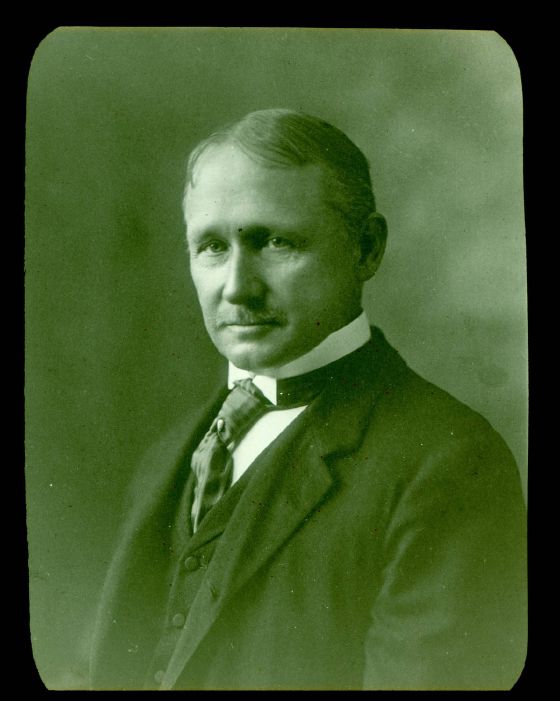
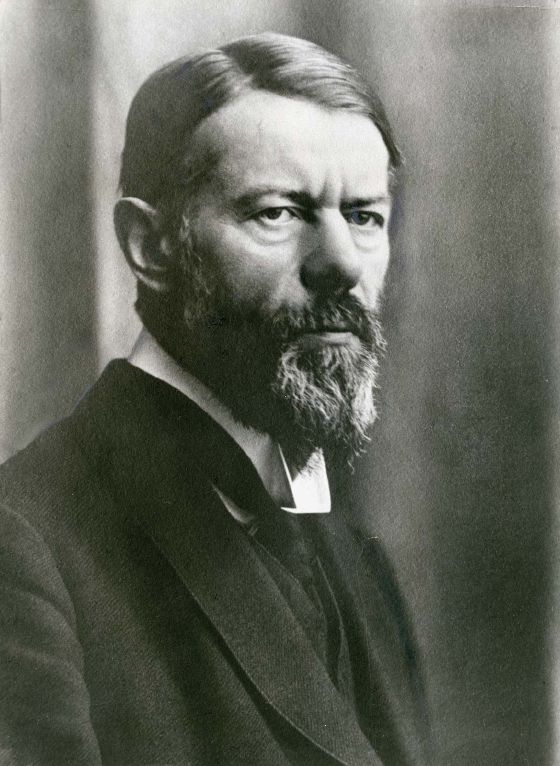
On 1 April 1950 a census enumerator walked the corridors of 370 Central Park West in Manhattan and wrote down who lived there. In apartment 506 he found Arthur F. Burns, 46, born in Poland, an economics teacher, with his wife Helen and their sons David and Joseph. In apartment 513 of the same building, he found David Rothbard, 58, a chemist at an oil company, also born in Poland; his wife Ray, 58, born in Russia; and their son Murray, 24, unmarried, living at home1.
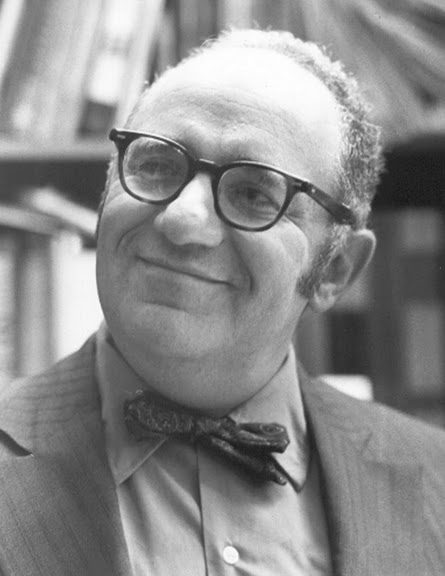
Murray Rothbard had taken his master’s degree in economics at Columbia four years earlier. He would not be given his doctorate for another six. On the account his friends later gave, the reason for the delay was the neighbour down the hall.
Burns went on to chair the Federal Reserve. Rothbard went on to become one of the most prolific economists of his century and one of the least cited: the author of about 25 books, the man usually called the founder of anarcho-capitalism, and the teacher of a movement that now reaches from a research institute in Alabama to the presidential palace in Buenos Aires. He never held a post in a research economics department. He wrote his best-known work in a dingy office at an engineering school, and most of the rest at night, in a two-bedroom flat on West 88th Street, in his pyjamas.
The only boy at the table
Murray Newton Rothbard was born in New York on 2 March 19262. His father David was a shoemaker’s son from Wyszogrod, a town on the Vistula north-west of Warsaw. His mother, Rachel Babushkin, came from Mogilev, in what is now Belarus. They married in 1919 and are buried together in Queens, under a stone that gives her birth as 30 August 1891 and his as 15 June 18933.
The household was unusual in its neighbourhood, and Rothbard said so himself, in the flattest terms, in 1992.
I grew up in New York City in the 1930s in the midst of what can only be called a communist culture. As middle-class Jews in New York, my relatives, friends, classmates, and neighbors faced only one great moral decision in their lives: should they join the Communist Party and devote 100 percent of their lives to the cause, or should they remain fellow travelers and devote only a fraction of their lives?4
His father was the exception, “an individualist” who “was always strongly anticommunist and antisocialist”4. One uncle helped build the Moscow subway. Another edited for a communist-dominated union. In a memoir published in 1994 Rothbard described the moment he first broke the family peace, at a gathering “featuring endless pledges of devotion to ‘Loyalist’ Spain during the Civil War”.
I piped up, at the age of 11 or 12, “What’s wrong with Franco, anyway?” It didn’t seem to me that Franco’s sins, however statist, were any worse, to put it mildly, than those of the [Spanish] Republicans. My query was a conversation-stopper, all right, but I never received an answer.5
He went to Birch Wathen, a private school in Manhattan, on a scholarship the school offered to raise its proportion of boys. He entered Columbia at 16, took a degree in mathematics and stayed for economics. Then, for ten years, he did not get a doctorate.
Ten years
Rothbard’s dissertation was on the panic of 1819, the first commercial crisis of the American republic. Columbia’s catalogue still records it: “The panic of 1819; contemporary opinion and policy”, 410 leaves, 19566. Columbia University Press published it in 1962 under a different subtitle, and it remains the work of his that economic historians treat as straightforwardly useful.
It took ten years from his master’s degree. The reason his circle gave was Arthur Burns. Burns, a future chairman of the Federal Reserve and by then a power at Columbia and the National Bureau of Economic Research, is said to have told Rothbard’s supervisor, Joseph Dorfman, that he expected more of him. One account has JoAnn Schumacher, soon to be Rothbard’s wife, finding him weeping on the steps of his building after hearing it2.
That story has one witness, and she was married to the subject. The Mises Institute’s own obituary says something different, that the thesis was written “under Joseph Dorfman and Arthur Burns”, which would make Burns an examiner rather than an obstacle5. So it is not altogether clear who was really responsible for the delay.
A system that could not be wrong
While he waited, he was hired by the William Volker Fund to turn Ludwig von Mises’s Human Action into something a general reader could manage. The book that came out of it, nine years later, was not a popularisation. Man, Economy, and State (1962) is a thousand-page treatise, and its preface states a programme that nothing in his later life softened.
The present work deduces the entire corpus of economics from a few simple and apodictically true axioms: the Fundamental Axiom of action—that men employ means to achieve ends, and two subsidiary postulates: that there is a variety of human and natural resources, and that leisure is a consumers’ good.7
Apodictic means necessarily true. The claim is that economics is not an empirical science at all. Rothbard had set it out five years earlier in the Southern Economic Journal, in an article defending what its own title called extreme apriorism, and there he gave the position in four parts: the fundamental axioms are absolutely true, the theorems deduced from them are therefore absolutely true, “there is consequently no need for empirical ’testing,’ either of the premises or the conclusions”, and the theorems “could not be tested even if it were desirable”8. In the treatise itself he put it in seven: “The economist does not ‘assume’; he knows.”7
The position is a serious one, and it was not his invention. Hans-Hermann Hoppe, who became his colleague and his most systematic defender, gave it its best analogy: expecting to settle economics by observation “is as if one wanted to establish the theorem of Pythagoras by actually measuring sides and angles of triangles”9. Nobody tests Pythagoras. The theorem is proved, and then used to measure things.
What, then, is history for? Rothbard answered that too.
To the economic historian, economic law is neither confirmed nor tested by historical facts; instead, the law, where relevant, is applied to help explain the facts. The facts thereby illustrate the workings of the law.10
The charge against such a system is obvious, and he met it head on rather than ducking it. Ordinary empirical laws, he wrote, “can hardly be called ‘falsifiable’ in the usual empiricist sense. How much more is this true of the Axiom, which is not even conceivably falsifiable!”8 He meant it as a boast.
He then spent 40 years writing about the money supply, the Great Depression, the Federal Reserve and what was going to happen next.
Joey, and the living room
He married JoAnn Beatrice Schumacher on 16 January 1953, in New York11. She was born in Harvey, Illinois, in 1928 and raised in southern Virginia, a Presbyterian marrying an agnostic Jew. The Mises Institute, announcing her death in 1999, called her “her husband’s editor and closest adviser” and “his partner in all aspects of scholarship and life”, and reported his own phrase for her: “the indispensable framework”11.
Her own account of how they met is better than the one his biographers give. Speaking at a celebration of his sixtieth birthday in 1986, she said: “He was and is always ready to laugh. Thirty-five years ago, we were chastised for laughing in the Columbia University library. And recently, I found him in a dark movie theater, by following his familiar laughter.”12 That puts it 35 years before 1986, in 1951, in a library, which does not match the 1949 meeting his later chronicler describes2.
They moved into a two-bedroom flat at 215 West 88th Street and stayed for 42 years. They had no children. Walter Block, in the memorial volume, listed what he left: “An only child, he left his beloved wife Joey, a sister-in-law, two nephews, and a few distant relatives.” He went on to count the rest of the family: “the hundreds, no, the thousands of people who saw themselves as part of his family: his intellectual and moral children.”5
That was not a figure of speech, and it describes the actual mechanism of his influence. Rothbard converted people in his living room, one at a time, at night. Block was one of them. A socialist graduate student at Columbia in the mid-1960s, he went to meet Rothbard expecting a fanatic, “some lean, mean muscle man”, “toting a machine gun in one hand and a bomb in the other”. What he found was “this little fat man who kept up a rapid fire of positively wicked jokes”. It took Rothbard, by Block’s account, about 15 minutes to convert him to the anarcho-capitalism he held for the rest of his life5.
The evenings were famous and they were long. One guest dates his departure from a typical one at about four in the morning5. JoAnn’s preface to the memorial volume gives the working routine.
Although Murray was not much interested in money, except in a theoretical sense, he managed to make a living for 40 years without having to get up before noon. This was important to him.5
He wrote at night, on an electric typewriter, and refused to use a computer5. Block, who wanted to know how the output was possible, kept asking him how fast he wrote until he gave a number: “Eight [single-spaced] pages per hour.” He barely edited. What came off the typewriter was what went to the printer5.
Hoppe’s memoir supplies the rest of the private man, and it is worth setting down because so much of what circulates about him is invention. He liked good food and a vodka martini. He studied German Baroque church architecture and early jazz formally, and could sing Gershwin, Rodgers and Hart and Cole Porter. He thought twentieth-century culture largely degenerate and went to the cinema constantly. He was a city man who disliked walking: “Nature for him was largely an untamed and dangerous foe.”5
The windowless office
For more than 20 years, from 1963, the man who had written a thousand-page treatise on economic theory taught economics to engineering students at the Polytechnic Institute of Brooklyn. Llewellyn Rockwell, who worked with him daily at the end of his life, described the post in one line: “working in a dingy, windowless office on the fifth floor, surrounded by Marxists. He never once complained, except to wonder why an engineering school couldn’t make the elevator work.”5
His friends were less cheerful about it. One wrote that he had paid “a very high price” by “never receiving the prestigious academic position that he deserved”5. Block put it as a counterfactual: “In any just world, he would have long ago been awarded the Nobel Prize in economics”. He would have held a chair at a serious graduate school, and “his writings would have graced all of the leading academic journals”. Instead, Block wrote, “he languished for years teaching engineers at Brooklyn Polytechnic Institute”5. In the last decade of his life he finally got a chair, the S. J. Hall Distinguished Professorship at the University of Nevada, Las Vegas. Hoppe left Germany because of him, and then followed him from New York to Las Vegas5.
The chair at Las Vegas brought the title but not the students. The department had no doctoral programme in economics, so Rothbard supervised no doctorate there; he chaired master’s essays, one or two at a time. Douglas French, who took his history of economic thought course in 1990 and later became president of the Mises Institute, recorded that in one of Rothbard’s last classes “only 20% of the students were taking the class for credit”. The rest were auditing, some of them for the second or third time. French also preserved the department’s own verdict. Its chairman conceded that “Student evaluations indicate that Professor Rothbard’s performance is significantly above the department average”, rated his classroom work merely satisfactory, called his professional growth disappointing in a year when he published four books, and closed by saying the department expected him “to teach more students”13. Joseph Becker, another of his master’s students, recorded the rest of it: Rothbard died, and Hoppe left, “before a PhD in economics was established”14. Both men are Mises Institute figures, and the chairman’s words reach us only through one of them.
Whether the exclusion was imposed or chosen is the question his admirers do not ask. The publication record suggests both. He published about 21 substantive articles in refereed journals across 44 years. Of those, 12 are in the Review of Austrian Economics, which he edited from 1987. His last article in a mainstream refereed economics journal appeared in 196215. A man who holds that his field’s leading journals are committed to a false epistemology has little reason to submit to them, and they have little reason to accept him. Both things then happen, and afterwards it is hard to say which came first.
The book he is judged by
America’s Great Depression appeared in 1963, the same year as Milton Friedman and Anna Schwartz’s A Monetary History of the United States. The two books cover overlapping ground, and they are the two halves of the quarrel that defined post-war monetary economics outside the Keynesian mainstream.
Rothbard’s argument runs in three steps. The 1920s were an inflationary boom, manufactured by the Federal Reserve. The crash was the unavoidable correction of that boom. And what turned a correction into a decade was intervention, chiefly the decision to hold wages up while prices fell. The villain is not Roosevelt.
Herbert Clark Hoover must be considered the founder of the New Deal in America. Hoover, from the very start of the depression, set his course unerringly toward the violation of all the laissez-faire canons.16
On that last point he was early and he was right, and it is worth saying so before taking the rest apart. In 1963 the textbook Hoover was a do-nothing liquidationist. The record says otherwise. On 21 November 1929 the White House issued a statement on behalf of the employers the president had summoned: they “will not initiate any movement for wage reduction”, because “aside from the human considerations involved, the consuming power of the country will thereby be maintained”17. Hoover wired the governors to accelerate public works, signed the Smoot-Hawley tariff, the Davis-Bacon Act and the act that created the Reconstruction Finance Corporation, and in 1932 a revenue act that took the top marginal rate from 25 to 63 per cent. Federal outlays rose 49 per cent between the 1929 and 1932 fiscal years while receipts halved18. That reading is now close to the consensus among economic historians, and is held by people with no Austrian commitments at all1920.
Two details in his own telling do not survive. He writes that the Davis-Bacon Act imposed “a maximum eight-hour day on construction of public buildings” as well as the prevailing wage16. The Act as passed has two sections and no hours provision at all21. And he quotes Hoover’s annual message of December 1929 as insisting “that wages and therefore earning power shall not be reduced”16. The message says consuming power22. The slip runs against his own argument, which is why it reads as a transcription error rather than anything worse.
The measure that does two jobs
The first step of the argument is the one that fails.
Rothbard’s headline figure is that between June 1921 and June 1929 the money supply rose by $28.0 billion, “a 61.8 percent increase over the eight-year period”, which he calls “an average annual increase of 7.7 percent, a very sizable degree of inflation”16. The 7.7 is a simple average: his 61.8 divided by eight, where his own table gives 61.7. Compounded, which is how a growth rate is normally meant, his own series grows 6.2 per cent a year. Compounding his 7.7 would give a rise of 81 per cent, not 6223.
The larger question is what he is counting. His measure is currency, demand deposits, time deposits, savings-and-loan share capital and the net cash value of life-insurance policies, the last of which he concedes is “our most controversial suggestion”16. His banking columns are not eccentric at all: they reproduce Friedman and Schwartz’s own deposit totals to within half a per cent, and his table is internally consistent at every one of its 15 rows23. The disagreement with the profession is definitional, not arithmetical. His total is their M2, plus the savings-and-loan shares, plus the insurance reserves.
Over the same window the standard aggregates rise a good deal less: broad M2 by 45.1 per cent, M1, which is cash and current accounts, by 25.0 per cent. Meanwhile consumer prices fell 3.9 per cent across his boom and industrial production rose 91.3 per cent23.
The measure that does two jobs
How much the money supply rose in the boom and fell in the slump, on Rothbard's own definition and on the standard ones. His measure is Friedman and Schwartz's M2 plus savings-and-loan share capital plus the net cash value of life-insurance policies. Those two components kept growing through the slump.
Show the numbers
| Money supply | Change |
|---|---|
| Rise, June 1921 to June 1929 | |
| Rothbard's measure | 61.7% |
| M2 | 45.1% |
| M2, commercial banks only | 42.6% |
| M1 | 25.0% |
| Fall, August 1929 to March 1933 | |
| Rothbard's measure | −16.7% |
| M2 | −26.2% |
| M1 | −28.0% |
That last set of numbers is the usual objection and Rothbard had already answered it. With output rising 8 per cent a year, he argued, prices ought to have fallen; holding them level was itself the inflation16. The objection and the answer are both arithmetically sound, because they use the word to mean different things. What cannot be defended is printing a single number, 7.7 per cent a year, without saying which quantity it describes.
Break his $28 billion into its parts and the aggregate turns out to be mostly the things that circulate least. Time deposits account for 43 per cent of the rise, life-insurance reserves for 23 per cent and savings-and-loan shares for 15 per cent. Currency and current accounts together make up 19 per cent, and currency on its own fell, by $40 million23.
What the inflation was made of
The $28 billion by which Rothbard's measure of the money supply grew between 1921 and 1929, split into its five parts. Currency fell.
Show the numbers
| Component | Change 1921–1929 | Share of the rise |
|---|---|---|
| Time deposits | +$12.03bn | 43.0% |
| Life-insurance reserves | +$6.43bn | 23.0% |
| Demand deposits | +$5.43bn | 19.4% |
| Savings-and-loan shares | +$4.15bn | 14.8% |
| Currency | −$0.04bn | −0.1% |
| Total | +$27.96bn | 100% |
The two components that swell his 1920s number, savings-and-loan shares and insurance reserves, kept growing straight through the slump. So when Rothbard reaches the collapse itself, the same yardstick tells him that “the total money supply declined by one-sixth”16. Measured as M1, it fell 28.0 per cent between August 1929 and March 1933; measured as M2, 26.2 per cent23. The instrument that makes the boom as large as possible makes the bust as small as possible, in the same book, in the service of an argument that needs the boom to be big and has no use for a monetary collapse it cannot blame on the correction.
Wages, which is the part that holds up
The third step is the one his reputation should rest on. Rothbard’s claim is that Hoover’s high-wage policy is what converted a severe recession into the Depression, because wages were not allowed to fall with prices.
His own version overreaches. He writes that money wage rates fell only 23 per cent over 1929 to 1933, “less than the decline in wholesale prices”, so that real wages for those still in work rose16. That is true against wholesale prices, which fell 30.8 per cent. Against the consumer price index, which fell 24.6 per cent, it is roughly a wash24. The conclusion is carried by the choice of deflator, and he does not say so.
What survives is the timing. Hourly earnings in manufacturing did not reach their own peak until April 1930, eight months after the business cycle turned, and in August 1930 they were still above their level of a year earlier. They then fell slowly: 3.5 per cent over the 12 months after that peak. In the slump of 1920 the same index fell 18.3 per cent over the 12 months after its own peak24.
Wages after the peak
Average hourly earnings in manufacturing after each slump's own wage peak, September 1920 and April 1930. In both episodes wages went on rising for about eight months after the business cycle turned. What differs is how fast they then fell.
Show the numbers
| Months after the wage peak | After the 1920 peak | After the 1930 peak |
| 6 | 90.5 | 98.3 |
| 12 | 81.7 | 96.5 |
| 18 | 78.4 | 93.1 |
| 24 | 81.0 | 86.2 |
| Total fall to the trough | −21.9% in 19 months | −24.4% in 38 months |
The chart carries the other half of it, which his account leaves out. Measured all the way to the bottom the two falls are about the same size, 21.9 per cent after 1920 and 24.4 per cent after 1930. The first took 19 months and the second 3824. Wages in the Depression were not held up indefinitely. They were held up about twice as long, which is a smaller claim than Rothbard’s, and one the data support.
The modern literature has tested his version and come back divided. Lee Ohanian’s model of Hoover’s programme finds it reduced aggregate hours by about 20 per cent by the end of 193119. Jonathan Rose, working with firm-level data at the Federal Reserve Board, finds the conferences “delayed the cuts in hourly wages at a small number of large firms”, with no evidence across industries that attending the December conference affected when wages were cut25.
The instrument that makes the boom as large as possible makes the bust as small as possible
The comparison he leans on hardest is weaker than he needs. He offers the depression of 1920 to 1921 as the control: government let wages fall, cut spending and taxes, and the slump “was over in one year”16. The fiscal half is true and overstated, since federal outlays fell 82 per cent between the 1919 and 1922 fiscal years mostly because a war had ended18. The monetary half is the problem. The New York Fed raised its discount rate to 7 per cent in June 1920, the highest in the System’s history to that point, held it for ten months, then cut it to 4.5 per cent by December 192126. That is an active monetary policy at both ends, which Daniel Kuehn has argued makes the episode a poor advertisement for doing nothing27. The data are weak too: estimates of 1921 unemployment range from 8.7 to 11.7 per cent depending on the series28.
What was going to happen next
A man who holds that economic law cannot be tested against history is not thereby excused from saying what will happen. Rothbard said it constantly. From 1969 to 1984 he wrote and edited The Libertarian Forum, a newsletter that ran to 143 surviving issues, every one dated, and he went on writing dated commentary until the month he died29.
The best of it is very good. On 15 June 1970 he wrote that the Nixon administration, unwilling either to stop inflating or to go to hard money, “might very well add onto its vacillation and drift a turn toward the totalitarian method of wage-and-price controls”, and that “already there are ominous signs of wage-price controls on the horizon”30. Nixon froze wages and prices on 15 August 1971. In the September issue Rothbard reprinted four of his own earlier paragraphs under a standing head, You Read It Here. That sentence was one of them31.
The same column contains the other half of this story. The official Rothbard was pointing at was Arthur Burns, by then chairman of the Federal Reserve, “the man our anarcho-Nixonites assured us was soundly free-enterprise”. Rothbard reports asking him what he would do if the inflationary recession continued. Burns said it would not. Pressed on what he would do in a future recession of that kind, Burns answered that “we would all have to resign”.30 That was 20 years after the census taker found them on the same corridor. The neighbour was now running the money, and Rothbard was writing him up in a newsletter.
Set the whole run against what happened and the record is thinner than the legend. Of 24 statements specific enough to check, 11 name a date or a period. The other 13 say “before long”, “in the foreseeable future”, “looming ever closer on the horizon”, “the coming years”32.
The 11 dated ones are the test, and they divide along a line he would not have liked. Seven are misses. One he hedged so heavily that it cannot be scored. The three that came right are all political, all about the 1996 election, and all from a single article he wrote weeks before he died: Dole would be nominated and beaten, Buchanan would run, Arlen Specter had no chance33. Every dated forecast he made about the economy failed32.
What he said would happen
Every statement in Rothbard's dated writing from 1970 to 1995 specific enough to be checked against the outcome, sorted by whether he named a date or a period.
Show the numbers
| Statements, 1970–1995 | |||
|---|---|---|---|
| A date or a period named | 3 came right | 7 did not | 1 hedged, not scored |
| No horizon named | 6 came right | 2 partly | 5 did not |
The misses are where the horizons are. In March 1975 he wrote that “the rate of inflation is bound to accelerate dangerously in the next two years”; consumer price inflation fell from 12.3 per cent in 1974 to 6.9 and then 4.93432. In January 1983, under the heading The Year Ahead, he wrote: “our Fearless Forecast is that 1983 will be another year of a quagmire of inflationary depression. We will have more of the same but worse.”35 1983 was the first year of an expansion that ran to 1990, and by July inflation was 2.5 per cent, the lowest since 196732. The same article opens by observing that “all the forecasts are more or less the same” and will “be proven way off the mark”35.
Two things conventionally counted as his great calls do not hold up on the documents. The first is Bretton Woods. The claim, which he made himself in November 1971, is that the Austrians had “warned day in and day out that the Bretton Woods system was headed for certain collapse” for over 25 years36. No dated text making that forecast before August 1971 could be found in the places it should be. What Has Government Done to Our Money?, published in 1963, does not mention Bretton Woods at all; every passage about it belongs to the chapter added in 197437. This paper could not find the forecast, which is not the same as establishing that none exists; much of his output of the 1950s and 1960s was in lectures and in journals that are not online.
The second is communism. Rothbard wrote well about the Soviet collapse while it was happening, in 1990 and 1991, and in October 1988 he named Poland, Hungary, the Baltics and Yugoslavia as the places where it would give32. What the archive does not contain is a forecast of the thing itself. He described it as it came.
The shape of that record follows from the method. A man who has deduced that fiat money must end in ruin has a theory that cannot tell him when, so no particular year in which the ruin fails to arrive counts against him. Rothbard thought that a feature.
The turn
Rothbard changed political company more often than anyone else of his stature, and he always had a good reason for it. In 1968 he was on the left. Writing in Ramparts that June, under the title “Confessions of a Right-Wing Liberal”, he opened: “Today, I am most likely to be called an extreme leftist, since I favor immediate withdrawal from Vietnam, denounce U.S. imperialism, advocate Black Power and have just joined the new Peace and Freedom Party.”38 He had helped found a journal, Left and Right, to argue that liberty was a cause of the left and that the conservatives had stolen the word.
The essay explains it like this:
On the domestic front, virtually the only conservative interests are to suppress Negroes (‘shoot looters,’ ‘crush those riots’), to call for more power for the police so as not to ‘shield the criminal’ (i.e., not to protect his libertarian rights), to enforce prayer in the public schools, to put Reds and other subversives in jail.38
He spent the 1970s in the Libertarian Party, having begun by arguing against its existence. In May 1972 he wrote that running a national ticket would present the public with “a tiny collection of kooks making a mockery of the electoral process”39. Two months later he signed on as economic adviser to its first presidential candidate, and he went on to sit on its platform committee and its national committee. In 1980, after the best-funded campaign the party had run took 1 per cent of the vote, he broke with it in print: “Libertarian principle was betrayed”40.
In 1977 he helped found the Cato Institute with Edward Crane and Charles Koch. In 1981 he was removed from it. His own account, published in his newsletter, is that his shares, held “only for ‘safekeeping’” in Wichita, were simply cancelled: “The blackguards had grabbed my shares!”41 Cato’s version leaves him out. Its own staff page for Crane in 1996 said that Crane had founded the institute “with Kansas industrialist Charles Koch in 1977”, naming two men and not three; the present-day page names no founder at all42. One neutral document sits across both accounts: the Internal Revenue Service recognised the Cato Institute as a charity on 1 March 1975, two years before the date every account gives for its founding43. The year after the expulsion came the Ludwig von Mises Institute, which became the vehicle for everything he did afterwards.
Then communism fell, and he concluded that the anti-communist argument that had organised American politics for 40 years was finished. His response was a strategy he called paleolibertarianism: an alliance between libertarians and the populist right against what he took to be a ruling elite of media, bureaucracy and academia. In January 1992 he set it out in the Rothbard-Rockwell Report, in an essay called “Right-Wing Populism: A Strategy for the Paleo Movement”. It is the most-quoted thing he ever wrote and the most often misquoted, in both directions, so it is worth quoting from the printed original.
Its occasion was David Duke, the former Klan leader who had just run for governor of Louisiana and lost. Rothbard’s point was the selectiveness of the establishment’s horror.
If it was OK for the revered Justice Hugo Black, or for the lion of the Senate, Robert Byrd, to have been a Klansman, why not David Duke?44
He then went further than any defence of him now admits.
It is fascinating that there was nothing in Duke’s current program or campaign that could not also be embraced by paleoconservatives or paleo-libertarians: lower taxes, dismantling the bureaucracy, slashing the welfare system, attacking affirmative action and racial set-asides, calling for equal rights for all Americans, including whites: what’s wrong with any of that?44
There is no sentence in the essay disavowing Duke’s own views. The defence that there is one, which is commonly offered, is false; the nearest thing comes two years later, in a different piece.
The programme he proposed has eight points. Three are standard libertarian demands: abolish the income tax, abolish the welfare system, abolish the Federal Reserve. Point three calls for the repeal of affirmative action and of “the entire ‘civil rights’ structure, which tramples on the property rights of every American”. Points four and five are the ones that have followed him since.
Take Back the Streets: Crush Criminals. And by this I mean, of course, not ‘while collar criminals’ or ‘inside traders’ but violent street criminals-robbers, muggers, rapists, murderers. Cops must be unleashed, and allowed to administer instant punishment, subject of course to liability when they are in error.44
Take Back the Streets: Get Rid of the Bums. Again: unleash the cops to clear the streets of bums and vagrants. Where will they go? Who cares? Hopefully, they will disappear, that is, move from the ranks of the petted and cosseted bum class to the ranks of the productive members of society.44
Both qualifiers are in the original and both are routinely cut. Hostile quoters drop “subject of course to liability when they are in error”. Friendly ones drop “Where will they go? Who cares?” The printer’s errors are in the original too: “while collar criminals” for white collar, and later “Stop gloabaloney” for globaloney.
Point eight demands the end of public schooling, and its replacement by “parental control”. In the same essay he praises Joseph McCarthy, for method rather than for substance: what he found exciting about McCarthy, he wrote, was precisely his means, a right-wing populism that could reach past the power elite to the public directly44. In the same issue he called Pat Buchanan “our leader”.
Set that programme beside the charge sheet of 1968 and the two documents describe each other. In 1968 the mark of the conservative was that he wanted more power for the police and prayer in the schools. In 1992 Rothbard wanted the police unleashed to administer instant punishment, and the schools returned to parents. He had written the case against his own programme 24 years earlier, and nothing in the later essay acknowledges it.
The gravest charge made against him does not survive the documents. It is often asserted that Rothbard was associated with Holocaust denial through the Institute for Historical Review. The Institute’s own complete index of its Journal of Historical Review, 1,219 entries, contains exactly two items mentioning him, both in the issue of May and June 1995: an obituary, and a reprint of an essay he had published in a libertarian journal in 1966 that says nothing about the Holocaust45. He died on 7 January 1995. The complete run of The Libertarian Forum does not mention the Institute, or Arthur Butz, or Robert Faurisson; its three substantive references to the Holocaust affirm it, two of them as moral benchmarks, one comparing a libertarian who will not act to “the tired old men of another time who shrugged over Auschwitz and Buchenwald”29. What is documented is that the Institute claimed him after he was dead. His revisionism, which was real and lifelong, was about the origins of the two world wars and the Cold War, which is a different argument with a respectable scholarly address.
And his own system supplies the sharpest objection to the strategy of his last years. In September 1977, writing about the Bakke case and about reparations, he asked “by what principle can we justify placing collective guilt unto the umpteenth generation”, and answered that the question would be clear enough once a movement had renounced what he called “the monstrosity of collective guilts and merits”46. Collective merits. The axiom he built everything on has no room for groups at all, and that is the ground on which the 1992 essay fails hardest, not in anyone else’s vocabulary but in his own.
What he built instead
A man who publishes 21 refereed articles in 44 years and is cited 304 times is, on the profession’s own measures, a minor figure. Rothbard is not a minor figure, and the reason is that he spent the second half of his life building things rather than submitting to journals.
Rockwell founded the Ludwig von Mises Institute in 1982, the year after Cato removed him, with Rothbard’s name and blessing on it; the Internal Revenue Service recognised it as a charity that September, and Rothbard was its vice-president for academic affairs until he died4748. It is now substantial. Its revenue in the 2023 tax year was $8.5 million and its assets at the year end were $54.7 million, roughly three times what they were in 201647. It gives his books away. Its statement of purpose, printed on every page of its website, says it exists to promote the Austrian school “in the tradition of Ludwig von Mises and Murray N. Rothbard”49.
The books carried further than the institutions, and they were not commercial products. For a New Liberty (1973) came out of what the Institute calls “the only contract Rothbard ever received from a mainstream commercial publisher”50. Hans-Hermann Hoppe read it in Germany. “Upon reading the book I became an anarchist”, he wrote 50 years later51. He moved to the United States in 1986 to study under Rothbard, and from New York to Las Vegas when Rothbard went5.
The transmission, though, was never really institutional. It was personal, and it worked the way it had worked on Walter Block in a living room in the 1960s. Ron Paul, who served 23 years in Congress and ran twice for president, wrote after Rothbard’s death that he had been one of “thousands of students”, and that Rothbard “taught me about economics and liberty, and encouraged my political work against war, inflation, and big government”. The two met in 1979, Paul having read him for years. Paul also recorded what Rothbard had said to him: that “he enjoyed meeting a Congressman who had not only read his books, but used them as a guide in his votes and legislation”5.
Even the label is less his than the legend has it. His own obituary in the memorial volume says he is “often called the founder of ‘anarcho-capitalism’”, which is a careful formula5. In May 1969, in his own newsletter, he used the word as vocabulary his readers already shared, writing of “the great majority of revolutionary anarcho-capitalists” without pausing to explain it52. In his memoir he dates the movement’s black-and-gold flag to a gathering in Colorado in the winter of 1963, and the credit he gives is collective: “the colors of which we had all decided best represented anarcho-capitalism”53.
Two ledgers
In the 31 years since his death, the two ways of counting Rothbard’s influence have pointed in opposite directions, and both are worth setting down.
By the profession’s reckoning he barely registers. Man, Economy, and State has 304 distinct citing works. Coase’s “The Problem of Social Cost”, published two years earlier, has 18,535. Against the fairest comparison, Friedman and Schwartz’s A Monetary History of the same year, the gap is a factor of between 10 and 17. Of the citations he does have, 27 per cent come from eight journals and book series of his own school, and none that the database records comes from a top-ten general economics journal54. Where he does appear in mainstream venues, the pattern is consistent: a New Palgrave entry, written by an Austrian55; reviews of his history of economic thought in History of Political Economy and the Economic Journal5657. He is handled as a figure in the history of ideas rather than as a living research programme, and the people handling him are frequently his own.
By the other reckoning he is one of the most consequential economists of the late twentieth century. On 10 December 2023 an avowed anarcho-capitalist became president of Argentina. Across every official transcript of Javier Milei’s presidency, from December 2023 to November 2026, Rothbard is named in 43 speeches, 88 times58. That is not an occasional nod. Milei gives the date and the text of his conversion: reading Rothbard in 2014, an essay on monopoly and competition, “o sea, automáticamente me convertí en anarcocapitalista”, which is to say that he became an anarcho-capitalist on the spot59. At Davos in January 2026 he said that Rothbard’s ethical criterion is one “a lo cual adscribo aún desde mi rol de Presidente de la gran Nación Argentina”, subscribing to it in his capacity as president60.
What that is worth should be stated precisely, because the temptation is to overstate it. No Argentine policy in those speeches is argued from Rothbard. The dollarisation, the fiscal surplus and the deregulation decrees are argued from Mises, Hayek and Huerta de Soto. What is Rothbard’s is the self-description, the yardstick Milei uses for the true size of the state, the ethical criterion he named at Davos, and his account of why he entered electoral politics at all58. A head of state converted by a book is a real thing. It is not the same as a government running on that book.
The same caution applies to the claim that Bitcoin grew out of Austrian monetary theory, and out of What Has Government Done to Our Money? in particular. The white paper names no economist of any school; its references are cryptography and timestamping papers. Across the archive of Satoshi Nakamoto’s forum posts and emails, “Rothbard”, “Hayek” and “Austrian” appear nowhere at all61. What is documented is later and separate: Saifedean Ammous, who wrote The Bitcoin Standard, contributed to and co-published a centenary tribute to Rothbard in 202662. The debt is an adoption, not a parentage.
His movement is now several movements, and they quarrel about him. In May 2024 the Mises Institute revoked Walter Block’s fellowship, the same Walter Block it had taken Rothbard 15 minutes to convert. Its own explanation was that Block had come out “in favor of positions obviously contrary to the Institute’s Rothbardian positions in foreign policy”63. The Property and Freedom Society, founded by Hoppe in 2006, dates its own origin to a conversation at the Mises Institute’s summer school in Auburn and describes its tradition as that of Mises and “his leading American student Murray N. Rothbard”64. The inheritance is contested in his name, by people he taught, in institutions he founded.
The man who could not be refuted
Rothbard died of a heart attack in Manhattan on 7 January 1995, at 68. He and JoAnn were at the optometrist’s5. She died in 1999, and they are buried together in Virginia, her state rather than his.
The method he spent his life defending did what he said it would do. It made him certain, it made him fast, and it made him free of the obligation to find out. The axiom was “not even conceivably falsifiable”, and he meant that as the highest praise he could give an idea. A man holding such a position can be right the way he was right about Hoover in 1963, when the textbooks were wrong and the White House’s own papers were on his side. He can be right the way he was in June 1970 about the wage and price controls that came 14 months later, and reprint himself under You Read It Here. And he can be wrong, in January 1983, about a year that turned out to be the first of a seven-year boom, and have no mechanism at all for noticing, because no year’s figures were ever allowed to count against the theory.
What he had instead of a research programme was people. That is not a lesser thing and this account should not pretend it is: the citations say one career and the living room says another, and the living room reached further. But it exacted the price his last years show. A man who cannot be refuted by evidence can still be refuted by his own earlier writing, and in 1992 he was. The case against unleashing the police and putting prayer back in the schools had been made, in 1968, by Murray Rothbard.
In 1950 a census taker wrote down two economists living on one corridor of 370 Central Park West. One of them went on to run the money supply of the United States for eight years. The other never got the job he wanted, and built something that outlasted him anyway, and is still being argued over by the people he made.
Sources
-
United States Bureau of the Census, 1950 Census of Population, New York County, enumeration district 31-656, sheet 19, households 236 and 237. Both families are entered at house number 370, Central Park West, in apartments 506 and 513. The sheet gives Burns’s age as 46 (he was 45) and his employer as City College rather than Columbia; the household, wife Helen B. and sons David S. and Joseph M., matches him. Retrieved 8 November 2026. ↩︎
-
Anthony G. Flood, “Murray Newton Rothbard: Notes Toward a Biography”, May 2019. Flood worked from interviews with Rothbard’s widow and from Justin Raimondo’s papers, and is the only source for several details below, including the birth date, the Birch Wathen scholarship and the Burns story. Hans-Hermann Hoppe writes instead that Rothbard was “born and bred in Manhattan”; no vital record was consulted for this article. ↩︎ ↩︎ ↩︎
-
Find a Grave, memorials 99316365 (David Rothbard) and 99316379 (Rachel Babushkin Rothbard), Mount Lebanon Cemetery, Glendale, Queens. A user-contributed register, used here only for dates and places that the 1950 census independently supports. The census gives both parents’ ages as 58 in April 1950, which puts David Rothbard’s birth two years earlier than the memorial’s 1893. ↩︎
-
Murray N. Rothbard, “A Strategy for the Right”, Rothbard-Rockwell Report, January 1992. The printed text in The Irrepressible Rothbard (2000), p. 6, is punctuated slightly differently. ↩︎ ↩︎
-
Llewellyn H. Rockwell Jr. (ed.), Murray N. Rothbard: In Memoriam, Mises Institute, 1995. Pinpoints: JoAnn Rothbard’s preface, pp. vii–viii; Walter Block, pp. 19–23; Ron Paul, pp. 5–6; Hans-Hermann Hoppe, pp. 36–37; Llewellyn Rockwell, pp. 105–107; Joseph Sobran, pp. 38–39; Richard Vedder, pp. 15–16; the unsigned obituary, pp. 122–123; Samuel Francis at p. 64, quoting Rothbard’s own memoir in Chronicles, August 1994. ↩︎ ↩︎ ↩︎ ↩︎ ↩︎ ↩︎ ↩︎ ↩︎ ↩︎ ↩︎ ↩︎ ↩︎ ↩︎ ↩︎ ↩︎ ↩︎ ↩︎
-
Murray N. Rothbard, The panic of 1819; contemporary opinion and policy, PhD dissertation, Columbia University, 1956, ix + 410 leaves. Columbia University Libraries catalogue record 1942951. Published by Columbia University Press in 1962 under the subtitle Reactions and Policies. ↩︎
-
Murray N. Rothbard, Man, Economy, and State, with Power and Market, 2nd scholar’s edition, Mises Institute, 2009 (first published 1962). Preface, p. lvi; “The economist does not” at p. 582. ↩︎ ↩︎
-
Murray N. Rothbard, “In Defense of ‘Extreme Apriorism’”, Southern Economic Journal 23(3), January 1957, pp. 314–320. Quoted here from the reprint in Economic Controversies, Mises Institute, 2011, pp. 104 and 108–109. ↩︎ ↩︎
-
Hans-Hermann Hoppe, Economic Science and the Austrian Method, Mises Institute, 1995, p. 16. ↩︎
-
Murray N. Rothbard, “Praxeology: The Methodology of Austrian Economics”, in Edwin G. Dolan (ed.), The Foundations of Modern Austrian Economics, 1976; reprinted in Economic Controversies, Mises Institute, 2011, p. 78. ↩︎
-
Mises Institute, “JoAnn Beatrice Schumacher Rothbard (1928-1999)”, 30 October 1999. ↩︎ ↩︎
-
JoAnn Rothbard, “The Joy of JoAnn”, a talk given at the Mises Institute on 1 March 1986 for Rothbard’s sixtieth birthday, reprinted in The Free Market. ↩︎
-
Douglas E. French, “Rothbard the Teacher”, Liberty Magazine, May 1995, pp. 14–15, reposted by the Mises Institute. French studied under Rothbard at the University of Nevada, Las Vegas and later became the Institute’s president; the chairman’s evaluation is quoted in his account and has not been seen elsewhere. ↩︎
-
Joseph F. Becker, “Memories of Rothbard at UNLV”, Mises Institute, 17 July 2018. ↩︎
-
Own count from Crossref,
query.author=Murray+N.+Rothbard, retrieved 8 November 2026, after removing six unrelated authors of the same surname, about fifteen book reviews he wrote, and nineteen posthumous reprints and translations. Twelve of the 21 are in the Review of Austrian Economics, which he co-founded in 1987. ↩︎ -
Murray N. Rothbard, America’s Great Depression, 5th edition, Mises Institute, 2000 (first published 1963). Money supply at pp. 87–94 and table 1 at p. 92; Hoover at p. 186; Davis–Bacon at p. 268; the 1929 message at p. 213; wage rates at p. 331; the 1920–21 comparison at p. 186; the stable-price-level argument in chapter 6. ↩︎ ↩︎ ↩︎ ↩︎ ↩︎ ↩︎ ↩︎ ↩︎ ↩︎
-
Herbert Hoover, Telegram Inviting Industry and Labor Leaders to Conferences at the White House, 20 November 1929, The American Presidency Project. The passage quoted is in the editorial note, which reproduces the White House statements issued after the conferences of 21 November 1929. The same statement records labour’s undertaking that no movement beyond those already in negotiation should be initiated for an increase of wages. ↩︎
-
Own calculation from federal receipts, outlays and the fiscal balance by fiscal year, Federal Reserve Bank of St. Louis, FRED series FYFR, FYONET and FYFSD, retrieved 8 November 2026. Outlays $3,127m in fiscal 1929 against $4,659m in fiscal 1932; receipts $3,862m against $1,924m; $18,493m in fiscal 1919 against $3,289m in fiscal 1922. ↩︎ ↩︎
-
Lee E. Ohanian, “What – or who – started the great depression?”, Journal of Economic Theory 144(6), 2009, pp. 2310–2335. The figure for aggregate hours is quoted from the revised working paper, NBER 15258, p. 37; the published text could not be consulted from here, and the two abstracts are identical. ↩︎ ↩︎
-
Ellis W. Hawley, “Herbert Hoover, the Commerce Secretariat, and the Vision of an ‘Associative State’, 1921–1928”, Journal of American History 61(1), 1974, pp. 116–140, doi:10.2307/1918256. ↩︎
-
An Act Relating to the rate of wages for laborers and mechanics employed on public buildings of the United States, 3 March 1931, 46 Stat. 1494. Two sections, neither of which concerns hours of work. ↩︎
-
Herbert Hoover, Annual Message to the Congress on the State of the Union, 3 December 1929, The American Presidency Project. ↩︎
-
Own calculation. Rothbard’s series is his table 1, column 7 (America’s Great Depression, p. 92), transcribed from the printed page. M1 and M2 are Friedman and Schwartz via the NBER Macrohistory Database, series m14174a and m14175a, seasonally adjusted, June figures. Prices are the BLS consumer price index (FRED
CPIAUCNS) and the BLS wholesale price index (NBER m04048c); industrial production is FREDINDPRO. All retrieved 8 November 2026. ↩︎ ↩︎ ↩︎ ↩︎ ↩︎ -
Own calculation from average hourly earnings in 25 manufacturing industries, National Industrial Conference Board, NBER Macrohistory series m08142, monthly. The series peaks in September 1920 and again in April 1930, in each case about eight months after the business cycle. Deflators as in the preceding note. ↩︎ ↩︎ ↩︎
-
Jonathan D. Rose, “Hoover’s Truce: Wage Rigidity in the Onset of the Great Depression”, The Journal of Economic History 70(4), 2010, pp. 843–870. ↩︎
-
Federal Reserve Bank of New York discount rate, NBER Macrohistory series m13009, monthly: 6 per cent in February 1920, 7 per cent in June 1920, held to April 1921, 4.5 per cent by December 1921. ↩︎
-
Daniel Kuehn, “A critique of Powell, Woods, and Murphy on the 1920–1921 depression”, The Review of Austrian Economics 24(3), 2011, pp. 273–291. Abstract and endnotes only; the body is paywalled. ↩︎
-
Christina D. Romer, “Spurious Volatility in Historical Unemployment Data”, Journal of Political Economy 94(1), 1986, pp. 1–37, table 9. ↩︎
-
The Libertarian Forum, 1969–1984, complete, Mises Institute, volume 1 and volume 2; individual issues at rothbard.it. 143 issues survive; volume VIII and parts of volumes XIV and XV are missing from the archive, and seven issues of 1977 and 1978 are image scans with no text layer. ↩︎ ↩︎
-
Murray N. Rothbard, “The Nixon Mess”, The Libertarian Forum II, 12, 15 June 1970, p. 1. ↩︎ ↩︎
-
The Libertarian Forum III, 8, September 1971. Four earlier passages are reprinted in that issue under the standing head “You Read It Here”. ↩︎
-
Own count from a reading of all 143 surviving issues of The Libertarian Forum, the dated essays in Making Economic Sense and the Rothbard-Rockwell Report pieces collected in The Irrepressible Rothbard. Twenty-four statements are specific enough to check; 11 attach a date or a period. Outcomes are taken from the consumer price index (FRED
CPIAUCNS), real GDP (GDPC1), unemployment (UNRATE) and the official returns of the Clerk of the House of Representatives. ↩︎ ↩︎ ↩︎ ↩︎ ↩︎ -
Murray N. Rothbard, “1996! The Morning Line”, Rothbard-Rockwell Report, February 1995, published the month after his death; reprinted in The Irrepressible Rothbard, Center for Libertarian Studies, 2000. ↩︎
-
Murray N. Rothbard, The Libertarian Forum VII, 3, March 1975. ↩︎
-
Murray N. Rothbard, “The Year Ahead”, The Libertarian Forum XVII, 1, January 1983. ↩︎ ↩︎
-
Murray N. Rothbard, The Libertarian Forum III, 10, November 1971. ↩︎
-
Murray N. Rothbard, What Has Government Done to Our Money?, Mises Institute edition, 2024 (first published 1963). Bretton Woods appears only in chapter III, added for the second edition of 1974, which opens by noting that the first edition had been written earlier. ↩︎
-
Murray N. Rothbard, “Confessions of a Right-Wing Liberal”, Ramparts VI, 4, 15 June 1968, pp. 48–52. ↩︎ ↩︎
-
Murray N. Rothbard, “The Party Once More”, The Libertarian Forum IV, 5, May 1972. ↩︎
-
Murray N. Rothbard, “The Clark Campaign: Never Again”, The Libertarian Forum XIII, 5–6, September–December 1980. ↩︎
-
Murray N. Rothbard, “Purged From Cato! It Usually Ends With Ed Crane”, The Libertarian Forum XIV, 1–2, January–April 1981. Rothbard’s own account, in his own newsletter. For the other side see the Cato Institute’s own staff page of 1996, cited below. ↩︎
-
Cato Institute, staff page for Edward H. Crane, captured 31 October 1996. The institute’s present-day pages name no founder. cato.org refuses automated requests, so this is the archived capture. ↩︎
-
Cato Institute, Internal Revenue Service exemption record, EIN 23-7432162, via ProPublica Nonprofit Explorer, retrieved 8 November 2026. Ruling date 1 March 1975. ↩︎
-
Murray N. Rothbard, “Right-Wing Populism: A Strategy for the Paleo Movement”, Rothbard-Rockwell Report 3, 1, January 1992, pp. 5–14. Quoted from a scan of the printed issue and checked against renderings of the individual columns, because the three-column text layer interleaves. The printed original reads “while collar criminals” and “Stop gloabaloney”; online republications silently correct both, and one of them replaces “Modal Libertarian” with “left-libertarian”. ↩︎ ↩︎ ↩︎ ↩︎ ↩︎
-
Institute for Historical Review, complete listing of the Journal of Historical Review, current to volume 19, number 5 (2000). 1,219 entries, of which two mention Rothbard, both in volume 15, number 3, May–June 1995: an obituary at p. 33 and “On the Importance of Revisionism for Our Time” at p. 35, which the Institute’s own note says first appeared in the Rampart Journal of Individualist Thought in spring 1966. ↩︎
-
Murray N. Rothbard, The Libertarian Forum X, 9, September 1977, on the Bakke case. ↩︎
-
Ludwig von Mises Institute, Internal Revenue Service Form 990 filings, EIN 52-1263436, via ProPublica Nonprofit Explorer, retrieved 8 November 2026. Tax year 2023: revenue $8,505,782, expenses $6,182,411, net assets $54,656,851. Tax year 2016: net assets $20,362,278. The IRS ruling date is September 1982. ↩︎ ↩︎
-
Mises Institute, “What is the Mises Institute?”, retrieved 8 November 2026. The Institute’s own history of its founding, which is its own account of itself. ↩︎
-
Mises Institute, statement of purpose, printed on its profile pages, retrieved 8 November 2026. ↩︎
-
Mises Institute, For a New Liberty: The Libertarian Manifesto, first published 1973. ↩︎
-
Hans-Hermann Hoppe, “Hans-Hermann Hoppe on For a New Liberty at 50”, Mises Wire, 18 January 2023. ↩︎
-
Murray N. Rothbard, “Editor’s Comment: The Panthers and Black Liberation”, The Libertarian I, 4, 15 May 1969, in The Libertarian Forum 1969–1975. The term “anarcho-capitalist” occurs 68 times in the 1969–1975 run. ↩︎
-
Murray N. Rothbard, The Betrayal of the American Right, Mises Institute, 2007, on Robert LeFevre’s Freedom School in Colorado. ↩︎
-
Own calculation from OpenAlex, retrieved 8 November 2026, taking the union of citing works across all records for each book, because OpenAlex merges a book’s citations onto the records of its 1960s reviews and the citing sets overlap. Man, Economy, and State: 304 distinct citing works, of which 82 are in eight Austrian-school journals and book series and none in the American Economic Review, Quarterly Journal of Economics, Journal of Political Economy, Econometrica, Review of Economic Studies, Journal of Economic Literature, Journal of Economic Perspectives, Economic Journal, Review of Economics and Statistics or Journal of Economic Theory. Coase’s “The Problem of Social Cost”: 18,535. The comparisons for A Monetary History of the United States and The Calculus of Consent are ranges, because their records could not be de-duplicated within the service’s free daily budget. ↩︎
-
Benjamin Powell, “Rothbard, Murray N. (1926–1995)”, The New Palgrave Dictionary of Economics, 2012 version, doi:10.1057/9781137336583.1572. Crossref stores the title of this entry with its en dash mis-encoded. ↩︎
-
Spencer J. Pack, review of Economic Thought Before Adam Smith and Classical Economics, History of Political Economy 29(2), 1997, pp. 367–370. Crossref’s record of this review misprints “Austrian” as “Australian”. ↩︎
-
Mark Perlman, review of Economic Thought Before Adam Smith, The Economic Journal 106(438), September 1996, p. 1414. ↩︎
-
Own count from the official transcripts of the Argentine presidency, casarosada.gob.ar, every speech published between December 2023 and November 2026. Rothbard is named in 43 of them, 88 times in all, between 24 February 2024 and 30 October 2026. No speech in that run argues a specific measure of the Argentine government from Rothbard. ↩︎ ↩︎
-
Javier Milei, address at the Universidad Torcuato Di Tella, 30 October 2026. The essay he names is “Monopolio y competencia”, a chapter of the second volume of El hombre, la economía y el Estado. ↩︎
-
Javier Milei, address to the World Economic Forum, Davos, 21 January 2026; the same passage is repeated at the Madrid Economic Forum on 14 March 2026. ↩︎
-
Satoshi Nakamoto, Bitcoin: A Peer-to-Peer Electronic Cash System, 2008, and the archive of his forum posts and emails at the Nakamoto Institute. The white paper’s eight references are cryptography and timestamping papers and a probability textbook. “Rothbard”, “Hayek” and “Austrian” do not occur in the archive; “Mises” occurs twice, both times in a thread title written by somebody else. ↩︎
-
Stephan Kinsella and Hans-Hermann Hoppe (eds.), Rothbard at 100: A Tribute and Assessment, Papinian Press and The Saif House, 2026. Saifedean Ammous, author of The Bitcoin Standard, is both a contributor and a co-publisher. ↩︎
-
Ryan McMaken, “We Have Standards”, Power & Market, Mises Institute, 30 May 2024. ↩︎
-
Property and Freedom Society, about page, dated 20 July 2009, retrieved 8 November 2026. ↩︎