On 10 October 1932 a 21-year-old lecturer in Dundee wrote to Ronald Fowler about the first lecture of a course he had just begun. “As it was a new approach (I think) to this subject, I was quite pleased with myself,” he reported. “One thing I can say is that I made it all up myself.” He had asked his students why firms exist at all in an economy where prices are supposed to do the organising, and had given them an answer: “I found the reason in the costs of conducting these marketing transactions.” Then he asked Fowler: “What do you think of the idea?”1

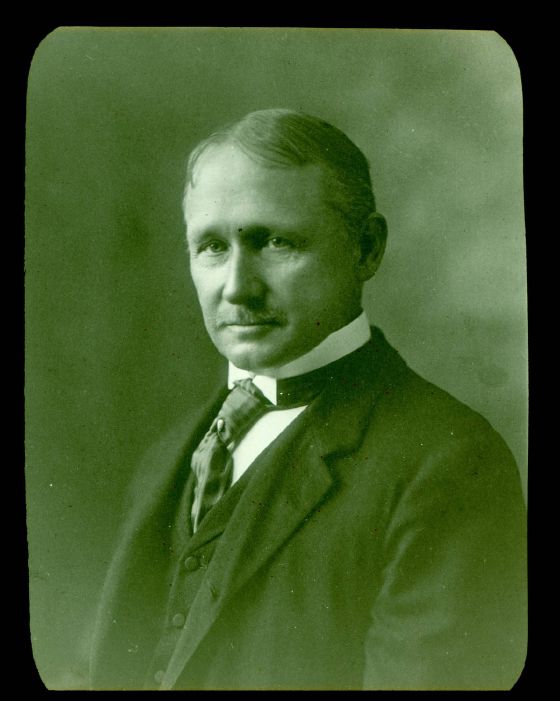
The writer was Ronald Coase. Five years later the argument of that lecture appeared in the journal Economica as “The Nature of the Firm”: 20 pages, 51 footnotes, one diagram and not one equation (own count)2. In 1991 it was one of the two articles for which he received the Nobel prize in economics3. Crossref, the registry of scholarly references, counts more than 15,000 citations of it4. Yet in 1970 its author called it “much cited and little used”5, and in 2009, at 98, he said he was surprised that it was cited so much, since it was “little more than an undergraduate essay”6.
Three numbers
The puzzle he took to America
Coase was born in 1910 in Willesden, a suburb of London, the only child of a Post Office telegraphist. Both his parents had left school at twelve3. He went to the London School of Economics in 1929 to read for a commerce degree designed, as he put it, for future works managers, “a choice of occupation for which I was singularly ill-suited”. Five months before his final examinations he began to attend the seminar of Arnold Plant, the new professor of commerce7.
Plant taught him what economists mean by coordination through prices. Plant quoted Sir Arthur Salter: “The normal economic system works itself.” Nobody is in charge of it and nobody needs to be, because prices rise where goods are scarce and producers follow them. It was the Depression, schemes for planning industry were in fashion, and Plant opposed them all. Competition working through prices, he said, would do all the coordinating that was needed7.
Coase accepted this and saw a gap in it. Economists also spoke of a factor of production called management, whose job was to coordinate. “Why was it needed if the pricing system provided all the co-ordination necessary?” The same question had a larger form. The Russian Revolution was fourteen years old. Lenin, as Coase remembered it, had said that the Russian economy would be run as one big factory, and economists in the West were arguing that this was impossible. Yet the West was full of factories, some of them very large7.
He took the question to the United States in 1931, on a travelling scholarship, to study why industries were organised so differently from one another. He went to few classes. He visited General Motors and Ford in Detroit, the steel works at Gary, Sears Roebuck and the Chicago stockyards. He spent a day in the office of a purchasing agent listening to his telephone calls, and he read the yellow pages, “where I was fascinated to find so many specialist firms operating within what we thought of as a single industry”. The literature on his subject he judged, in a letter home, to be “absolute bilge”1.
The paper he published in 1937 puts the puzzle without Lenin or the yellow pages. Inside a firm, it observes, prices do not move people about: “If a workman moves from department Y to department X, he does not go because of a change in relative prices, but because he is ordered to do so”2. It borrows an image from the Cambridge economist D. H. Robertson, for whom firms were “islands of conscious power in this ocean of unconscious co-operation like lumps of butter coagulating in a pail of buttermilk”8. And it asks why, if prices can do the organising, the islands are there at all2.
They are large islands. Herbert Simon imagined in 1991 a visitor from Mars with a telescope that shows firms as solid green areas and market transactions as red lines between them. Its message home, he wrote, would speak of “large green areas interconnected by red lines”, and the visitor would be surprised to hear the scene called a market economy9.
A cost of using the price mechanism
Coase’s answer takes one sentence: “The main reason why it is profitable to establish a firm would seem to be that there is a cost of using the price mechanism.” Somebody has to find out what the prices are. Every exchange needs a contract, which has to be negotiated and concluded. Inside a firm one contract replaces many: a worker agrees, for a wage, “to obey the directions of an entrepreneur within certain limits”, and within those limits is told what to do. Coase sums up that “the operation of a market costs something” and that an organisation saves part of the cost2.
The objection is obvious, and he raises it himself. If organising saves cost, “Why is not all production carried on by one big firm?” His reply is that organising has costs too, and that they rise as a firm grows, because whoever is in charge has more to keep track of and makes more mistakes. He calls this “decreasing returns to the entrepreneur function”. The two costs meet at a margin. A firm will expand, he writes, “until the costs of organising an extra transaction within the firm become equal to the costs of carrying out the same transaction by means of an exchange on the open market or the costs of organising in another firm”2.
The core of the theory has no more parts than that. It turns the size of a firm into a matter of comparison, and in a footnote it gives Coase a reply to the planners and to their opponents at once. State planning is imposed on industry, he notes, while firms “arise voluntarily because they represent a more efficient method of organising production”. The footnote ends with an exclamation mark: “In a competitive system, there is an ‘optimum’ amount of planning!”2
The paper offers almost no evidence. A Lancashire weaver, a department store and a Russian factory appear in passing, but there is no table in it and no firm is studied. Its best-known term is absent: the words “transaction cost” appear nowhere, and Coase writes of “marketing costs”, eight times, and of the “cost of using the price mechanism” instead (own count). And it ends modestly. Its closing words describe the whole exercise as “our comparatively simple task of definition and clarification”2. Rereading it half a century later, Coase was struck by “its extreme simplicity”10.
Congratulated on the way to lunch
He had a draft by the early summer of 1934, at 23, and published it with very few changes in November 1937, by which time he was teaching at the London School of Economics10. “On the day that the issue of Economica was published,” he recalled, “on the way to lunch I was congratulated by Sargent and Plant, the professors of commerce. Neither ever referred to the article again or discussed it with me”. The head of his department, Lionel Robbins, never mentioned it to him, and neither did Friedrich Hayek10.
The paper was not forgotten. George Stigler chose it for the American Economic Association’s volume of readings in price theory, published in 1952, which, Coase said, “increased the number of footnote references but did not bring about any real interest in the questions raised”11. That is what he meant in 1970 by “much cited and little used”, and he gave a reason: the problems the theory was meant to illuminate “have not been of much interest to economists in recent years”5. His later article on social cost, by contrast, was in his own words “an instant success”3. The Swedish Academy’s summary in 1991 was that it “took a long time for his approach to gain a foothold”12.
Cited most in the 1990s and 2000s
Of every 1,000 indexed works on a subject, the number that cite “The Nature of the Firm”, by decade of publication.
Show the numbers
| Published | Economics: citing works | of all works | per 1,000 | Business: citing works | of all works | per 1,000 |
|---|---|---|---|---|---|---|
| 1970s | 40 | 29,838 | 1.34 | 37 | 18,044 | 2.05 |
| 1980s | 246 | 68,812 | 3.57 | 172 | 39,890 | 4.31 |
| 1990s | 658 | 127,625 | 5.16 | 836 | 100,937 | 8.28 |
| 2000s | 1,589 | 354,124 | 4.49 | 3,263 | 339,190 | 9.62 |
| 2010s | 1,962 | 678,416 | 2.89 | 4,483 | 878,774 | 5.10 |
| 2020–25 | 905 | 540,229 | 1.68 | 1,763 | 852,625 | 2.07 |
The record of citations fits that account as far as it can be checked. OpenAlex, an open index of scholarly work, sorts works by subject and lists the ones that cite the paper. For the years before 1970 it holds too few reference lists to be of use. Of every 1,000 works on economics, 1.3 cited the paper in the 1970s, 3.6 in the 1980s and 5.2 in the 1990s, the decade of the prize. The rate has since fallen to 1.7, although the number of works citing the paper went on rising, to nearly 2,000 in the 2010s: the index grew faster. In work on business and management the rate peaked later and higher, at 9.6 in the 2000s. By the index’s sorting, 45 per cent of all the works that cite the paper are about business and management and 23 per cent about economics (own count)13.
In the 1970s the paper acquired critics, and one economist, Oliver Williamson, set about making it testable.
A proposition which is clearly right
The sharpest early criticism came in 1972, from Armen Alchian and Harold Demsetz. Coase’s firm rests on authority: inside it, people do as they are told. Alchian and Demsetz called that a delusion. A firm, they wrote, has “no power of fiat, no authority, no disciplinary action any different in the slightest degree from ordinary market contracting between any two people”. An employer can fire or sue, which is what a customer can do to a shopkeeper. “Telling an employee to type this letter rather than to file that document is like my telling a grocer to sell me this brand of tuna rather than that brand of bread”14.
Their second objection went deeper. That firms do more where markets cost more to use, they wrote, is “a difficult proposition to disagree with or to refute”. One could “with equal ease” build a theory of the firm on the cost of managing: the lower it is, the more firms will do. Both statements are true, and neither says when a firm will take a transaction inside14.
The charge stuck, even among admirers. Six years later Benjamin Klein, Robert Crawford and Alchian, in a paper that set out to build on Coase, described his starting point as “the truism that profit-maximizing firms will undertake those activities that they find cheaper to administer internally than to purchase in the market”15. Williamson quoted the complaint of the economist Stanley Fischer that transaction costs “have a well-deserved bad name as a theoretical device”, partly, Fischer said, because of a suspicion that almost anything can be rationalised by invoking suitable ones16. In 2009 the committee that awarded Williamson his own Nobel prize wrote that the 1937 paper “offered only the preliminaries of an actual theory of the firm”. Without saying what determines the two costs, “Coase’s statement has little empirical content”17.
Theorists added two objections. The paper does not show why the costs should be lower inside a firm. Sanford Grossman and Oliver Hart put the point in 1986 against the whole family of transaction-cost arguments: they do not explain how the room for one side to exploit the other changes “when one of the self-interested owners becomes an equally self-interested employee of the other owner”. And they found Coase’s limit on the size of a firm, the owner’s limited capacity to manage, “unconvincing since the owner could always hire another manager”18.
Coase’s replies varied with the charge. Being told that his proposition was a tautology, true by definition, did not trouble him. “It is the criticism people make of a proposition which is clearly right,” he said in 1987, and Grossman and Hart, he said, had misread him10. Elsewhere he gave way. He named a weakness of his own: “I consider that one of the main weaknesses of my article stems from the use of the employer-employee relationship as the archetype of the firm”. On what decides between firm and market he conceded the point entirely. The paper contains “no such comprehensive theory”, he said in the same lectures11. In Stockholm he repeated Williamson’s judgement that he “did not indicate what the factors were that determined the outcome of this choice”, and added: “This also is true”7. And in 2009, by the University of Chicago Law School’s account, he disputed the paper’s claim that returns diminish as a firm grows larger, and called the growth of firms a sociological matter6.
The part he left out
A theory that does not say what its costs depend on cannot be tested. Williamson supplied the missing part from 1971. Transactions differ, he argued, and the ones that belong inside a firm are those that are complex and that need investments of use to one trading partner only. A press tool that fits one carmaker’s door is an example. Economists call this asset specificity. The danger, described by Klein, Crawford and Alchian in 1978, is that once such an investment has been made the other side can reopen the bargain, and that owning the supplier, which is called vertical integration, may be the cheapest protection15. Economists came to call this the hold-up problem19. Because complexity and specificity can be measured, the Nobel committee wrote, “Williamson’s theory had the required empirical content”17.
Coase had met this argument in 1932 and had written it down himself. In a letter from Detroit that spring he described a supplier that must buy costly equipment “specialized insofar that it can only be used for the particular product concerned”, and that then faces “one great risk”: its only customer may take his business elsewhere or “exercise his monopoly power to force down the price”. Looking back in 1987, he said he had thought the argument sound and had come across cases of it. He had also found that firms wrote contracts to get round the danger and commonly made such investments for a single customer all the same1. His example was A. O. Smith of Milwaukee, an independent maker of car frames whose main customer was General Motors11. So the investment alone could not decide between a contract and ownership, and he went on looking for something more general1.
The textbook case of hold-up is General Motors and Fisher Body. As Klein, Crawford and Alchian told it, GM signed a ten-year contract in 1919 to buy its closed car bodies from Fisher at cost plus 17.6 per cent. Demand then shifted sharply to closed cars, GM came to think the price too high, and Fisher, they wrote, “refused to locate their body plants adjacent to General Motors assembly plants”. By 1924 GM found the arrangement intolerable, and in 1926, already the owner of 60 per cent of Fisher’s shares, it bought the rest15.
In 1987 Coase’s own recollection of the case was still close to theirs. He had seen a Fisher Body plant in 1932, and remembered being told at General Motors that the main reason for the purchase “was to make sure that the body plants were located near General Motors assembly plants”. As things had looked to him then, he said, the case “might well have been an example” of ownership forced by this kind of risk1. Thirteen years later he disputed it outright. In an article published when he was 89 he wrote: “This tale is factually incorrect.” Fisher had not put its plants far from GM’s, and “There is no evidence that a holdup occurred”20.
Klein replied in the same issue of the journal and conceded a good deal. Coase’s conclusion “that Fisher generally located its plants close to GM production facilities during this early period, is accurate”, he wrote, and the 1978 paper had been mistaken to date the breakdown to 1924. What remained, for Klein, was 1925, when Fisher would not build a plant at Flint and bodies were hauled 57 miles from Detroit with 17.6 per cent added to the cost of hauling them. He still called that a hold-up and the main reason for the purchase21. Two other articles in the issue took Coase’s side. One, by Robert Freeland, argued that the Fisher brothers held General Motors up only after they had become its employees22.
One case settles nothing about a theory. It does show where Coase stood. “Coase rejects this idea that specific investments are a determinant of vertical integration,” Klein wrote21. The mechanism that made the paper testable was one he had weighed at 21 and set aside, and its showpiece was a story he ended by denying.
Overwhelming, mixed and modest
By the 1990s the testable version had been tested many times, usually by asking whether firms make for themselves the parts and services that need specific investment and buy the ones that do not. Reviews of this work reach verdicts that sound incompatible. Francine Lafontaine and Margaret Slade, surveying it for the Journal of Economic Literature in 2007, wrote: “The weight of the evidence is overwhelming”23. A meta-analysis in a management journal the year before had reported strong support24. Robert David and Shin-Kap Han, counting results for another management journal in 2004, found support “at 47 percent” and said they were surprised25. A meta-analysis of 143 studies in 2013 credited the theory with “a real yet modest ability to explain how firms organize economic activity”26.
The verdicts are less far apart than they sound, because each rests on a different question.
Under half of the tests came out as predicted
How 308 statistical tests of transaction cost economics came out, in 63 articles published from 1982 to 2002.
Show the numbers
| Tested | Tests | Significant, as predicted | Not significant | Significant, the wrong way |
|---|---|---|---|---|
| All tests | 308 | 144 (47%) | 133 (43%) | 31 (10%) |
| Asset specificity | 107 | 64 (60%) | 39 (36%) | 4 (4%) |
| Uncertainty | 87 | 21 (24%) | 52 (60%) | 14 (16%) |
David and Han counted 308 statistical tests in 63 articles. A test counted as support only if it was statistically significant in the predicted direction. On that standard 144 passed, 31 were significant in the wrong direction, and 133 were not statistically significant (the last figure is our subtraction). The theory’s central variable did better: of 107 tests of asset specificity, 64 supported it and 4 contradicted it. Uncertainty, which is also supposed to push transactions inside the firm, was supported in 21 of 87 tests and contradicted in 1425.
Lafontaine and Slade asked of a smaller set of studies, mostly from economics journals, whether anything significant contradicts the theory. Almost nothing does. In their eight tables on transaction costs we count 41 estimates from 22 studies, some of which appear in several tables: 35 point the predicted way, 30 of them significantly, and two are significantly negative (own count from the working-paper version)23. The meta-analysis of 2013 asked how strong the link is. Across the 109 of its studies that measure it, the corrected correlation between asset specificity and integration is 0.12. Squared, that is about 1.4 per cent of the variation in how far firms integrate (own calculation), and the authors’ own phrase is that transaction costs “explain only a fraction” of what managers do26.
So the reviews do not contradict one another. For the central variable the predicted effect appears in most tests and seldom reverses. How often it is statistically significant depends on the sample, from six in ten of the tests in the management literature to three-quarters of the estimates in the economists’ tables, and the one review that measured its strength found it weak. For uncertainty the record is close to a draw. Whether that amounts to overwhelming support depends on what one was hoping for.
The reviews list doubts of their own. Lafontaine and Slade note that specificity is mostly measured by asking managers about it23. Another review points out that it is treated as given, although firms choose how specialised their investments are27. The classic studies did not test a rival explanation, such as the view that firms keep in-house what they are good at: of 27 widely cited studies examined in 2006 none did, though the examiners name four later ones that do28. There are plain counter-examples too. Bengt Holmström and John Roberts pointed out in 1998 that Japanese carmakers leave the specialised dies with their suppliers, where the theory expects the carmaker to own them, and that the relationships are stable all the same: only three of roughly 150 first-level Toyota suppliers had left its association in eleven years19.
A study of 2014 raised a different doubt. Enghin Atalay, Ali Hortaçsu and Chad Syverson used the Census Bureau’s shipment surveys of 1993 and 1997 to see where plants owned by vertically integrated American firms send their output. The textbook picture is that a firm owns its supplier to secure the part. They found that “roughly one-half of upstream establishments report no shipments to downstream establishments within the same firm”, and that the median plant sends 0.4 per cent of its shipments there. On two looser definitions of an internal shipment the share that sends nothing falls to about a quarter. Their reading is that ownership may mainly serve to move intangible inputs, such as know-how, within the firm, in which case the decision to make or buy a physical part, the decision the textbook cases are about, explains only a fraction of what firms own29. The same authors later found that ownership does pull goods towards it: a plant of the same firm at the destination raises shipments by as much as a 40 per cent cut in distance30. Multinationals resemble the plants in the first study: in 2004 the median foreign manufacturing affiliate of an American company shipped nothing to its parent and received nothing from it31.
Technology and the size of firms
The idea reached a wider public as a forecast. If firms exist because markets are costly to use, and computers make markets cheap to use, then firms should shrink. Thomas Malone, Joanne Yates and Robert Benjamin argued in 1987, building on Williamson and without citing Coase, that information technology “will lead to an overall shift toward proportionately more use of markets”32. In 1998 Malone and Robert Laubacher described an “e-lance economy” whose basic unit is “not the corporation but the individual”, and imagined a General Motors split into several dozen divisions that had outsourced most of what they did33. In the same year Larry Downes and Chunka Mui attached Coase’s name to a Law of Diminishing Firms: “As transaction costs in the open market approach zero, so does the size of the firm”34. When the gig economy arrived, The Economist explained it under the heading “Coase and effect”35, and in 2017 a brief on the paper said the boundary between firm and market “might appear to be dissolving altogether”, though it added that firms were unlikely to wither away36.
Coase had written something else. The paper’s one passage on technology says: “Changes like the telephone and the telegraph which tend to reduce the cost of organising spatially will tend to increase the size of the firm.” A footnote on the same page adds a condition. Most inventions change both the cost of organising and the cost of using the market, and “whether the invention tends to make firms larger or smaller will depend on the relative effect on these two sets of costs”. The telephone itself, the footnote says, would make firms smaller if it cut the cost of using the market by more2. So the paper does not predict that firms will shrink. It names the condition under which they would. Asked in 1997 whether he was excited by the new electronic ways of doing business, Coase answered: “Yes, because I don’t understand them”37.
The largest firms did not dissolve
Share of all employees of American private-sector firms who work for the largest and for the smallest firms, 1978 to 2023.
Show the numbers
| Year | 10,000 or more employees | Fewer than 20 employees |
|---|---|---|
| 1978 | 25.0% | 22.7% |
| 1979 | 25.1% | 22.1% |
| 1980 | 25.6% | 21.6% |
| 1981 | 25.8% | 21.7% |
| 1982 | 25.1% | 21.7% |
| 1983 | 24.7% | 22.4% |
| 1984 | 24.1% | 22.6% |
| 1985 | 24.3% | 22.2% |
| 1986 | 24.2% | 22.1% |
| 1987 | 23.4% | 22.0% |
| 1988 | 23.3% | 21.9% |
| 1989 | 23.2% | 21.5% |
| 1990 | 23.6% | 21.3% |
| 1991 | 24.2% | 21.2% |
| 1992 | 23.8% | 21.3% |
| 1993 | 23.7% | 21.4% |
| 1994 | 23.6% | 21.1% |
| 1995 | 23.8% | 20.8% |
| 1996 | 24.5% | 20.6% |
| 1997 | 25.0% | 20.3% |
| 1998 | 25.5% | 19.7% |
| 1999 | 26.1% | 19.4% |
| 2000 | 26.7% | 19.0% |
| 2001 | 26.8% | 18.8% |
| 2002 | 26.7% | 19.3% |
| 2003 | 26.2% | 19.3% |
| 2004 | 25.9% | 19.4% |
| 2005 | 26.2% | 19.2% |
| 2006 | 26.3% | 19.1% |
| 2007 | 26.7% | 18.8% |
| 2008 | 26.8% | 18.5% |
| 2009 | 27.2% | 18.6% |
| 2010 | 27.1% | 18.9% |
| 2011 | 27.3% | 18.6% |
| 2012 | 27.3% | 18.4% |
| 2013 | 27.8% | 18.1% |
| 2014 | 27.7% | 17.8% |
| 2015 | 28.1% | 17.6% |
| 2016 | 28.3% | 17.4% |
| 2017 | 28.5% | 17.2% |
| 2018 | 28.9% | 17.1% |
| 2019 | 29.2% | 16.8% |
| 2020 | 29.4% | 16.6% |
| 2021 | 30.0% | 17.2% |
| 2022 | 29.5% | 17.3% |
| 2023 | 29.9% | 16.7% |
What happened to firms can be read from the Census Bureau’s Business Dynamics Statistics, which cover American private-sector firms with employees. In 1978 firms with 10,000 or more employees accounted for 25.0 per cent of the employment in the series. Their share fell to 23.2 per cent in 1989, the lowest of the series, moved little until the mid-1990s and then rose, to 29.9 per cent in 2023. Firms with fewer than 20 employees accounted for 22.7 per cent in 1978 and for 16.7 per cent in 2023 (own calculation)38.
The forecast rested on something real. Erik Brynjolfsson, Malone and two colleagues found that investment in information technology was followed by smaller firms, in data for 1976 to 1989, the years in which the largest firms’ share was falling39. Malone and Laubacher’s evidence in 1998 was that the share of American workers employed by Fortune 500 companies had fallen from one in five to less than one in ten in 25 years33. Until 1995 the Fortune 500 list ranked industrial companies only40, and in manufacturing the trend they saw went on. A Census Bureau study of the same series reports that manufacturing kept moving towards smaller firms while retailing moved the other way, the share of its employment in large firms rising from 36 per cent in 1978 to 62 per cent in 201941. Across the whole economy the largest firms’ share was back above its level of 1978 by 1998, the year the e-lance economy was announced.
So the paper does not predict that firms will shrink.
Workers did not leave for self-employment in the numbers predicted either. The Bureau of Labor Statistics, counting people by their main job, found independent contractors to be 7.4 per cent of the employed in February 2005, 6.9 per cent in May 2017 and 7.4 per cent in July 20234243. In Germany people who work for themselves without staff were 3.6 per cent of the employed in 1991, 6.1 per cent at the peak in 2005 and 3.5 per cent in 2025. The statistical office links the growth from 2003 to a start-up subsidy, the so-called Ich-AG, which was replaced in mid-2006 by a narrower one44. One survey seemed to show a boom. Lawrence Katz and Alan Krueger reported in 2016 that alternative work arrangements, a wider category that also takes in agency, on-call and contract-company workers, had risen from 10.7 to 15.8 per cent of American workers in a decade45. Three years later they revised this to “a 1 to 2 percentage point increase” and wrote of “our 2016 overstatement”46.
The forecast was right about some things. Firms did hand work to the market, though work of particular kinds. In West Germany the share of the workforce employed by cleaning, security and logistics contractors and by temporary agencies rose from 2 per cent in the mid-1970s to almost 8 per cent in 2008, most of it after 1990. About one cleaner in ten worked for a cleaning firm in 1975, and almost four in ten in 200847. In the United States, by a wider definition and over a longer period, the share of the workforce in business service firms rose from under 2 per cent in 1950 to more than 8 per cent in 201548. A study that followed individual firms points the same way: French firms that got broadband in the 2000s spent more on outsourcing and employed a narrower range of occupations49.
Other measures are harder to read. The number of tax returns filed by American businesses with no employees doubled, from 15.4 million for 1997 to 32.0 million for 2024 (own count from Census files)50. How much of that is new work is disputed: a study of the tax records published in 2025 finds that the rise in reported self-employment since 2005 is not matched by payments that firms report making to contractors, and comes mainly from what low earners declare51. By one count the largest firms have narrowed their range, the biggest firm in an average industry being active in 13 other industries in 1982 and in fewer than 9 in 201252. A study of listed companies’ annual reports finds the opposite, that American firms have widened what they do over the past thirty years53.
The number of people a firm employs is in any case a rough stand-in for what the paper meant by size, which was the number of transactions a firm organises. No series counts that. The nearest are the share of America’s foreign trade in goods that takes place between related companies, 38.5 per cent in 1992 and 42.8 per cent in 2025 (own calculation for 1992)54, and the share of corporate assets held by the largest 1 per cent of American corporations, which rose from 70 per cent in 1931 to 97 per cent in 201855.
One study shows both of Coase’s costs at work in a single industry. George Baker and Thomas Hubbard studied what on-board computers did to American haulage between 1987 and 1997. Simple trip recorders, which let an owner see afterwards how a driver had handled a truck, made it cheaper to supervise one’s own drivers and pushed haulage into shippers’ own fleets. The more advanced devices also reported a truck’s position as it travelled, which helps a dispatcher find return loads, and that capability pushed haulage out to trucking companies. “Has IT adoption led to larger or smaller firms in trucking?” the authors asked, and answered: yes. They left open whether the result holds in other industries56.
What is left
Three things have to be kept apart: the question, the answer and the forecast.
The question has lasted. Even the critics who denied that a firm runs on authority went on to ask why firms exist and where they end, and that is now a field with prizes of its own: Williamson’s in 2009 for work on the boundaries of the firm17, and in 2016 that of Hart and Holmström for contract theory, whose committee named the 1937 paper as “the intellectual origin” of the modern theory of those boundaries57.
The answer, as written, was a way of looking. It said where to look, at the cost of transacting set against the cost of organising, and did not say what would be found. Coase agreed, and said in Stockholm that what was needed was “more empirical work” on contracts and on what firms do7. The version that could be tested was built by others, on a mechanism he had set aside. The tests bear out its main prediction, weakly, and its other predictions unevenly.
The forecast was never his. He wrote that the telephone and the telegraph would tend to make firms bigger, and added in a footnote that the telephone would make them smaller if it cut the cost of using the market by more. That cannot be wrong, which is the weakness his critics found in the paper as a whole: a statement that firms will grow or shrink according to which cost falls further fits any outcome. Its merit is that it says what to measure. Where somebody did, in trucking, the answer came out in both directions. And the pattern of the past thirty years, a growing share of jobs in the largest firms together with more outsourcing, is what the Law of Diminishing Firms did not expect.
Coase died in Chicago on 2 September 2013, at 1026. In Stockholm he had told his audience: “I have made no innovations in high theory.” His contribution, he said, had been to urge economists to take account of “features of the economic system so obvious” that they had been overlooked, and he found it “a strange experience to be praised in my eighties for work I did in my twenties”. He ended the lecture with the consolation open to a scholar whose idea is true: he “can count on ultimately seeing it accepted, if only he lives long enough”7.
Sources
-
R. H. Coase, “The Nature of the Firm: Origin”, The Journal of Law, Economics, and Organization 4(1), Spring 1988, pp. 3–17. Quoted from the reprint in O. E. Williamson and S. G. Winter (eds.), The Nature of the Firm: Origins, Evolution, and Development, Oxford University Press, 1993, pp. 35–46. The lecture, given in 1987, prints Coase’s letters of 1932 to Ronald Fowler. ↩︎ ↩︎ ↩︎ ↩︎ ↩︎
-
R. H. Coase, “The Nature of the Firm”, Economica 4(16), November 1937, pp. 386–405. The counts of pages, footnotes and words are ours, from the scanned article. The passage on inventions and its footnote are on p. 397. ↩︎ ↩︎ ↩︎ ↩︎ ↩︎ ↩︎ ↩︎ ↩︎
-
Ronald H. Coase, autobiography written for the Nobel Foundation, 1991. ↩︎ ↩︎ ↩︎
-
Crossref, record of the article, 15,289 references to it registered, retrieved 11 October 2026. OpenAlex, a broader index used further on, lists 24,069 citing works. ↩︎
-
R. H. Coase, “Industrial Organization: A Proposal for Research”, in Victor R. Fuchs (ed.), Policy Issues and Research Opportunities in Industrial Organization, National Bureau of Economic Research, 1972, pp. 59–73, at pp. 62–63. The paper was given in November 1970. ↩︎ ↩︎
-
University of Chicago Law School, “Ronald H. Coase, Founding Scholar in Law and Economics, 1910-2013”, 2 September 2013. The remarks of 2009 are from a video address, as the obituary reports it. ↩︎ ↩︎ ↩︎
-
Ronald H. Coase, “The Institutional Structure of Production”, lecture to the memory of Alfred Nobel, Stockholm, 9 December 1991. ↩︎ ↩︎ ↩︎ ↩︎ ↩︎ ↩︎
-
D. H. Robertson, The Control of Industry, Harcourt, Brace and Company, New York, 1923, p. 84. Quoted here as Coase gives it at p. 388, without Robertson’s comma. ↩︎
-
Herbert A. Simon, “Organizations and Markets”, Journal of Economic Perspectives 5(2), 1991, pp. 25–44, at pp. 27–28. ↩︎
-
R. H. Coase, “The Nature of the Firm: Meaning”, The Journal of Law, Economics, and Organization 4(1), Spring 1988, from p. 19. Quoted from the 1993 reprint, pp. 48–58. ↩︎ ↩︎ ↩︎ ↩︎
-
R. H. Coase, “The Nature of the Firm: Influence”, The Journal of Law, Economics, and Organization 4(1), Spring 1988, from p. 33. Quoted from the 1993 reprint, pp. 61–67. Its pp. 70–72, on A. O. Smith, were available to us only as search snippets. ↩︎ ↩︎ ↩︎
-
Royal Swedish Academy of Sciences, press release on the prize in economic sciences, 15 October 1991. ↩︎
-
OpenAlex, record of the article and of the 24,069 works it lists as citing it, retrieved 11 October 2026. The rates are our count, and the chart’s caption gives the method. The shares of 45 and 23 per cent are of all 24,069 works, whatever their year. Of the 19 citing works the index lists from before 1970, at least 8 are mismatches. ↩︎
-
Armen A. Alchian and Harold Demsetz, “Production, Information Costs, and Economic Organization”, American Economic Review 62(5), 1972, pp. 777–795, at pp. 777 and 783. ↩︎ ↩︎
-
Benjamin Klein, Robert G. Crawford and Armen A. Alchian, “Vertical Integration, Appropriable Rents, and the Competitive Contracting Process”, The Journal of Law and Economics 21(2), October 1978, pp. 297–326, at pp. 297–298 and 308–310. The 60 per cent stake is in footnote 25. ↩︎ ↩︎ ↩︎
-
Oliver E. Williamson, “Transaction-Cost Economics: The Governance of Contractual Relations”, The Journal of Law and Economics 22(2), October 1979, pp. 233–261, at p. 233, quoting Stanley Fischer in the Journal of Monetary Economics 3 (1977), p. 322. ↩︎
-
Royal Swedish Academy of Sciences, “Economic Governance”, scientific background on the prize in economic sciences 2009, 12 October 2009, pp. 1–2. ↩︎ ↩︎ ↩︎
-
Sanford J. Grossman and Oliver D. Hart, “The Costs and Benefits of Ownership: A Theory of Vertical and Lateral Integration”, Journal of Political Economy 94(4), August 1986, pp. 691–719, at pp. 692–693 and footnote 1. ↩︎
-
Bengt Holmström and John Roberts, “The Boundaries of the Firm Revisited”, Journal of Economic Perspectives 12(4), 1998, pp. 73–94, at pp. 74 and 81. ↩︎ ↩︎
-
R. H. Coase, “The Acquisition of Fisher Body by General Motors”, The Journal of Law and Economics 43(1), April 2000, pp. 15–32. Quoted from the article’s abstract; the full text was not available to us. ↩︎
-
Benjamin Klein, “Fisher—General Motors and the Nature of the Firm”, The Journal of Law and Economics 43(1), April 2000, pp. 105–142, at pp. 106 and 112–116. ↩︎ ↩︎
-
Robert F. Freeland, “Creating Holdup Through Vertical Integration: Fisher Body Revisited”, The Journal of Law and Economics 43(1), April 2000, pp. 33–66. From the abstract. The other article is by Ramon Casadesus-Masanell and Daniel F. Spulber, pp. 67–104. ↩︎
-
Francine Lafontaine and Margaret Slade, “Vertical Integration and Firm Boundaries: The Evidence”, Journal of Economic Literature 45(3), 2007, pp. 629–685. Read in the working-paper version, Warwick Economic Research Paper 799, May 2007, pp. 32–35 and tables 7 to 14. ↩︎ ↩︎ ↩︎
-
Inge Geyskens, Jan-Benedict E. M. Steenkamp and Nirmalya Kumar, “Make, Buy, or Ally: A Transaction Cost Theory Meta-Analysis”, Academy of Management Journal 49(3), 2006, pp. 519–543. From the abstract. ↩︎
-
Robert J. David and Shin-Kap Han, “A systematic assessment of the empirical support for transaction cost economics”, Strategic Management Journal 25(1), 2004, pp. 39–58, table 2 and p. 51. ↩︎ ↩︎
-
T. Russell Crook, James G. Combs, David J. Ketchen and Herman Aguinis, “Organizing Around Transaction Costs: What Have We Learned and Where Do We Go from Here?”, Academy of Management Perspectives 27(1), 2013, pp. 63–79, table 1. ↩︎ ↩︎
-
Jeffrey T. Macher and Barak D. Richman, “Transaction Cost Economics: An Assessment of Empirical Research in the Social Sciences”, Business and Politics 10(1), 2008, pp. 1–63. Read in the authors’ manuscript of 2006. ↩︎
-
Richard Carter and Geoffrey M. Hodgson, “The impact of empirical tests of transaction cost economics on the debate on the nature of the firm”, Strategic Management Journal 27(5), 2006, pp. 461–476, at p. 474. ↩︎
-
Enghin Atalay, Ali Hortaçsu and Chad Syverson, “Vertical Integration and Input Flows”, American Economic Review 104(4), 2014, pp. 1120–1148, at pp. 1120–1122 and table 1. ↩︎
-
Enghin Atalay, Ali Hortaçsu, Mary Jialin Li and Chad Syverson, “How Wide Is the Firm Border?”, The Quarterly Journal of Economics 134(4), 2019, pp. 1845–1882. ↩︎
-
Natalia Ramondo, Veronica Rappoport and Kim J. Ruhl, “Intrafirm trade and vertical fragmentation in U.S. multinational corporations”, Journal of International Economics 98, 2016, pp. 51–59. Read in the accepted manuscript. ↩︎
-
Thomas W. Malone, Joanne Yates and Robert I. Benjamin, “Electronic markets and electronic hierarchies”, Communications of the ACM 30(6), June 1987, pp. 484–497, at p. 484. ↩︎
-
Thomas W. Malone and Robert Laubacher, “The Dawn of the E-Lance Economy”, Harvard Business Review, September–October 1998. ↩︎ ↩︎
-
Geoffrey Sampson, “The myth of diminishing firms”, Communications of the ACM 46(11), November 2003, pp. 25–28, quoting Larry Downes and Chunka Mui, Unleashing the Killer App (1998). Sampson argues against the law. ↩︎
-
The Economist, “There’s an app for that”, briefing, 3 January 2015. ↩︎
-
The Economist, “Coase’s theory of the firm”, economics brief, 27 July 2017. ↩︎
-
Thomas W. Hazlett, “Looking for Results: An Interview with Ronald Coase”, Reason, January 1997. ↩︎
-
US Census Bureau, Business Dynamics Statistics, 2023 release, national table by firm size, retrieved 11 October 2026. The shares are our calculation. ↩︎
-
Erik Brynjolfsson, Thomas W. Malone, Vijay Gurbaxani and Ajit Kambil, “Does Information Technology Lead to Smaller Firms?”, Management Science 40(12), December 1994, pp. 1628–1644. The years of the data are from the working-paper version of January 1993. ↩︎
-
Fortune, “Fortune Archives: The year the Fortune 500 recalibrated”, 8 June 2025. ↩︎
-
Christopher Goetz and Martha Stinson, “The Business Dynamics Statistics: Describing the Evolution of the U.S. Economy from 1978-2019”, US Census Bureau, Center for Economic Studies working paper 21-33, October 2021. The paper gives 500 employees as its threshold for a large firm; its national figures match the class of 1,000 or more in the published tables. ↩︎
-
US Bureau of Labor Statistics, “Contingent and Alternative Employment Arrangements — May 2017”, news release USDL-18-0942, 7 June 2018, which also gives the figure for February 2005. ↩︎
-
US Bureau of Labor Statistics, “Contingent and Alternative Employment Arrangements — July 2023”, news release USDL-24-2267, 8 November 2024. ↩︎
-
Statistisches Bundesamt, “Solo-Selbstständige”, Qualität der Arbeit, 23 July 2026. Share of all employed people aged 15 to 64. The survey was redesigned in 2020, so figures from then on are only roughly comparable with earlier ones. ↩︎
-
Lawrence F. Katz and Alan B. Krueger, “The Rise and Nature of Alternative Work Arrangements in the United States, 1995-2015”, NBER working paper 22667, September 2016. ↩︎
-
Lawrence F. Katz and Alan B. Krueger, “Understanding Trends in Alternative Work Arrangements in the United States”, RSF: The Russell Sage Foundation Journal of the Social Sciences 5(5), 2019, pp. 132–146, at p. 133. ↩︎
-
Deborah Goldschmidt and Johannes F. Schmieder, “The Rise of Domestic Outsourcing and the Evolution of the German Wage Structure”, The Quarterly Journal of Economics 132(3), 2017, pp. 1165–1217. The figures are from the working-paper version, NBER working paper 21366, July 2015. ↩︎
-
David Dorn, Johannes F. Schmieder and James R. Spletzer, “Domestic Outsourcing in the United States”, report for the US Department of Labor, 31 January 2018 (archived copy). ↩︎
-
Antonin Bergeaud, Clément Malgouyres, Clément Mazet-Sonilhac and Sara Signorelli, “Technological Change and Domestic Outsourcing”, Journal of Labor Economics 43(4), 2025, pp. 1135–1168. From the abstract. ↩︎
-
US Census Bureau, Nonemployer Statistics, national files for 1997 and 2024, retrieved 11 October 2026: 15,439,609 and 31,985,874 businesses without paid employees. The figures come from business income tax records. ↩︎
-
Andrew Garin, Emilie Jackson and Dmitri Koustas, “New Gig Work or Changes in Reporting? Understanding Self-Employment Trends in Tax Data”, American Economic Journal: Applied Economics 17(3), 2025, pp. 236–270. From the abstract. ↩︎
-
David Autor, David Dorn, Lawrence F. Katz, Christina Patterson and John Van Reenen, “The Fall of the Labor Share and the Rise of Superstar Firms”, The Quarterly Journal of Economics 135(2), 2020, pp. 645–709, at pp. 663–665. ↩︎
-
Gerard Hoberg and Gordon M. Phillips, “Scope, Scale, and Concentration: The 21st-Century Firm”, The Journal of Finance 80(1), 2025, pp. 415–466. From the abstract. ↩︎
-
US Census Bureau, “U.S. Goods Trade: Imports and Exports by Related-Parties, 2025”, 7 July 2026, and the release for 1992 of 6 April 1994. The share for 1992 is our calculation from that release’s import and export totals; the bases of the two years differ slightly. ↩︎
-
Spencer Y. Kwon, Yueran Ma and Kaspar Zimmermann, “100 Years of Rising Corporate Concentration”, American Economic Review 114(7), 2024, pp. 2111–2140. ↩︎
-
George P. Baker and Thomas N. Hubbard, “Make Versus Buy in Trucking: Asset Ownership, Job Design, and Information”, American Economic Review 93(3), 2003, pp. 551–572. ↩︎
-
Royal Swedish Academy of Sciences, “Oliver Hart and Bengt Holmström: Contract Theory”, scientific background on the prize in economic sciences 2016, 10 October 2016, p. 18. ↩︎